
At one station, a ballot box remained unretrieved as of Thursday morning, fueling further criticism of the already embattled National Election Commission (NEC) over its handling of the vote. The NEC is the independent agency responsible for overseeing the country's elections.
The disruption began around 4:40 p.m. the previous day, when ballot papers ran out at several polling stations in southern Seoul, leading to long queues as voters waited for additional ballot papers to arrive. Election officials issued waiting numbers to those who arrived before the 6 p.m. closing time, allowing them to vote even after polls had officially closed.
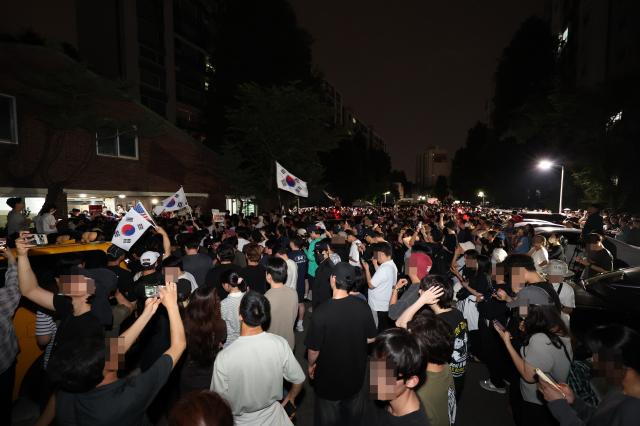
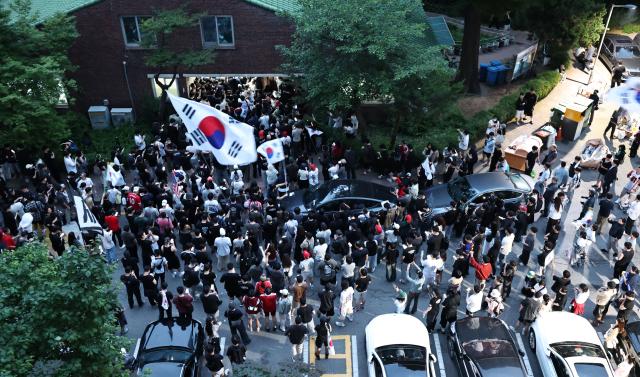
As of Thursday morning, a ballot box at a polling station in Jamsil, in Seoul's Songpa district, had yet to be retrieved, as protesting voters claimed their voting rights had been infringed, according to the NEC.
Voting was extended until 10 p.m. there after a shortage of ballot papers disrupted the normal process. However, even after voting ended, the ballot box could not be immediately transferred for counting, as some residents and protesters objected to its removal amid anger over the shortage. Election officials did not immediately proceed with the transfer, and the box remained unretrieved as of Thursday morning.
But the surge was widely anticipated, as Wednesday's elections had already seen early voting turnout of 61 percent, up 10.1 percentage points from 50.9 percent in the 2022 local elections, the second-highest level ever recorded in a South Korean local election.
The all-time high remains the 68.4 percent recorded in the first local elections in 1995. Local elections are held separately from general elections, which historically draw higher turnout; the 2024 general elections, for comparison, recorded 67 percent.
The NEC issued a public apology, admitting that ballot paper shortages caused "great confusion and concern," and said it felt responsible for undermining public trust in fair election management. However, the apology left key questions unanswered, including how many voters were directly affected, whether anyone left without casting a ballot, and why the initial allocation of ballot papers fell short.
The incident came after a similar problem during early voting for the 2024 general elections, when some polling stations ran short of printer ink for ballot papers following stronger-than-expected turnout. An unusually long proportional representation ballot, which listed dozens of parties, also pushed ink use beyond available supplies.
South Korea is not the first country to face such problems. In Germany, the 2021 federal election in Berlin was later partially rerun after widespread election-day disruptions including ballot shortages, incorrect ballots and long delays. The Federal Constitutional Court ordered a repeat vote in 455 of Berlin's 2,256 electoral districts. Similar irregularities also led to a full rerun of the Berlin state election in 2023, in which CDU candidate Kai Wegner replaced SPD incumbent Franziska Giffey as governing mayor.
The NEC said it would hold a comprehensive briefing once counting is completed, covering the cause of the shortage, the handling of the ballot box and any follow-up measures.
Meanwhile, incumbent Oh Se-hoon of the main opposition People Power Party (PPP) was re-elected Seoul mayor, defeating strong contender Chung Won-o from the ruling Democratic Party (DP) by approximately 30,000 votes, a margin of less than one percentage point, to secure a fifth term despite unprecedented disruptions in parts of the city.

Copyright ⓒ Aju Press All rights reserved.
