
The United States has demanded that NATO allies fill the gap left by the reduction of U.S. military assets in Europe.
On June 3, U.S. European Command and NATO Supreme Allied Commander Alexis Greenkwich stated that he expects European nations and Canada to quickly increase the number of manned and unmanned military aircraft and naval vessels necessary for NATO defense plans.
Greenkwich explained that there has been an unhealthy dependence on U.S. military forces within the NATO Force Model.
He added, "President Trump and Secretary of Defense Pete Hegseth have made it clear that change is necessary and will indeed happen," noting that the potential reality of simultaneous conflicts in multiple theaters necessitates this shift.
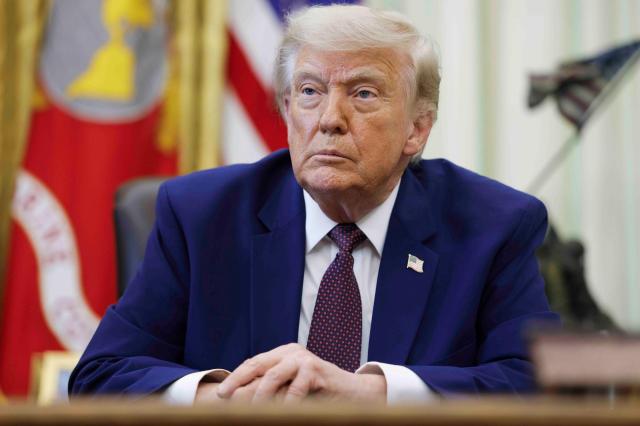
Trump has criticized NATO for its excessive reliance on U.S. military power, urging European member states to take greater responsibility for conventional defense on the continent.
In line with this stance, the U.S. informed allies last month that it would reduce its contributions to the NATO Force Model, which allocates troops and equipment for crisis situations.
While specific details regarding the scale and timing of the reductions were not disclosed, military sources indicated that the cuts would affect a wide range of military assets, including aerial refueling tankers, fighter jets, drones, and naval vessels.
Greenkwich specifically mentioned manned and unmanned aircraft and naval vessels, marking the first public confirmation of the areas where the U.S. intends to reduce its forces.
He stated, "As the U.S. reduces its assigned forces in Europe to redeploy them elsewhere, European and Canadian allies can expand their roles immediately and in the near future in the areas of manned and unmanned aircraft and naval vessels."
According to Reuters, military sources indicated that under the U.S. plan, the number of F-15 and F-15E fighter jets provided to NATO would be reduced by one-third to 99, while the number of MQ-4 and MQ-9 Reaper drones would be halved to 12.
Sources noted that the reduction of MQ-9 drones could impact NATO's surveillance capabilities, stating, "This will be detrimental."
In response, Colonel Martin O'Donnell, a spokesperson for NATO's military headquarters, explained that the areas mentioned by Greenkwich are ones where allies already possess sufficient capabilities or can acquire them soon.
O'Donnell asserted, "There will be no reduction in defense capabilities; countries (NATO allies) just need to allocate their existing capabilities to NATO."
Security experts warn that this decision could send the wrong political signals to both allies and Russia, regardless of whether a real capability gap exists.
Jim Townsend, a senior fellow at the Center for a New American Security (CNAS), emphasized, "Now is not the time for the U.S. to reduce its military presence in Europe and cut the promised military capabilities to NATO, especially when Europe is being harassed by Russia."
* This article has been translated by AI.
Copyright ⓒ Aju Press All rights reserved.