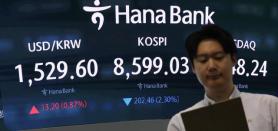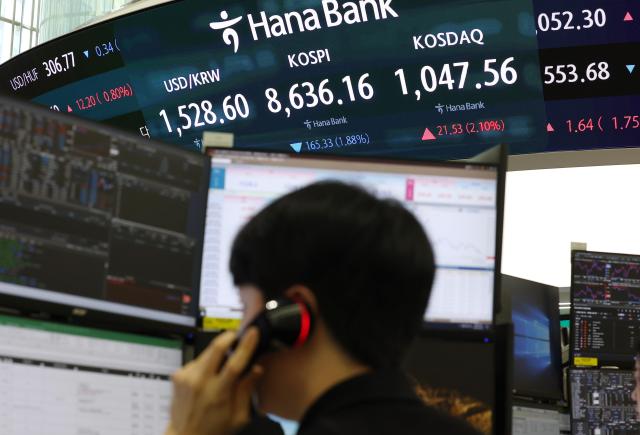
In Seoul's currency market, the won opened at 1,530 per dollar, down 13.6 won from the previous session's close. This marks the first time in 17 years and three months that the exchange rate has kicked off below the 1,530 won threshold since March 10, 2009, during the height of the global financial crisis.
Immediately after the opening bell, the rate tumbled to 1,530.8 won before paring some gains to trade in the mid-1,520 won range. However, the high-flying trend persists, with the currency hovering in the 1,500 won range for 12 consecutive sessions on a closing basis.
Market analysts attribute the unyielding weakness of the won, despite growing possibilities of a rate hike by the Bank of Korea (BOK), to a compounding stack of external headwinds, chiefly triggered by a hawkish surprise from neighboring Japan that amplified fears of a broader liquidity squeeze across Asia.
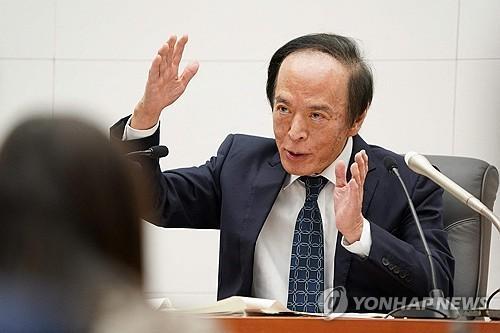
Bank of Japan (BOJ) governor Kazuo Ueda hinted on Wednesday at a potential interest rate hike at the upcoming June 15–16 policy meeting, citing secondary inflation risks driven by soaring energy costs.
"Even amid uncertainty in the Middle East, there is a clear need to discuss the appropriateness of raising interest rates," Ueda said during a lecture in Tokyo, warning that delaying necessary monetary normalization could "inflict a heavy burden on the economy, markets, and the financial system."
This regional monetary tightening pressure closely aligns with stubborn inflationary pressures in the U.S., where growing concerns that the Fed might lurch back into a hawkish stance are providing solid, ongoing support for both the U.S. dollar and Treasury yields.
Adding to the compounding pressure, renewed military tensions between the United States and Iran have stoked global inflation worries and driven up international crude prices, further exacerbating depreciation pressures on the local currency.
South Korea relies on the Strait of Hormuz for nearly 70 percent of its total crude oil imports. Consequently, soaring oil prices trigger an increased demand for the greenback to settle import bills while stoking anxieties over a deteriorating trade balance.
Continued profit-taking and portfolio rebalancing by foreign investors in the domestic stock market have further strained won supply and demand. According to the Korea Exchange (KRX), foreign investors net sold 4.8 trillion won worth of shares on the main KOSPI bourse as of noon.
The bond market also exhibited a turbulent trend. In the morning session of the Seoul debt market, the benchmark three-year government bond yield closed up 6.6 basis points at 3.839 percent - reaching its highest level since November 2023, when fears of prolonged high interest rates in the U.S. hammered global debt markets.
The 10-year government bond yield also rose 7.1 basis points to 4.209 percent - bouncing back to the 4.2 percent range for the first time since mid-May, highlighting renewed weakness in long-term debt. This slump effectively erased the bullish sentiment from Tuesday, when net purchases of 10-year bonds by foreign investors hit the second-highest volume in history.
The prospect of a BOJ rate hike raised immediate concerns over a regional liquidity squeeze, triggering heavy offloading of local fixed-income assets. Adding to this was the anxiety of market participants already bracing for the possibility that the Gulf crisis could drive oil prices higher, rekindle domestic consumer inflation, and strengthen the BOK's justification for rate hikes.

Copyright ⓒ Aju Press All rights reserved.