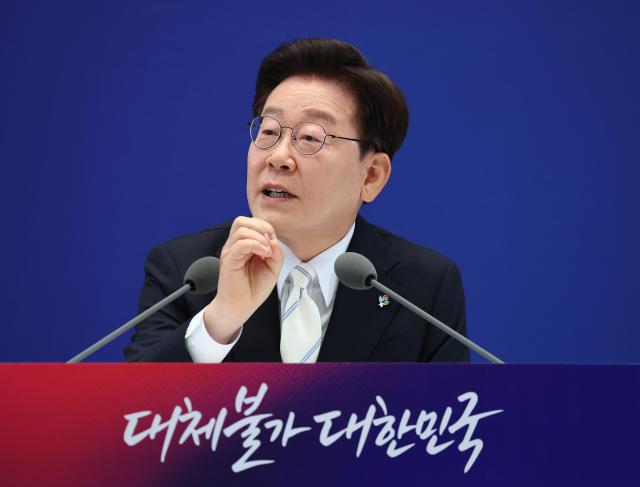
During a press conference in Seoul on Monday marking his first anniversary in office, President Lee Jae Myung was asked about pursuing an Acquisition and Cross-Servicing Agreement (ACSA) with Japan, which simplifies logistical support and supplies. He said he had told Japanese Prime Minister Sanae Takaichi that it would be difficult for South Korea to accept such an arrangement at this stage due to public sentiment.
"I believe there is a practical need," Lee said. "But if I say this, I will get in trouble. Please understand our position."
His remarks came as Europe searches for new security umbrellas in the face of Russia's continued threat, the war in Ukraine and concerns that U.S. President Donald Trump could scale back its military presence in Europe.
The debate has gained attention after Italian Defense Minister Guido Crosetto called for NATO to expand beyond Europe and North America to include countries such as Australia, Brazil, India, Japan, and South Korea.
In an interview with the New York Times, Crosetto said NATO should seek new members beyond its traditional geographic boundaries because "the world has evolved." He also said the alliance should no longer remain a "club for the elites of the global north," arguing that a broader organization is needed to provide security and stability across the world.
The same anxiety has also revived interest in joining the European Union. Nine countries currently have EU candidate status including Albania, Bosnia-Herzegovina, Georgia, Moldova, Montenegro, North Macedonia, Serbia, Turkey and Ukraine.
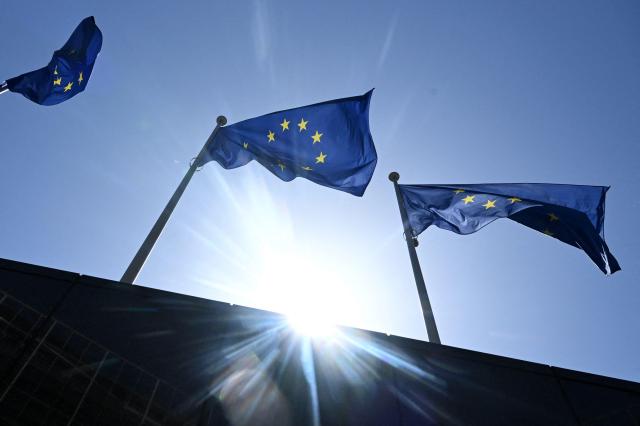
The trend reflects a broader shift in Europe, where the EU is increasingly seen not only as an economic bloc but also as a security umbrella at a time when U.S. commitments appear less predictable.
For South Korea, such discussions carry both opportunity and burden. South Korea's growing defense exports and its role in the Indo-Pacific have made it a more visible player in discussions about global security.
But Seoul's approach to Japan shows that broader security cooperation is constrained not only by strategy, but also by domestic sentiment, historical disputes and distrust over Japan's expanding military role.
Japan has repeatedly raised the issue of an ACSA in recent defense consultations with South Korea, but Seoul has effectively dismissed the idea, saying it is not considering such an agreement.
An ACSA is not a mutual defense treaty or a combat pact. It is a logistics-sharing arrangement that allows militaries to exchange supplies and services such as fuel, food, transportation, maintenance and medical support during joint drills, peacekeeping operations, disaster relief missions or other contingencies.
Such agreements are common among allies and friendly countries and are meant to make joint operations more efficient by allowing forces to share supplies and services.
Ban Kil-joo, a professor of international security at the Korea National Diplomatic Academy, said an ACSA itself is not unusual, as such logistics-sharing agreements can be signed not only between allies but also between friendly countries.
But he said an ACSA between the two neighboring countries carries a different meaning because they are geographically close and their military cooperation cannot be separated from their shared history.
He said such an agreement could allow the two countries to use each other's ports and exchange supplies when necessary, which may appear natural in peacetime. But in a wartime context, it could create room for Japan to become involved on the Korean Peninsula.
"If a second Korean War breaks out on the Korean Peninsula, Japan could provide logistics support under the agreement, which would mean Japan becoming involved," Ban said. "That would create an uncomfortable point when viewed in light of the history between South Korea and Japan."
He also warned that the agreement could create risks in the opposite direction, as South Korea could face pressure to support Japan in a conflict, potentially drawing Seoul indirectly into a Taiwan contingency.
The concern has become more politically charged as Japan moves beyond the security limits it adopted after World War II and seeks to become a more "normal" military power. Tokyo has revised its defense export rules to allow the transfer of lethal weapons, expanded defense spending and acquired counterstrike capabilities, steps that signal a shift toward active combat readiness.
Ban said South Korea does not need to completely shut the door on discussing an ACSA with Japan. But he said moving directly to such an agreement at the early stage of renewed shuttle diplomacy between Seoul and Tokyo would be premature.
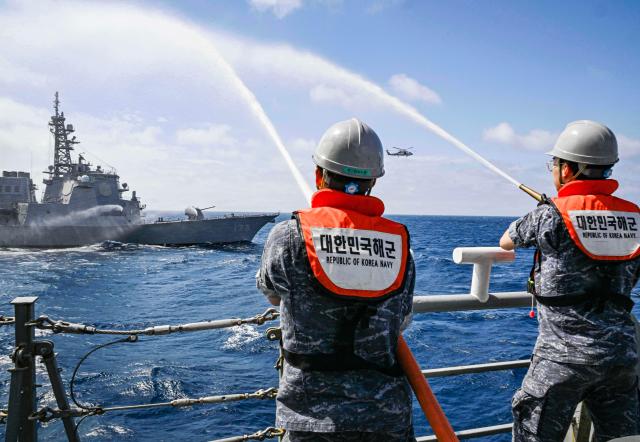
Such steps could help Seoul and Tokyo build trust before moving toward more institutionalized military cooperation. Ban said South Korea should also review whether the risks surrounding an ACSA can be reduced before deciding whether to move forward.
Lee also said South Korea and Japan should continue managing areas where cooperation is possible, despite disputes over history and territory. But he added that military cooperation between South Korea and Japan, as well as trilateral military cooperation among South Korea, the U.S. and Japan, remains a unique and sensitive issue.
"In the long term, I believe Northeast Asia's security should move toward a complex multilateral security system," Lee said. "But there are aspects we need to be careful about for now."
Still, Ban said trilateral cooperation among South Korea, the U.S. and Japan could gain more leverage if NATO weakens under growing uncertainty over U.S. commitments. He said such cooperation is important not only for regional stability and deterrence against North Korean threats, but also for managing alliance with Washington.
The challenge for Seoul is how to strengthen such cooperation without moving too quickly on politically sensitive military arrangements with Japan.

Copyright ⓒ Aju Press All rights reserved.