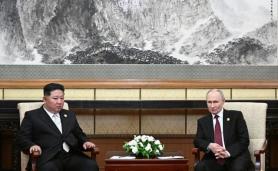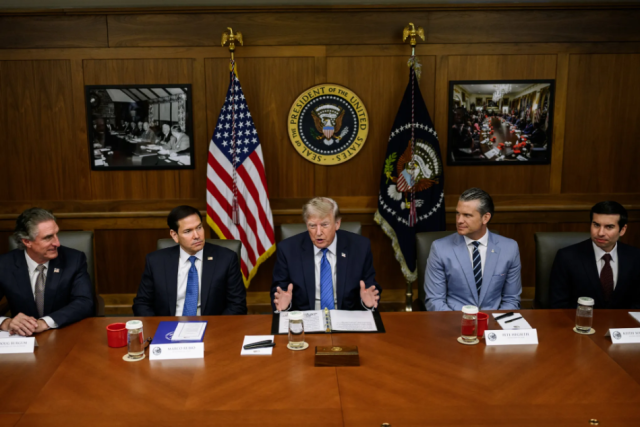
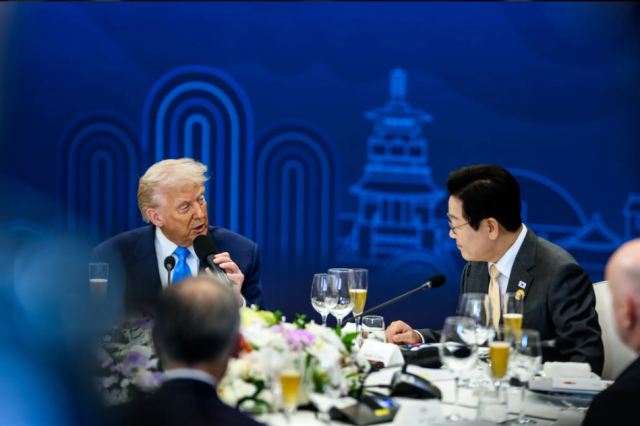
Trump instructed the Pentagon to "substantially reduce" the annual Ulchi Freedom Shield exercise just hours before it was due to begin, citing its cost, his "very good relationship" with North Korean leader Kim Jong-un and Seoul's refusal to join U.S. military action against Iran. The exercise's computer-simulated drills and other training began Monday and are scheduled to run through Aug. 27.
Former Secretary of State Hillary Clinton sharply criticized the move on X. "The president is making US policy friendlier to North Korea and Russia than Canada and Oman. Are you kidding me?" Clinton wrote.
Democratic Sen. Tim Kaine of Virginia also said Trump's decision appeared to punish an ally even as Pyongyang continued its missile provocations.
"North Korea tests ballistic missiles and Trump decides the problem is with... our ally, South Korea, because it has the sense to avoid joining Trump's disastrous war with Iran? Kim Jong Un couldn't buy a better deal," Kaine wrote on Facebook.
The criticism crossed party lines. Republican Sen. Thom Tillis stressed South Korea's longstanding military partnership with the United States.
"South Korea has been a solid military ally for over 70 years that possesses exquisite military capabilities," Tillis wrote on X, arguing that reducing the exercises would free up North Korean troops to support Russia's war in Ukraine.
In Seoul, however, the main opposition People Power Party (PPP) directed its criticism at Lee rather than Trump, calling the reduction a "security disaster" brought about by the Lee administration's foreign policy.
PPP Chairman Jang Dong-hyeok said the exercises were now at risk of disappearing altogether and accused Lee of failing to maintain Washington's trust.
"President Trump was expressing his dissatisfaction with President Lee Jae Myung by scaling back the South Korea-U.S. joint military exercises," said Rep. Choi Soo-jin, the party's chief floor spokesperson.
"Trump's Truth Social post showed that he is dissatisfied with the Lee administration," said Rep. Kim Gunn, a member of the National Assembly's Foreign Affairs and Unification Committee.
"I believe the underlying frustration stems from the fact that South Korea's investment commitments in the United States are not being carried out at the pace he wants," Kim added.
"What North Korea fears most is South Korea-U.S. joint military exercises," said Rep. Sung Il-jong, former chair of the National Assembly's National Defense Committee.
"The United States and North Korea are likely engaged in behind-the-scenes negotiations at the moment," Sung said.
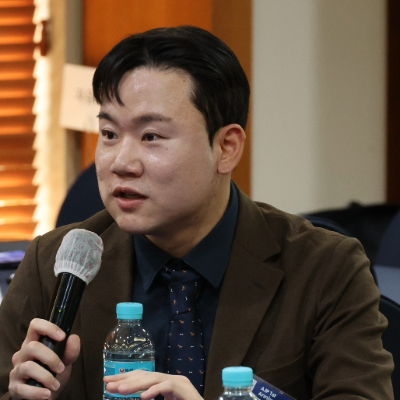
"Given that South Korea is also seeking dialogue with North Korea, I believe we need to actively make use of the reduction in the exercises," Jin added, arguing that Seoul could turn the scale-back into an opportunity.
The controversy comes as North Korea has launched two ballistic missiles since Aug. 6 and deepened military cooperation with Russia, raising concerns in Washington and Seoul over whether reduced allied training could weaken deterrence on the Korean Peninsula.
Copyright ⓒ Aju Press All rights reserved.