
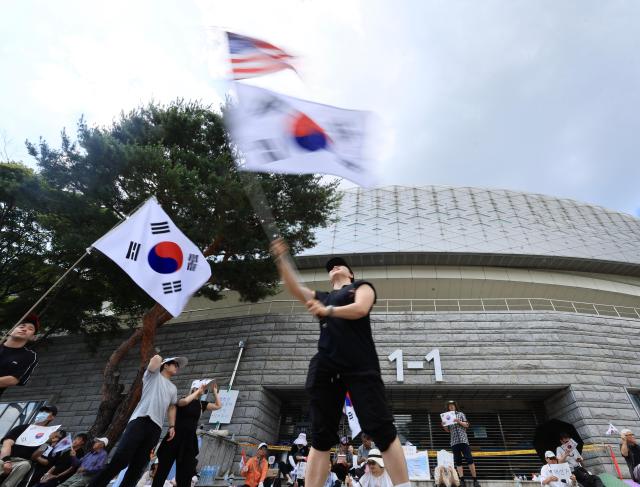
On the evening of June 3, voters in Seoul's Jamsil neighborhood lined up at their polling stations and were turned away. Not by armed soldiers, but by a paper shortage. Ballots had simply run out.
It sounds almost absurd — a punchline for a country that has spent decades positioning itself as a model of democratic development in Asia. South Korea holds transparent elections, produces peaceful transfers of power, and boasts one of the most digitally sophisticated electorates on earth.
And yet, on election day 2026, polling stations in at least 91 locations nationwide ran dry. Voting was suspended for up to 105 minutes at some sites.
The National Election Commission, it later emerged, had quietly lowered the minimum ballot-printing threshold from 60 percent to 50 percent of registered voters — not through a formal commission meeting, but through internal sign-off by administrators. No contingency plan existed for what would happen when, inevitably, turnout exceeded expectations.
Within hours, young people were in the streets.
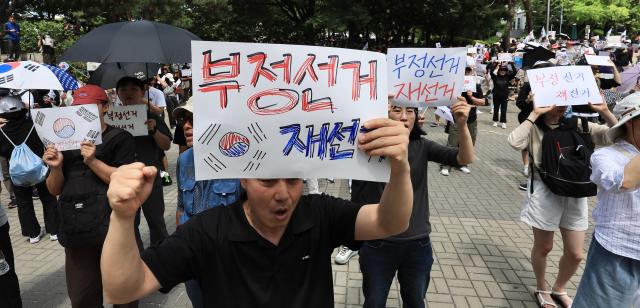
What followed has been dismissed in some quarters as disproportionate — a few hundred protesters blocking a polling station in Jamsil, refusing to disperse, demanding a rerun of the entire election. Commentators noted that the number of missing ballots (now revised upward to over 7,000) was unlikely to have changed any outcome. Critics pointed out that "stop the steal" rhetoric was audible on the margins of the crowd, mingling with the more measured demands for accountability. These are fair observations. They are also beside the point.
The 20- and 30-year-olds who pulled themselves away from their dinner tables on a holiday evening were not, primarily, angry about outcomes. They were angry about something more fundamental, something that President Lee Jae Myung himself acknowledged — with notable candor — at his first-anniversary press conference: the state had, through carelessness, blocked citizens from exercising their sovereign right to vote. And the initial response from the political class, including his own administration, was essentially: it didn't affect the result, so it doesn't much matter.
That response landed like a slap.
To understand why, you have to understand what democracy means to a Korean in their twenties or thirties — which is to say, what it has always been.
The generation now in their 20s was born after 1987, the year South Korea's June Democratic Struggle forced the military-backed regime to concede direct presidential elections. The generation in their 30s has only faint childhood memories of what came before.
For both cohorts, democracy is not an achievement to be periodically celebrated. It is the water they swim in, the air they breathe. They have never experienced a ballot box that wasn't real, a vote that didn't count, a president who wasn't chosen.
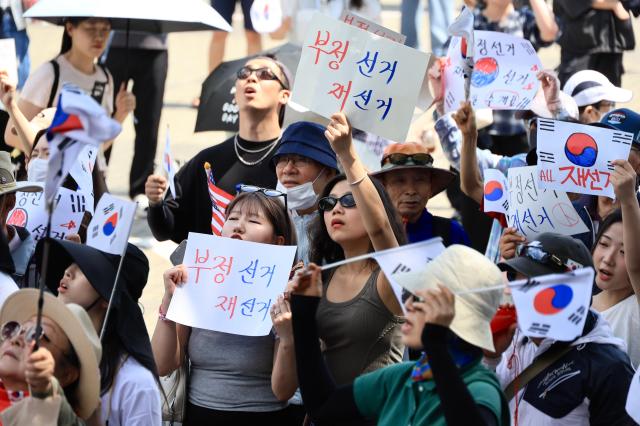
Their elders — the ones who actually fought those battles, who remember tear gas on the streets of Seoul, who understand what the word democratization cost — sometimes mistake this familiarity for apathy. Or for ingratitude. In fact, it produces something else entirely: an acute sensitivity to any erosion, however incremental, however accidental.
Older generations who lived through authoritarian rule can unconsciously calibrate. This is bad, but it's not as bad as before. The young have no such calibration. For them, there is no baseline of worse. There is only the democracy they were handed and the democracy they expect to inherit. Any gap between the two reads not as improvement still in progress, but as failure, full stop.
When the December 2024 martial law incident briefly threatened to suspend democratic governance, it was young Koreans who flooded the streets within hours. Not because they had a sophisticated reading of constitutional crisis, but because the threat to democracy was existential in the most literal sense — a threat to the only political reality they had ever known.
The Jamsil protests carry the same DNA. A ballot shortage is not martial law. But it is a crack in the same foundation, and this generation is not inclined to paper over cracks.
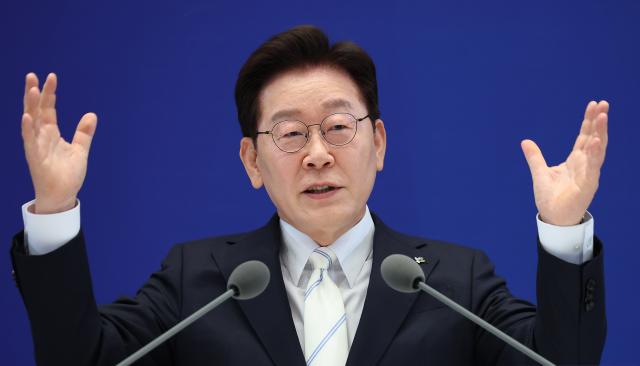
President Lee, to his credit, said as much. At his press conference, he reflected that he had initially approached the shortage as a matter of vote counts and outcomes — and that the young protesters had corrected him. "This is a matter of principles," he said. He admitted to a "lack of sensitiveness" toward civilian rights in his own first response. He thanked the young people for posing the fundamental question.
It was an honest accounting. It was also a revealing one.
Because what Lee was describing — the dulling of instinct in those of us who have spent long enough inside institutions — is real. People who have fought for democracy, worked within democracy, argued about democracy for decades, develop a kind of pragmatic tolerance for its imperfections. The machinery malfunctions sometimes. You fix the malfunction and move on. You keep your eye on the larger project.
The young do not accept this trade-off. They shouldn't have to.
The Korean Bar Association did not frame the ballot shortage as a logistical inconvenience. It called it "a serious matter that infringed upon citizens' constitutional right of suffrage."
Student councils at sixteen major universities — Seoul National, Yonsei, Korea University among them — coordinated statements calling for a parliamentary investigation, a special counsel probe, punishment of those responsible, and structural reform of the National Election Commission. These are not the demands of people who have been manipulated into outrage by partisan operatives. These are the demands of people who take the mechanics of democracy seriously, perhaps more seriously than many of their elders.
The protests have not been without complications. As the days wore on, the character of the Jamsil demonstrations shifted. The 20s and 30s who gave the movement its initial energy were gradually outnumbered by older, harder-line voices, some carrying "stop the steal" placards borrowed wholesale from the American far right. Allegations of fraud circulated without evidence. Athletes were surrounded and their bags demanded for inspection. A police officer was mocked and humiliated by the crowd. These developments deserve criticism, and they have received it.
But they do not invalidate the original grievance. The existence of bad actors at the margins of a legitimate protest has always been used, conveniently, to delegitimize the protest itself. It is worth resisting that convenience here.
The core demand — that the state account fully for how this happened, why the threshold was reduced without formal deliberation, why no contingency protocol existed, and what will be done to ensure it never happens again — is not extremist. It is the minimum that a functioning democracy owes its citizens.
Germany's Federal Constitutional Court ordered re-elections in parts of Berlin after procedural irregularities in 2021. Austria's Constitutional Court mandated a presidential runoff re-run over absentee ballot handling issues in 2016. Procedural integrity is not a technicality. It is the architecture on which democratic legitimacy is built.
There is something else worth saying plainly: the young Koreans in the streets were right to resist the attempts of established politicians to hijack their microphone.
Footage and reporting from Jamsil consistently showed protesters redirecting politicians who showed up to speak, insisting that the message remain theirs. This was not naivety. It was political literacy of a high order — an understanding that a spontaneous civic protest, once absorbed into the machinery of partisan competition, becomes something else. It becomes an asset to be traded. They didn't want to be traded.
The handwritten placards, the self-organized structure, the deliberate exclusion of party flags — these were choices. They said, in effect: this is about the principle, not the politics. That distinction matters enormously, and the fact that a generation raised on social media and cynicism about institutions managed to hold that line — even imperfectly — deserves recognition rather than condescension.
President Lee's approval rating fell nearly ten percentage points in the wake of the crisis, landing just above 50 percent. The gap between his Democratic Party and the opposition People Power Party narrowed to half a percentage point. These numbers are a political warning. They are also a democratic signal.
A generation that has never known anything but democracy is sending a message to every institution that touches it: we are watching, and we are unforgiving, and we are not going anywhere.
That is not a problem for Korean democracy. That is Korean democracy working exactly as it should.
*The author is the managing editor of AJP.
Copyright ⓒ Aju Press All rights reserved.
