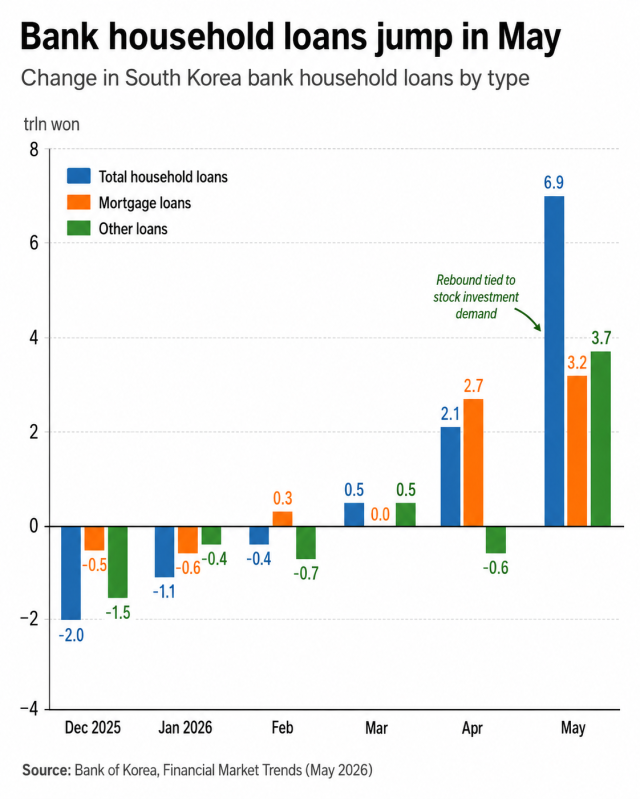
Bank household loans increased by 6.9 trillion won ($4.52 billion) in May, widening from a 2.1 trillion won gain in April and exceeding the 5.2 trillion won increase recorded a year earlier, according to the Bank of Korea.
The sharpest turnaround came from other loans, which include unsecured credit loans, credit lines and stock-backed loans. Other household loans rose by 3.7 trillion won in May after falling by 600 billion won in April, with the BOK citing large-scale stock investment by individuals and seasonal funding demand linked to Family Month.
The loan growth came as the stock market extended a steep rally. The KOSPI climbed on optimism over the semiconductor cycle and stronger corporate earnings, hitting a record high of 8,801 on June 2.
The index later corrected, led by semiconductor shares, as expectations for U.S. Federal Reserve rate hikes strengthened. Still, as of June 10, the KOSPI remained 17.2 percent above its end-April level.
Bond yields have been rising in line with the expectations of a rate hike as early as July on inflationary pressure. The three-year Treasury yield rose to 3.88 percent Wednesday from 3.60 percent at the end of April, while the 10-year yield climbed to 4.27 percent from 3.92 percent over the same period.
The BOK said government bond yields were affected by inflation concerns at home and abroad and changing expectations for monetary policy.
Corporate funding also showed signs of shifting toward bank loans. Bank lending to companies rose by 10.6 trillion won in May, following a 10.7 trillion won increase in April.
Loans to large companies increased by 5.2 trillion won, while lending to small and medium-sized enterprises rose by 5.4 trillion won. The BOK said SME lending remained strong as banks continued to expand corporate credit under their productive finance push, while large companies sought working capital, including funds to redeem corporate bonds.
Corporate bond issuance remained weak, with companies recording a net redemption of 1.1 trillion won in May as higher interest rates raised issuance costs and pushed firms toward alternative funding sources such as bank loans. Commercial paper and short-term bonds also shifted to a net redemption of 2.1 trillion won.
Deposits at financial institutions rose sharply. Bank deposits increased by 48.8 trillion won in May after falling by 6.8 trillion won in April, helped by short-term funds placed by some large companies and banks' efforts to secure lending resources and manage regulatory ratios.
Asset management firms also saw large inflows. Their deposits rose by 86.4 trillion won in May, led by stock funds, which increased by 58.8 trillion won on valuation gains from higher domestic and overseas share prices and continued new investment inflows.

Copyright ⓒ Aju Press All rights reserved.