
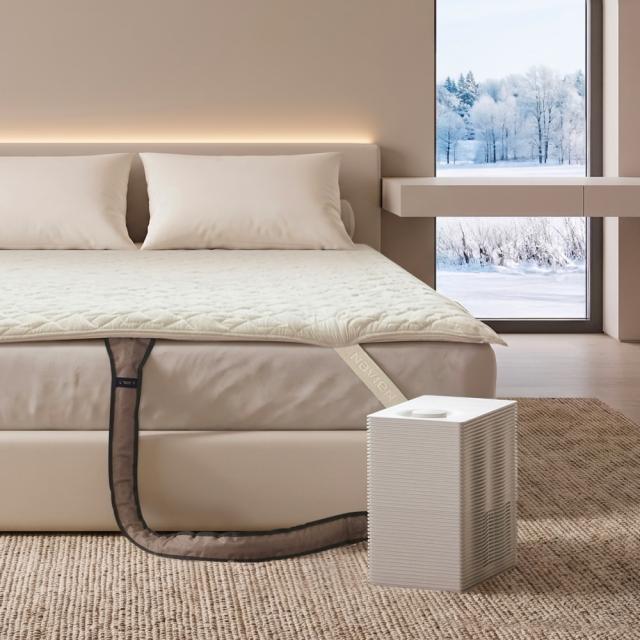
The boiler industry, traditionally associated with winter appliances, is now diving into a fierce competition in the summer market, focusing on cooling and sleep technology. Major players in the domestic boiler market, Kyungdong Nabien and Guitura, are expanding their offerings beyond winter products to include air conditioners, ventilation purifiers, and sleep mats, aiming to overcome the limitations of the off-season.
According to industry sources on June 11, both Kyungdong Nabien and Guitura have ramped up their marketing efforts and new product lineups targeting niche summer demands this month. Kyungdong Nabien has adopted the slogan "Partner for a Comfortable Living Environment" as it ventures into the sleep technology and year-round climate control markets.
In particular, the company is heavily promoting its 'Nabien Sleep Mat,' which features dual-zone temperature control technology aimed at consumers struggling with temperature regulation during hot summer nights. This advanced control technology adjusts temperatures precisely according to the user's sleep stages, going beyond simple cooling.
Additionally, the ventilation purifier, which combines indoor air quality management with cooling assistance, has emerged as a popular product. It allows for ventilation without opening windows, filtering out indoor carbon dioxide and pollutants generated while air conditioning is in use, thereby maximizing cooling efficiency. This system has gained traction in the summer apartment sales and remodeling markets.

In response, Guitura is expanding its territory with a more intuitive lineup of cooling appliances. The company has successfully introduced the 'Guitura Window Air Conditioner,' the first of its kind in the boiler industry, featuring a top-rated energy-efficient dual inverter compressor. When using the 'Eco Mode,' energy consumption can be reduced by approximately 60% compared to standard cooling. It can be installed easily without special tools and has a maximum dehumidification capacity of 40 liters per day, ensuring a comfortable indoor environment during the heat and rainy seasons.
The urgency for the boiler industry to focus on the summer market is driven by the need to improve revenue structures. With stagnant new demand and market saturation, relying solely on winter sales is no longer sustainable. Both companies are gradually decreasing the proportion of boiler sales in their overall revenue while continuously increasing their share in cooling and comprehensive appliance sectors.
An industry insider stated, "As climate change leads to longer summers and more frequent heatwaves, it is inevitable for boiler companies, which have accumulated expertise in airflow control and precise temperature management, to enter the cooling and sleep markets. To stand out in the global heating, ventilation, and air conditioning (HVAC) market, they must shed the label of winter appliances and evolve into comprehensive consumer appliance companies."
* This article has been translated by AI.
Copyright ⓒ Aju Press All rights reserved.