"The mood is leaning toward South Korea. The last sticking point is whether the full package goes to Korea or is shared with the German team," one source told AJP.
"Even if the order is divided, I understand South Korea could receive the larger share," a German submarine expert familiar with the discussions separately told AJP, adding that the announcement had been delayed as the parties continued to coordinate details.
Ottawa had initially been expected to name a preferred bidder around the end of June, but the decision has slipped into early July amid continued speculation over whether all 12 submarines under the Canadian Patrol Submarine Project (CPSP) will go to a single supplier or be divided between South Korea's Hanwha Ocean and Germany's Thyssenkrupp Marine Systems (TKMS).
A South Korean industry ministry official declined to comment directly on the negotiations but suggested the government was awaiting "positive news."
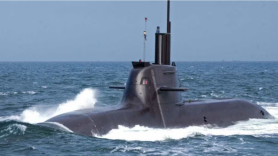
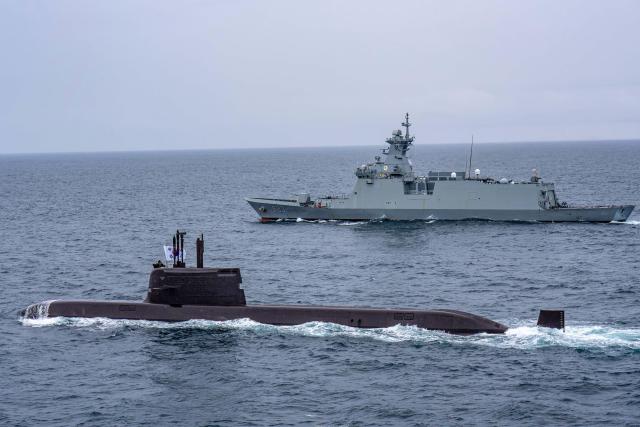
Canada plans to acquire up to 12 conventionally powered submarines under the CPSP. The competition has narrowed to Hanwha Ocean's KSS-III Batch-II and TKMS's Type 212CD.
The German submarine expert said the principal difference between the two submarines lies in their size and operational philosophy.
Both are diesel-electric submarines equipped with air-independent propulsion systems. The Type 212CD is smaller, requires a significantly smaller crew and is optimized for prolonged submerged and covert operations, giving it advantages in stealth and low detectability.
The KSS-III, by contrast, offers a substantially longer operational range and carries a larger and more diverse weapons load, making it better suited for long-range patrols and strike missions. The expert added that the Type 212CD was designed primarily for NATO interoperability, while the two platforms also differ in maintenance requirements and operational management.
Canada has repeatedly stressed that the selection extends beyond submarine performance to include jobs, industrial investment and broader economic cooperation, effectively turning the competition into a contest between two government-backed industrial packages.
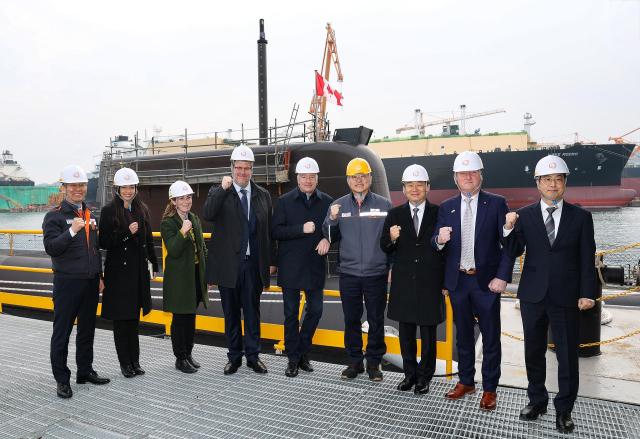
South Korea's package centers on rapid submarine delivery, domestic production in Canada and broader cooperation in steel, artificial intelligence, and mobility. Its flagship proposal includes a C$3.1 billion hydrogen truck project based on Hyundai Motor's fuel-cell technology, featuring a hydrogen vehicle plant in Ontario, a liquefied hydrogen facility in British Columbia and refueling stations across western Canada. Seoul estimates the package could create about 9,000 jobs.
Germany's proposal, meanwhile, emphasizes NATO interoperability and Canada's participation in the existing German-Norwegian Type 212CD production program.
Earlier in the competition, Canadian officials pointed to Volkswagen's planned Ontario battery plant when encouraging Seoul to present a comparable automotive investment. Volkswagen later distanced itself from the submarine competition, saying the battery investment was independent of the defense procurement process and denying any cooperation with TKMS.
The timing also coincides with President Lee Jae Myung's participation in his first NATO summit since taking office.
Lee is expected to use the gathering in Ankara on July 7-8 to promote South Korea's growing role in global defense supply chains and its ability to deliver advanced weapons systems quickly and at scale.
The industry ministry official cautioned against linking Lee's attendance directly to Canada's submarine decision.
"There are many reasons for attending the NATO summit, and it would be too early to say the president is going because the submarine project is likely to go South Korea's way," the official said.
He added, however, that South Korea's defense manufacturing capacity has become increasingly valuable as NATO members seek to rebuild depleted inventories while reducing supply-chain vulnerabilities.
"NATO urgently needs to strengthen its own defense, but defense supply chains cannot be restored in a matter of months or even one or two years," he said.
South Korea has emerged as an increasingly attractive alternative because it offers relatively fast delivery, competitive pricing and active production lines, earning a growing reputation as an "arsenal of the free world," he added.
Another factor reshaping the competition is Canada's proposal to establish a multilateral Defence, Security and Resilience Bank (DSRB), which could reduce the political advantage Germany appeared to gain from Ottawa's expanding defense relationship with Europe.
Canada recently became the first non-European participant in the European Union's €150 billion Security Action for Europe (SAFE) program, giving Canadian companies greater access to European defense projects. While the agreement does not require Ottawa to purchase a European submarine, it strengthened Germany's argument that the Type 212CD fits Canada's expanding defense integration with Europe.
Canada's lead negotiator has described discussions with Seoul as productive and estimated South Korea's chances of joining as a founding member at roughly "50-50."
Germany, by contrast, has participated only as an observer.
If South Korea ultimately secures the submarine contract, it would position itself not only as a supplier of naval platforms but also as a long-term partner in a broader Canada-led defense manufacturing and financing network spanning shipbuilding, maintenance, supply chains and advanced industrial cooperation.
The final decision will therefore determine far more than which submarine Canada purchases. It will shape the industrial and defense partnership underpinning the operation and maintenance of Canada's future submarine fleet for decades.
Canadian Defence Minister David McGuinty has also warned that operating two submarine classes would increase costs and complexity by requiring separate maintenance, logistics and training systems, although he has stopped short of ruling out a split order.
For now, the central question is no longer whether South Korea remains in contention, but whether Ottawa awards the full contract to Seoul or opts for a politically balanced compromise by dividing the order.

Copyright ⓒ Aju Press All rights reserved.