
Historian Arnold Toynbee analyzed the rise and fall of civilizations through the lens of "challenge and response." Civilizations thrive when they creatively respond to severe challenges, but they collapse when they fail to do so. In 2026, South Korea faces a daunting "complex crisis" characterized by five simultaneous waves: declining trust in the United States, a more assertive China, a resurgent North Korea, a militarizing Japan, and shocks to energy and supply chains. The key lies not in the intensity of the challenges but in our capacity to respond. An outdated map cannot navigate a new world.
The fractures began within the United States, which, despite remaining the world's largest economy, is experiencing a decline in trust regarding its commitments. A recent Pew Research survey revealed a significant drop in South Koreans' favorable views of the U.S. and confidence in its international leadership. In a separate Ipsos poll, respondents identified China as having a more positive impact on the international community than the U.S. This shift is a consequence of trade wars, defense cost demands, and transactional diplomacy that undermines alliances. Additionally, the International Energy Agency has described the oil supply disruptions stemming from the Iran conflict as the worst in decades. Both South Korea and Japan, which rely on foreign sources for over 90% of their energy, find themselves in a precarious situation, heavily dependent on Middle Eastern oil.
Conversely, China has rapidly restructured its industrial and technological competitiveness, establishing new strategic influence. It accounts for nearly 30% of global manufacturing output, surpassing the combined totals of the U.S., Japan, and Germany. The Pentagon forecasts that China will possess around 1,000 nuclear warheads by 2030, supported by a navy of over 370 ships. China leads in electric vehicles, batteries, and solar production, controlling 90% of rare earth refining and tightening its grip on Western high-tech industries through export controls on gallium, germanium, and rare earths. This scenario illustrates that 21st-century hegemony hinges not on the number of aircraft carriers but on who controls the chokepoints in supply chains.
The actions of neighboring countries are also noteworthy. The war in Ukraine has presented North Korea with unprecedented opportunities. Following expanded military cooperation with Russia, North Korea's economy is estimated to be experiencing its highest growth in recent years, absorbing energy, foreign currency, satellite and missile technology, and combat experience. The New York Times remarked that Kim Jong Un has gone from "hell to heaven." With inter-Korean dialogue severed and both sides entrenched as "hostile nations," time is not on our side.
Japan has been the first in Asia to initiate supply chain restructuring and security transitions. Since the 2010 Senkaku incident, it has reduced its dependence on Chinese rare earth permanent magnets to 31%. In 2026, Japan's defense budget surpassed 9 trillion yen for the first time. Efforts are underway to amend Article 9 of its pacifist constitution, and Japanese Self-Defense Force officers have been dispatched to NATO. However, as the Financial Times pointed out, Japan is a country that cannot say "no" to Trump. Bound to a one-sided relationship with the U.S., Japan faces rising costs and deepening constraints, with only 20% of its citizens expressing trust in the U.S. Prime Minister Takaiichi's remarks about a "crisis of existence in the event of a Taiwan-like situation" have provoked economic retaliation from China. This one-sided diplomatic approach has led Japan to a dead end.
South Korea, facing similar geopolitical pressures as Japan, is even more vulnerable in terms of supply chains. Among 31 key rare metals, China is the largest supplier of 16. While Japan has reduced its reliance, South Korea's dependence on Chinese rare earth permanent magnets has soared to 88%, with 98% of gallium, 97% of graphite, and 84% of magnesium sourced from China. The 2021 urea water crisis serves as a reminder; when China halted urea exports, trucks across the nation nearly came to a standstill. This was a preview of how supply chain wars can suffocate industries, even without missiles flying.
Despite these challenges, South Korea possesses strengths that Japan lacks. First, it has the "industrial leverage" of semiconductors and shipbuilding, which the U.S. desperately needs. As evidenced by Hanwha Ocean's acquisition of a shipyard in Philadelphia and contracts for U.S. Navy vessel maintenance, leveraging this position could yield tangible results, such as approval for nuclear-powered submarines or negotiations on nuclear cycles. Second, the recent APEC summit in Gyeongju facilitated Chinese President Xi Jinping's first visit to South Korea in 11 years, restoring high-level diplomatic ties with China. Third, as a key player in the Korean Peninsula issue without the burden of historical grievances, South Korea is well-positioned to lead a coalition of middle powers in Asia.
Victor Cha, a Korea chair at the Center for Strategic and International Studies, advises abandoning "strategic ambiguity" and standing with the U.S. and Japan against China. His warning to recognize the reality of South Korean companies being expelled from China during the THAAD retaliation is worth heeding. However, this prescription is only partially correct. Clearly recognizing threats and aligning with a specific bloc are entirely different matters. Dependence ultimately leads to entrapment. The binary choice of "alliance or autonomy" is an outdated framework that has led Japan down a narrow path.
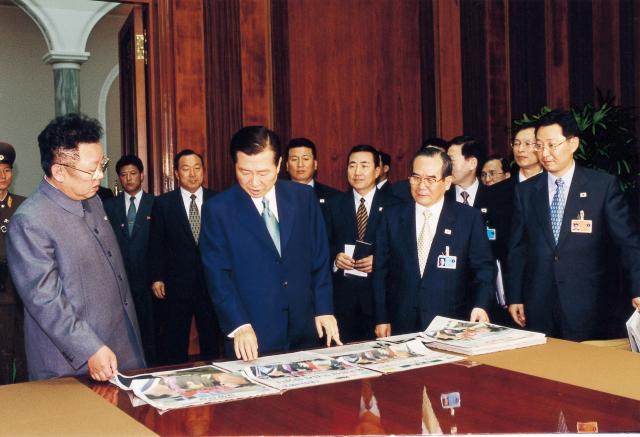
The archetype of pragmatic diplomacy lies with former President Kim Dae-jung. He anchored the South Korea-U.S. alliance in national interests but did not bind himself to it. With a robust diplomatic stance toward the U.S., he opened dialogue with Pyongyang, balanced historical issues with the Kim Dae-jung-Obuchi Declaration, and expanded diplomatic horizons through engagement with the four major powers. His principles of "intellectual awareness and pragmatic sensibility" serve as a textbook for creative responses. The current administration's pragmatic diplomacy, which encompasses security and economic interests while addressing issues on a case-by-case basis, aligns with this approach.
In the Cold War era, the key question was which side to choose. However, in the age of complex crises, the priority is to secure strategic space that maximizes national interests rather than merely choosing sides. Alliances should be strengthened, but options must be broadened, and while pursuing values, the realities of economic security cannot be ignored. Just as the Kim Dae-jung administration cultivated both national interests and peace amid the dual crises of the financial crisis and the Cold War structure on the Korean Peninsula, today's South Korea is called to develop a new national strategy that combines principles and pragmatism. Prioritizing national interests in diplomacy is not about balancing between great powers but about creating a proactive diplomacy that makes them need South Korea. The future of South Korea does not lie in choosing between the U.S. and China but in becoming an indispensable nation that both seek to cooperate with, leveraging its strengths in semiconductors, shipbuilding, batteries, AI, and cultural industries. This is the broader path South Korea must pursue in the era of complex crises.
Author's Key Background
△ Chairman of the Korea Inter-Parliamentary Exchange Center (Washington D.C.) △ Former Member of the National Assembly (two terms, Namyangju-eul, Democratic Party) △ Visiting researcher at Cornell University's East Asia Program (New York, U.S.A., 2006-2007) △ Former Chief of Staff to President Kim Dae-jung
* This article has been translated by AI.
Copyright ⓒ Aju Press All rights reserved.