
The controversy surrounding the shortage of ballots during the June 3 local elections has expanded into a broader issue of systemic failures within the Election Commission. An internal investigation by the Commission revealed a lack of numbered ballots, a breakdown in reporting systems, and failures in on-site responses. Meanwhile, the joint investigation team has begun analyzing seized materials and is accelerating its inquiry into the decision-making process behind the reduced printing of ballots.
On June 12, legal sources reported that the joint investigation team is analyzing materials obtained from searches conducted the previous day at the Central Election Commission, the Seoul Election Commission, and seven district election commissions, including those in Songpa, Gangnam, Seocho, Gwangjin, and Dongjak. The team is categorizing documents such as ballot printing plans, budget proposals, voter registries, electronic files, and meeting minutes to examine the election preparation process and the response on election day.
The search warrants named over ten individuals, including former Central Election Commission Chairman Noh Tae-ak and former Secretary-General Heo Cheol-hoon, as suspects in violations of the Public Official Election Act, neglect of duty, and embezzlement.
On June 12, legal sources reported that the joint investigation team is analyzing materials obtained from searches conducted the previous day at the Central Election Commission, the Seoul Election Commission, and seven district election commissions, including those in Songpa, Gangnam, Seocho, Gwangjin, and Dongjak. The team is categorizing documents such as ballot printing plans, budget proposals, voter registries, electronic files, and meeting minutes to examine the election preparation process and the response on election day.
The search warrants named over ten individuals, including former Central Election Commission Chairman Noh Tae-ak and former Secretary-General Heo Cheol-hoon, as suspects in violations of the Public Official Election Act, neglect of duty, and embezzlement.
More than 10 polling stations failed to respond to requests for additional ballots
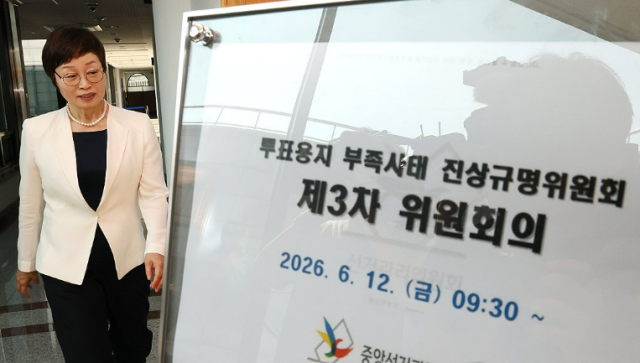
The Election Commission's internal investigation identified several issues as causes of the ballot shortage.
Jo Hyun-wook, chairman of the ballot shortage investigation committee, described the situation as a "systemic failure" during a briefing.
According to the committee, the Seoul Election Commission distributed 2,000 unnumbered ballots to each district, based on internal guidelines that required preparing about 3% of the voter population in each district.
In Songpa District, where there are 564,438 registered voters, approximately 17,000 unnumbered ballots were needed, but only 2,000 were actually distributed.
On election day, the response was also chaotic. At around 11:50 a.m. on June 3, the Songpa District Election Commission requested additional serial numbers due to unexpectedly high voter turnout. The Seoul Election Commission began assigning serial numbers to unnumbered ballots around noon, but multiple polling stations requested additional supplies simultaneously, causing delays.
As a result, starting at 5:05 p.m. that day, unnumbered ballots without serial numbers were sent to the polling places, and polling managers had to write the numbers by hand. By 5:09 p.m., the unnumbered ballots were nearly exhausted, leaving more than ten polling stations without the requested supplies.
The investigation committee noted that the transfer process for ballots did not adhere to the required handover procedures, and reporting to the Seoul Election Commission and the Central Election Commission was not conducted smoothly, effectively paralyzing the higher committee's on-site command authority.
However, Jo stated, "So far, no intentional wrongdoing has been confirmed," adding that there is evidence the Election Commission attempted to devise measures through research projects and task force operations.
Election Commission secured budget for 110% of voter count but printed only 50%
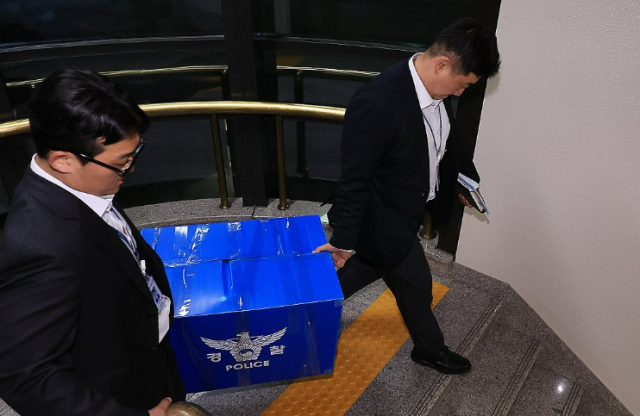
The joint investigation team is focusing its efforts on clarifying the decision-making process within the Election Commission.
In this regard, it has reportedly secured documents related to the ballot printing plan, meeting minutes, budget proposals, and electronic files related to the local elections. Notably, the team has obtained the meeting minutes where the decision to reduce ballot printing was made, making this a central issue in the investigation.
The investigation team plans to verify why the Election Commission, which secured a budget for 110% of the voter count, printed only 50% of the planned amount. They are also looking into whether some polling stations recognized the potential for ballot shortages in advance but failed to take appropriate action.
The voter registry, which records the storage locations, quantities, and remaining ballots on election day, is also a key focus for analysis. The joint investigation team aims to reconstruct the actual distribution of ballots and the scale of shortages, as well as the Election Commission's response process.
Searches of the Central Election Commission's server continued for a second day. The joint investigation team is downloading extensive electronic information from the server and may consider additional searches and expanding the list of suspects based on the analysis results.
The joint investigation team, established at the Central District Prosecutor's Office, plans to complete its internal network setup and data transfer by next week before summoning staff from various election commissions for questioning.
Errors in the counting process also confirmed, prompting discussions of a national investigation
The controversy surrounding the Election Commission has extended beyond the ballot shortage to issues of vote counting management.
Errors in vote counting have been confirmed in the education superintendent elections, with incorrect input of results reported in both Jeonbuk and Gyeonggi provinces.
According to the Gyeonggi Election Commission, at the third polling station in Geumgwang 2-dong, Seongnam, the order of candidates on the B-type ballots was incorrectly entered into the counting system, resulting in a mix-up of vote totals. In Gwangju, the results from the ninth polling station were mistakenly entered into the second polling station, leading to duplication during the correction process.
In the Jeonbuk education superintendent election, it was additionally confirmed that the counting results from the Jungwha 1-dong polling station in Jeonju were incorrectly recorded. The Wansan District Election Commission reportedly took several days to report the error to higher authorities after it was discovered.
It has also come to light that there were counting errors in the Gyeonggi Suwonjeong constituency during the 22nd National Assembly elections two years ago, raising further criticism of the Election Commission's vote and counting management system.
In the political arena, discussions are intensifying regarding a national investigation. The Democratic Party plans to submit a request for a national investigation during the upcoming National Assembly session next week. Kim Min-seok, the Prime Minister, instructed at a recent ministerial meeting that the Election Commission must undergo a thorough reassessment from top to bottom and called for a prompt and rigorous investigation led by the joint investigation team.
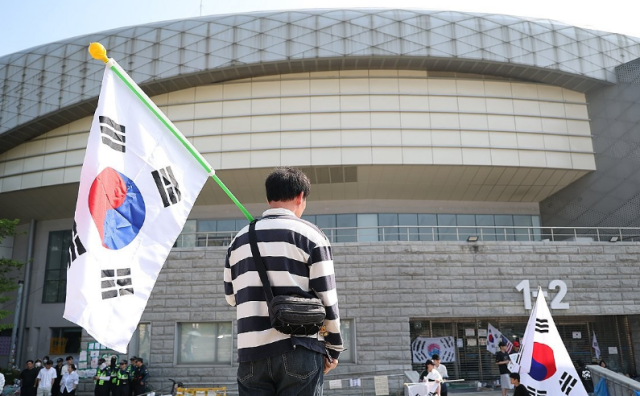
Meanwhile, protests at the counting center in Olympic Park in Songpa District have continued for over a week. Police are monitoring the situation closely, considering the potential for an escalation of protests this weekend.
* This article has been translated by AI.
Copyright ⓒ Aju Press All rights reserved.