
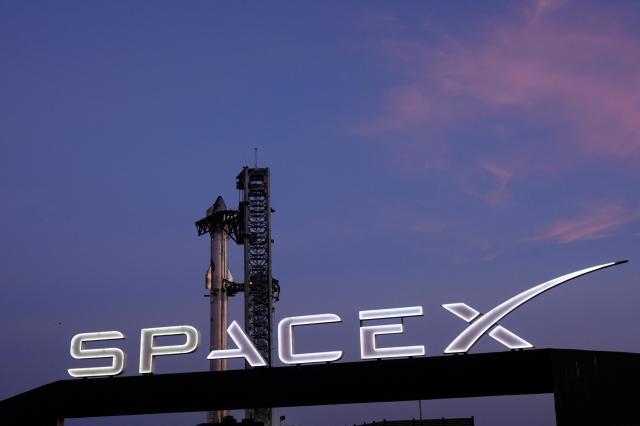
While SpaceX is best known for reusable rockets and the Starship program, analysts increasingly view Starlink as the company's financial engine. The low-Earth orbit satellite internet network has become SpaceX's largest business segment by revenue and one of its few consistently profitable operations.
According to reports citing CNBC, Starlink's subscriber base has more than doubled over the past year to about 10.3 million users. Reuters reported that Starlink generated roughly 60 percent of SpaceX's $18.67 billion in revenue last year, underscoring why the satellite unit sits at the center of investor expectations following the company's highly anticipated IPO.
Yet Starlink's global expansion is also exposing a reality often overshadowed by SpaceX's technological achievements.
Launching satellites may be global. Selling internet access remains intensely local.
From South Korea to India, Starlink is encountering a patchwork of telecom regulations, national security concerns and entrenched market structures that suggest growth may not be as straightforward as subscriber figures imply.
South Korea offers a telling example.
Starlink began commercial service in the country last December, but it has yet to show signs of becoming a meaningful alternative to existing broadband and mobile networks.
One reason is simple: South Korea already possesses one of the world's most advanced terrestrial communications infrastructures. For most households, fiber-optic broadband and nationwide 5G services are cheaper, faster and easier to use than a satellite-based connection requiring dedicated equipment.
Starlink's residential plan in Korea launched at 87,000 won ($57) per month, while customers must also purchase a standard terminal kit priced at 550,000 won.
By comparison, major Korean broadband providers typically offer residential internet plans at around 22,000 won per month for 100 Mbps service, 33,000 won for 500 Mbps and 38,500 won for 1 Gbps under long-term contracts. Routers are often bundled into service packages or rented for a small monthly fee.
The economics make it difficult for Starlink to compete directly in the mass consumer market.
Some industry observers also question whether satellite internet can gain significant traction in a country where network coverage is already extensive.
"In Korea, people can use mobile data even on mountaintops," one telecommunications industry official said. "Unlike the United States, Korea does not have large coverage gaps, so there are questions about how much satellite internet is really needed here."
Instead, Starlink's more realistic opportunity in Korea appears to lie in business-to-business applications, particularly for ships, aircraft, offshore facilities, remote industrial sites and emergency communications networks where terrestrial infrastructure is unavailable or unreliable.
Recognizing that reality, local operators such as SK Telink and KT SAT have largely positioned themselves as partners rather than direct competitors, using Starlink's network to expand satellite services for maritime and aviation customers.

Astrome Technologies, an Indian satellite and wireless systems startup backed by South Korean venture capital firms in its early stages, argues that the industry's future will increasingly be shaped by national strategic interests as much as by technological capability.
"With geopolitical tensions rising, every country now wants sovereign technological capabilities, especially in satellite communications," Astrome President Venkatesh Kumaran told AJP.
India illustrates that concern vividly.
Authorities have reportedly delayed final approvals for Starlink's commercial launch because of national security concerns.
According to Bloomberg, agencies under India's Ministry of Home Affairs have withheld the clearances required for Starlink's operations, citing concerns that satellite terminals could be used during military conflicts or geopolitical crises.
Reports that Starlink terminals were used in Iran despite the absence of a commercial license appear to have heightened concerns in New Delhi over whether India could maintain effective control over a foreign-operated communications network during periods of heightened tension.
The Indian case highlights a broader challenge facing Starlink worldwide.
Satellite internet is not merely another telecommunications service. During wars, natural disasters or political emergencies, it can become critical infrastructure with strategic and military significance.
Low-Earth orbit satellite networks are particularly valuable because they do not depend entirely on cell towers, fiber-optic cables or fixed ground stations that can be damaged, disrupted or destroyed during conflicts.

If Starlink can sustain communications during one conflict, governments naturally ask whether the same capability could operate beyond their direct control during a future crisis.
For investors captivated by SpaceX's blockbuster debut, that may be the most important reality check.
The next phase of Starlink's growth will not be determined solely by how many satellites SpaceX can place in orbit. It will depend just as much on how many governments are willing to trust a foreign-owned communications network when national security is at stake.
That challenge may prove far more difficult than reaching space.

Copyright ⓒ Aju Press All rights reserved.
