
Humanity transformed the world during the Age of Exploration and reshaped economic order through the Industrial Revolution. If the 20th century was defined by automobiles and semiconductors, the 21st century is poised to be dominated by artificial intelligence (AI) and space. Recently, SpaceX's initial public offering (IPO) represents more than just a corporate listing; it signifies a shift in the space industry from reliance on government budgets to a massive sector evaluated by private capital markets.
SpaceX has set its offering price at $135 per share, aiming to sell approximately 555.6 million shares to raise around $75 billion. This figure significantly surpasses the previous IPO record of $29.4 billion set by Saudi Arabia's state-owned oil company, Aramco, in 2019. Based on the offering price, the company's valuation is estimated to be between $1.75 trillion and $1.77 trillion, propelling it into the ranks of the world's top companies upon listing.
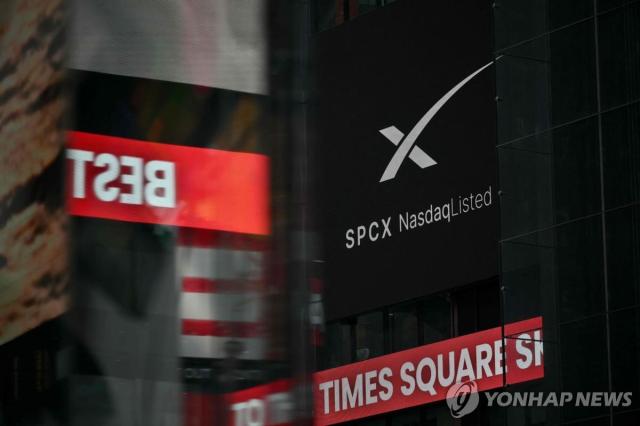
Just over 20 years ago, space development was largely the domain of national agencies like NASA and the Russian Federal Space Agency. Rocket launches were symbols of national prestige, military power, and scientific capability. However, the landscape has changed. The center of the space industry is shifting from government-led initiatives to private sector leadership, with SpaceX at the forefront.
Elon Musk has not merely launched rockets; he has transformed the economics of the space industry. By utilizing reusable rockets, he has reduced launch costs and connected space to the telecommunications sector through Starlink. While Mars exploration remains a distant goal, satellite internet and launch services are already established businesses. Space is no longer just an area of expense but a burgeoning industry with revenue and market value.
The critical factor is market evaluation. Investors view SpaceX not just as a rocket manufacturer but as a future infrastructure company. Just as oil and railroads were the key infrastructures of the industrial age, satellite communications, space data, and space logistics are expected to become the new infrastructure of the future.
In fact, the global space economy is rapidly expanding. New markets are emerging in satellite communications, Earth observation, precision location services, space internet, space logistics, space resource development, and lunar base construction. The space industry is no longer just a dream for scientists; it is a future industry connected to telecommunications, defense, finance, agriculture, disaster response, and energy security.
The space industry also serves as a comprehensive report card on a nation's technological capabilities. A single launch vehicle incorporates semiconductors, AI, communications, materials, batteries, robotics, precision manufacturing, and defense technologies. Engaging in the space industry signifies not just the production of rockets but the sophistication of a nation's industrial ecosystem.
Consequently, the United States, China, Europe, Japan, and India are all entering the space race. China is building an independent space station and accelerating its lunar and Mars exploration efforts. India is enhancing its presence with a low-cost space development model. The space competition has evolved from a Cold War rivalry between the U.S. and Russia into a multipolar contest for industrial supremacy.
South Korea cannot afford to remain a bystander. The successful launch of the Nuri rocket marked a significant starting point. However, securing launch vehicle technology is just the beginning. The real competition lies in creating a robust space industry ecosystem.
First, the space industry must be elevated to a national strategic industry. A research and development-focused approach alone is insufficient. The government needs to establish systems and markets that enable private companies to invest and grow, centered around a space agency.
Second, private space companies must be nurtured. The strength of the U.S. space industry comes not only from NASA but also from private firms like SpaceX and Blue Origin. South Korea should cultivate companies targeting the global market in launch vehicles, satellites, communications, components, and data analysis.
Third, AI and space must be integrated. The future space industry will not only involve rocket competition. It will be an era where AI analyzes and utilizes the vast data produced by satellites. The combination of AI and space will create new industries, impacting climate change monitoring, defense reconnaissance, maritime management, disaster response, and agricultural forecasting.
Fourth, defense and space should be viewed integratively. Modern warfare can be described as satellite warfare. Reconnaissance satellites, communication satellites, and navigation systems are core infrastructures for national security. The competitiveness of the space industry directly correlates with defense capabilities. This is why the U.S. views SpaceX as a strategic asset.
Fifth, talent must be developed. The space industry requires a long-term commitment. A talent development system involving universities, research institutions, and businesses is essential. Just as AI talent is crucial for national competitiveness, space talent will also be key to future national power.
SpaceX's IPO clearly demonstrates that space is no longer a distant future. It has become a reality where capital markets assign value, companies compete, and nations formulate strategies. For South Korea to leap from being a leader in AI and semiconductors to becoming a powerhouse in space, decisive action is needed now.
The foundation is technology. The principle is challenge. The common sense is that the first country to leap into emerging markets will be the victor. SpaceX's listing is not just a success for one company; it is a signal that the space industry has entered a new arena of national power. South Korea must now view space not just as a scientific domain but as a sector of industry, security, and future economy.
* This article has been translated by AI.
Copyright ⓒ Aju Press All rights reserved.