
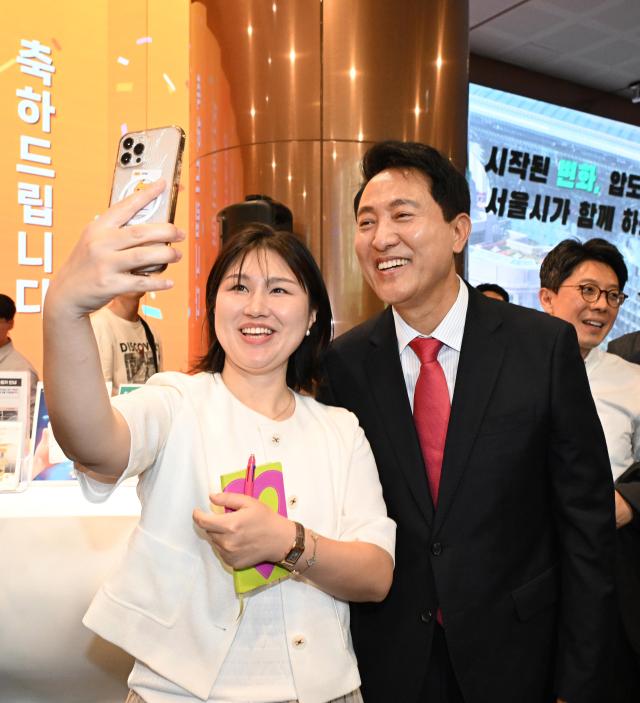
"I voted for the Democratic Party for the district chief, but for mayor, I chose Oh Se-hoon."
This statement from a man in his 40s, encountered near Sillim Station in Gwanak District, encapsulates the essence of the recent Seoul mayoral election.
He expressed skepticism about politics, saying, "I honestly don’t trust it much, but I feel that Seoul has become a bit more comfortable during my commute." This indicates that he judged the mayoral candidate by different criteria than his political leanings.
A woman in her 50s, a self-employed individual from Nowon District, echoed similar sentiments. "Even if I don’t like the party, I need to choose a capable mayor. I had hopes that the atmosphere in the neighborhood could change."
The key factor behind Oh Se-hoon’s victory in this election is surprisingly simple: 'cross-voting.' Voters who chose Democratic Party candidates for district chief also cast their ballots for Oh Se-hoon for mayor across various areas.
However, political analysts suggest a clearer interpretation. They argue that cross-voting was merely a result, with deeper causes at play. At the center of this was the individual, Oh Se-hoon. Thus, this election was less about the victory of the People Power Party and more about the triumph of Oh Se-hoon’s personal brand.
Seoul citizens evaluated the mayoral race using different criteria, prioritizing who could effectively manage the city and who had made tangible improvements in their lives over party loyalty or ideology.
Notably, Seoul’s election results diverged sharply from national trends. While candidates from the People Power Party faced defeats in Busan, Ulsan, Gangwon, and Chungnam, Seoul stood apart by choosing Oh Se-hoon over party affiliation.
A member of Oh Se-hoon’s campaign team stated, "It’s important to note that this election was about Oh Se-hoon as an individual, not just as a candidate from the People Power Party. This is a classic example of separating party support from mayoral evaluation."
The numbers from the election further illustrate this point. Cross-voting in northern and southwestern districts, including Jungnang, Seongbuk, Gangbuk, Nowon, and Eunpyeong, shifted the election dynamics. In these areas, Oh Se-hoon received 106,125 more votes than the People Power Party’s district chief candidates. Given that the final vote difference between Oh Se-hoon and his opponent Jeong Won-oh was about 60,000 votes, it is fair to say that cross-voting in these regions determined the election outcome.
In particular, Oh Se-hoon garnered 27,031 more votes than the People Power Party’s district chief candidate in Gwanak District, along with significant margins in Nowon (15,840 votes), Gangseo (15,259 votes), Seongbuk (14,811 votes), and Jungnang (14,256 votes).
This phenomenon cannot be simply explained as a shift among moderate voters. It suggests that some Democratic Party-leaning voters made an exception for Oh Se-hoon in the mayoral race. In other words, the sentiment in Seoul was that while the party may be Democratic, the mayor should be Oh Se-hoon.
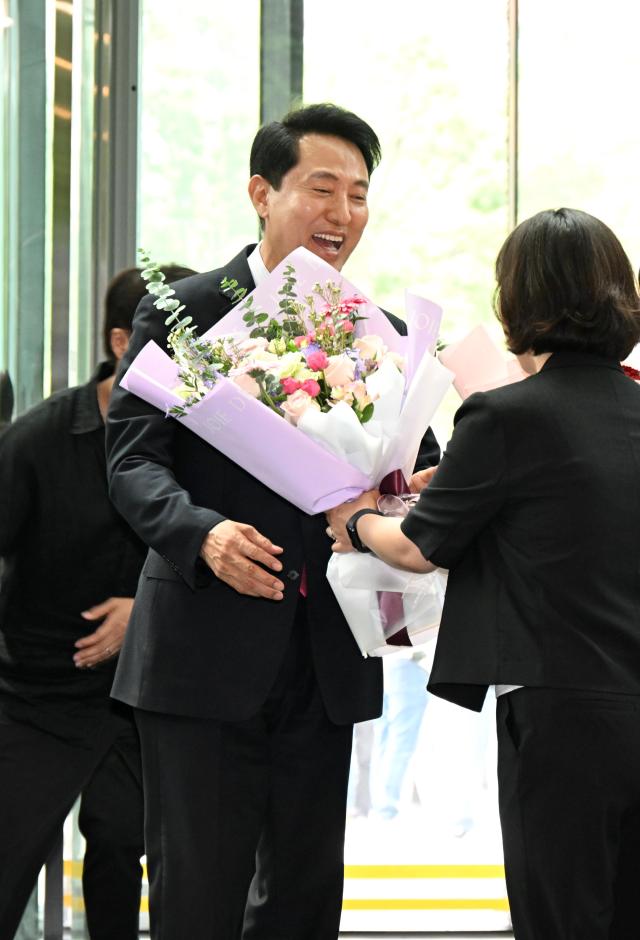
Why did this happen? Political insiders cite the 'Oh Se-hoon persona' as the primary reason. During this election, Oh Se-hoon did not confine himself to the People Power Party label. Instead, he adopted a strategy that maintained a certain distance from central politics.
Throughout the campaign, Oh Se-hoon publicly clashed with party leadership multiple times. He effectively led the message of 'severing ties' with former President Yoon Suk-yeol and did not shy away from criticizing the leadership. His intention was clear: to frame the mayoral election as an evaluation of city administration rather than an extension of central politics.
Political analysts noted, "Oh Se-hoon was a candidate from the People Power Party, but his supporters did not campaign in the typical People Power Party manner."
Indeed, while the narrative of 'judging the People Power Party' was strong nationwide, Oh Se-hoon managed to remain relatively free from that framework. His so-called 'decoupling strategy'—separating himself from government and ruling party risks—was seen as successful in expanding his appeal to moderate voters.
Another member of Oh Se-hoon’s campaign team remarked, "While the national sentiment was about judging parties, Seoul was an exception. Seoul citizens evaluated Oh Se-hoon from the perspective of selecting a city manager rather than a party candidate."
However, his policy effectiveness should not be overlooked. The key factor was not just the policies themselves but the trust in Oh Se-hoon as the one executing them. Lifestyle policies such as the Climate Companion Card, Seoul Run, Wrist Doctor 9988, Youth Employment Academy, Safe Help Me, and Seoul Outdoor Library clearly influenced voter sentiment. Yet, voters chose not just based on a list of policies but on their trust in 'Administrator Oh Se-hoon' who consistently implemented them.
Seoul City spokesperson Lee Min-kyung stated, "Seoul citizens are more sensitive to policies they use daily than to grand political slogans. Policies like the Climate Companion Card, which citizens repeatedly experience, significantly contributed to the trust in Mayor Oh."
Another notable feature of this election was its generational appeal. There was significant expansion among demographics traditionally seen as weak for conservative parties, particularly women in their 20s and 30s and individuals in their 40s and 50s. Notably, while these groups have historically leaned Democratic, they voted based on practical effectiveness rather than party affinity in this election. This change cannot be easily explained as a mere consolidation of conservative support.
Some in the political sphere interpret this Seoul mayoral election as a symbolic moment showcasing the limitations of fandom politics. They argue that strong support bases alone could not capture the sentiment of Seoul voters.
While the Democratic Party, centered around President Lee Jae-myung, relied on mobilizing strong support and political loyalty, Oh Se-hoon focused on lifestyle policies and urban administrative achievements to attract moderates.
A ruling party official commented, "This Seoul mayoral election can be seen as a victory for effectiveness over fandom. It marks a shift in importance from who can rally support to who has actually changed citizens' lives."
The changes in northern and southwestern Seoul are particularly symbolic. The 'Era of Northern Seoul' and 'Southwestern Seoul Revitalization' initiatives, which Oh Se-hoon promoted as key brands for his administration, have taken on greater significance than mere development promises. They instilled hope in residents who have long felt relative deprivation that 'this time, things can really change.'
Plans for a 16 trillion won investment in northern Seoul, along with transportation network restructuring and development projects in Chang-dong and Dobong, were proposed. Similarly, southwestern Seoul is set to see innovation in the G-Valley and the creation of an industrial belt linked to Magok, along with expanded rail networks.
Crucially, residents perceived these initiatives not as mere electoral promises but as feasible projects. Unlike past development pledges that remained at the declarative level, Oh Se-hoon has established a reputation as someone who can 'actually implement' these plans.
This Seoul mayoral election ultimately raises a fundamental question: Why did Seoul citizens choose Oh Se-hoon again? The answer may be simple: it was about the person, not the party.
The prevailing analysis suggests that Seoul sentiment is no longer swayed solely by grand ideologies and partisan slogans. Voters cast their ballots based on who has genuinely improved their lives and who has the capability to fulfill promises.
Seoul has always been a trendsetter. Shifts in moderate voter behavior, generational divides, and changes in the political landscape often begin in Seoul. In this regard, this election carries implications that extend beyond a mere local election. It suggests that practical politics, trust in individuals over party loyalty, and administrative effectiveness may become the new standards in South Korean politics.
* This article has been translated by AI.
Copyright ⓒ Aju Press All rights reserved.