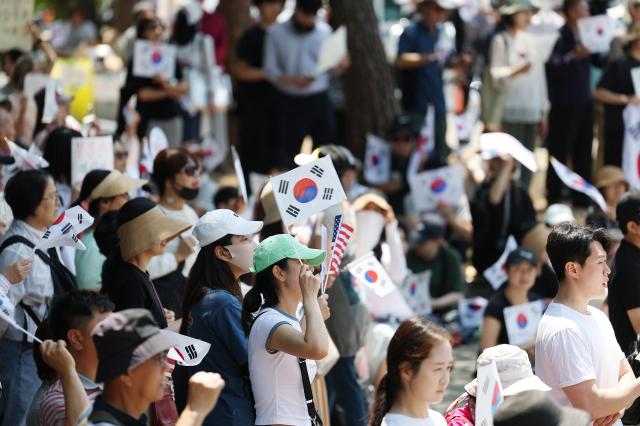
SEOUL, June 15 (AJP) - Unlike their clear-cut elders, young South Koreans are neither right nor left. They are simply pro-democracy, and intolerant when they believe it is under attack — whether through a martial law declaration or a shortage of ballot papers.
The generational divide has become increasingly visible in recent months as South Koreans in their 20s and 30s have emerged as a new political force, distancing themselves from the country's deeply entrenched ideological camps while mobilizing around what they see as threats to democratic norms.
The latest example came after widespread ballot shortages during the June 3 local elections, an administrative failure that triggered protests led largely by younger citizens and ignited a broader debate over trust in South Korea's electoral institutions.
Unlike older generations, whose political identities have long been shaped by Cold War-era divisions between conservatives and progressives, many younger Koreans have shown little loyalty to either camp. Instead, they have increasingly rallied around procedural fairness, transparency and institutional accountability.
For more than a week, demonstrators occupied areas around a vote-counting center in Seoul's Jamsil district, demanding accountability from election authorities and, in some cases, calling for a rerun of the election.
The protests drew significant participation from people in their 20s and 30s, many of whom organized through online communities rather than traditional civic organizations.
But as far-right groups attempted to frame the controversy as evidence of election fraud, many younger protesters deliberately sought to distance themselves from such narratives.
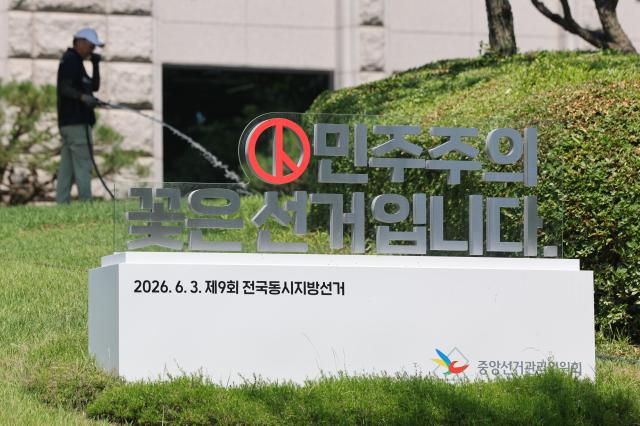
On June 11, users of the online platform DC Inside launched a new forum called the "Voting Rights Gallery," saying its purpose was to restore public confidence in elections and protect citizens' right to vote.
A similar distinction emerged offline.
At a rally near Hongik University Station on Saturday, organizers prohibited all flags except placards calling for a new election. National flags and political banners commonly associated with conservative and far-right protests were banned. About 40 people attended, according to organizers.
University students have also sought alternative avenues for civic engagement.
One example is "One Vote Record," a website compiling statements from student governments nationwide. According to the platform, 396 statements issued by 215 universities most frequently referenced democracy, voting rights, trust and fairness.
Ninety-six percent of the statements mentioned democracy, while 94 percent referred to political participation rights and 87 percent highlighted concerns about trust or fairness.
Experts say the movement reflects anxieties over institutional competence rather than belief in systemic election fraud.
"The first responsibility is to separate two issues that can too easily become confused: the administrative failure itself, and the much broader claim that the election was fraudulent," said Emily Flore St. Denny, a political scientist at the University of Copenhagen.
"A shortage of ballot papers is a serious failure because it affects the equal exercise of voting rights. It deserves a full and independent public investigation. But it should not automatically be allowed to become evidence for fraud unless there is evidence of fraud," she said.
Robert Gulotty, a political scientist at the University of Chicago, said political leaders have a responsibility both to improve election administration and to reject unfounded allegations.
"Parties and people have a responsibility to hold their own politicians to account when they try to argue that elections are fraudulent when they are not," Gulotty said.
Peter Chen, a senior lecturer at the University of Sydney, said governments must focus on building institutional resilience.
"Trust and confidence in elections should be a core performance measure," he said, adding that independent electoral bodies, stronger resources and anti-misinformation strategies are essential.
The issue has become politically sensitive for President Lee Jae Myung, whose administration has condemned disruptive protest tactics while acknowledging public frustration.
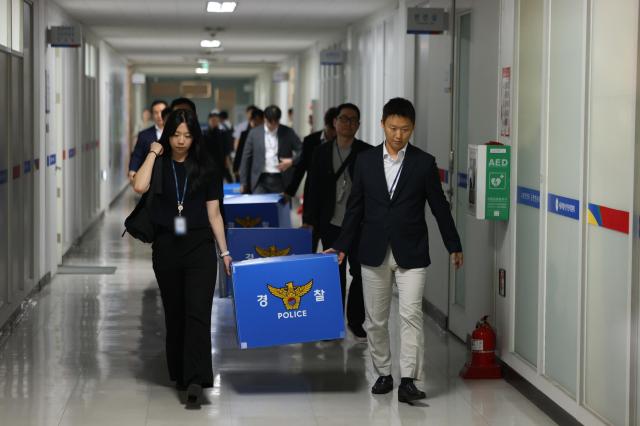
On Monday, Lee wrote on X that demonstrators should refrain from violating the rights of others while expressing their views. He cited reports that activities at sports facilities near the Jamsil election site had been disrupted and instructed police to investigate allegations of obstruction and restricted public access.
"Freedom of expression and public debate must be protected," Lee said previously. "But actions that cross the line cannot be tolerated."
Political analysts warn that authorities' handling of the controversy could have lasting consequences for public trust.
"Democracy depends not only on citizens accepting the winners they prefer, but also on accepting losses they dislike," St. Denny said.
"When trust in election administration collapses, electoral defeat is no longer interpreted as defeat but as a form of theft."
Yet some scholars argue that the intensity of public engagement itself signals democratic resilience rather than decay.
"South Koreans still believe in democracy enough to participate massively," said Timothy Koskie, a researcher on trust at the University of Sydney. "They believe in it enough to protest a lot. Consequently, it just isn't accurate to say that Korea's trust in democracy has collapsed."
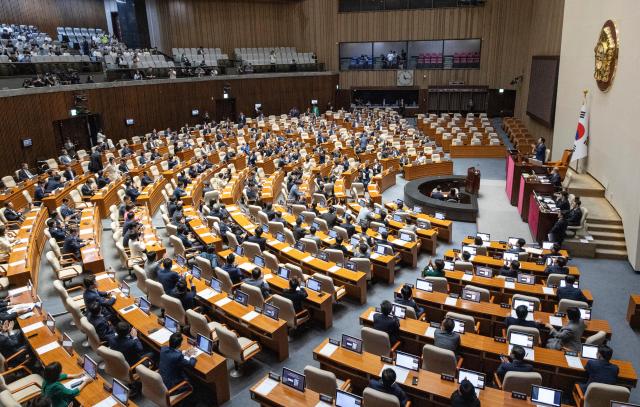
Lawmakers from both the ruling and opposition parties largely agreed that younger voters no longer fit conventional ideological labels.
"I think the young people are being very wise in drawing a line between themselves and those who claim election fraud," said Rep. Kwon Chil-seung.
"The younger generation has a balanced view of this situation."
Rep. Song Ki-heon said many politicians still struggle to understand younger voters.
"I feel that there are not many politicians who understand the sentiments of people in their 20s and 30s," he said.
For younger South Koreans, democracy itself — not party affiliation — has become the cause worth defending.
Copyright ⓒ Aju Press All rights reserved.