
The Trump administration is expected to release key details of the memorandum of understanding this week, offering the first glimpse into an agreement that links nuclear dismantlement, maritime security and a potentially massive reconstruction program for Iran.
Lee is scheduled to arrive in France on Tuesday and hold a series of bilateral meetings with G7 leaders and invited partner countries through Wednesday, with energy security, supply chains and economic resilience expected to dominate discussions.
For South Korea, one of the world's largest energy importers, the agreement could evolve into both an energy security issue and a long-term industrial opportunity.
U.S. Vice President JD Vance said Monday that Iran could gain access to a $300 billion reconstruction fund if it fully complies with obligations under the deal.
"That's the sort of thing they could have access to, funded by the Gulf Coast Coalition, so long as they honor their end of the obligation," Vance said in an interview with CBS News.
The fund would tie economic benefits directly to Iran's compliance with strict conditions, including surrendering its stockpile of enriched uranium, permitting routine inspections of nuclear facilities and permanently abandoning efforts to develop or acquire nuclear weapons.
"I think one of the things you're going to see is that the hard-liners in the Iranian system will overemphasize the benefits that Iran gets while underemphasizing all the things they have to concede," Vance said.
The White House said additional details of the memorandum would be released on Tuesday or Wednesday, while the full text is scheduled to be published on Friday.
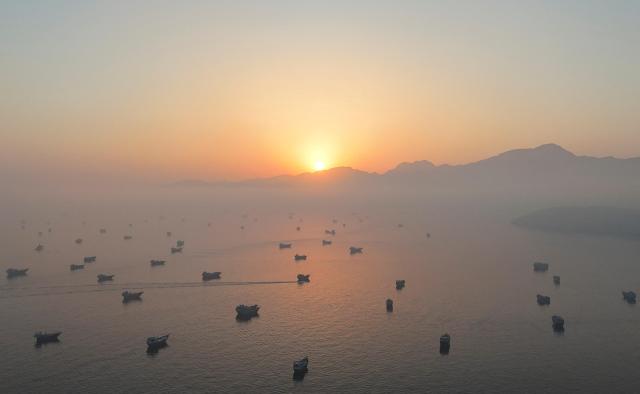
U.S. officials have described the arrangement as establishing permanent toll-free passage through the Strait of Hormuz, the strategic waterway that handles roughly one-fifth of global oil shipments.
Iranian state-linked media, however, said free passage would be guaranteed for only 60 days while technical negotiations continue, after which vessels could eventually face maritime service charges administered by Iran and Oman.
"Our expectation is that the strait is going to be opened in a toll-free way for the long term, and that's the sort of thing we're going to figure out in these technical negotiations," Vance said during a CNBC interview.
Questions also persist over reports that Iran could receive access to $24 billion in frozen assets.
A senior Iranian official told Reuters that the arrangement included cash transfers, regional cooperation and financial credit lines.
Vance dismissed the figure, saying the amount "just doesn't appear anywhere in any of the texts that we've talked about with the Iranians."
The reconstruction fund itself remains unofficial. Iranian media, including Mehr News Agency, have portrayed it as a war compensation mechanism that would require the United States and its allies to finance rebuilding efforts following extensive damage to infrastructure and industrial facilities.
Washington, meanwhile, has framed any economic support as performance-based sanctions relief rather than direct financial compensation.
South Korean companies stand to benefit from reconstruction ventures and and the lifting of sanctions. Before the reimposition of U.S. sanctions in 2018, South Korea was among Iran's largest Asian trading partners, importing substantial volumes of crude oil and participating in major infrastructure projects.
Companies including Hyundai Engineering, Hyundai E&C, DL E&C, GS E&C and other industrial groups secured multi-billion-dollar contracts spanning petrochemicals, refineries, shipbuilding and hospital construction.
Hyundai Engineering signed a 3.8 trillion won ($2.8 billion) petrochemical complex project in South Pars in 2017, while Daelim Industrial, now DL E&C, won a 2.2 trillion won refinery modernization contract in Isfahan before financing collapsed under sanctions pressure.
Industry officials said a reconstruction phase could generate demand for Korean expertise in refineries, liquefied natural gas facilities, ports, electricity grids, desalination plants, smart cities, hospitals and digital infrastructure.
Lee is expected to use the G7 meetings to strengthen cooperation with major economies on energy diversification, supply-chain resilience and future industrial partnerships.
But any re-entry would depend on the durability of the agreement, the pace of sanctions relief and whether Washington establishes a clear legal framework allowing foreign companies to operate without risking secondary sanctions.
Copyright ⓒ Aju Press All rights reserved.
