
Daegu was once a key player in South Korea's industrialization. The textile industry symbolized Korean exports, while the machinery and metal industries supported the local economy. However, as the industrial focus shifted to the capital region and manufacturing structures changed, Daegu has faced prolonged stagnation and youth outmigration.
In the recent local elections, elected Mayor Choo Kyung-ho openly acknowledged this reality. He emphasized that Daegu's economy remains centered on small and medium-sized enterprises in the materials, parts, and equipment sectors, arguing that a 'Daegu Economic Transformation' is necessary to change the industrial structure itself. His vision includes making Daegu a central city for AI, semiconductors, and robotics by attracting Samsung Electronics and SK Hynix semiconductor factories, Tesla's second Asian factory, and HD Hyundai Robotics' research and development campus.
The question is simple.
Can Daegu, now a latecomer in South Korea's industrialization, leap forward in the AI era?
From a Textile City to an AI Industrial City: Daegu's Last Gamble
Daegu has long discussed the need for change. The challenge has been finding the right direction. Even after the decline of the textile industry, a clear new growth engine has not emerged. Various attempts, such as creating advanced medical complexes and national industrial parks, and fostering the robotics industry, have been insufficient to alter the overwhelming trends of concentration in the capital region and youth outmigration.
Choo Kyung-ho offers a different approach at this juncture. Rather than merely improving parts of the industrial structure, he aims to completely reshape the economic landscape. The core of his 'Daegu Economic Transformation' is attracting mega-corporations. His plan includes bringing Samsung Electronics and SK Hynix semiconductor factories, Tesla's second Asian factory, and HD Hyundai Robotics' global research and development campus to Daegu, fundamentally changing the industrial structure.
Many question the feasibility of these promises. This is a valid concern. Samsung, SK Hynix, and Tesla are companies that any region would desire. However, the more important issue is the direction. Mayor Choo views Daegu's challenges not merely as an economic downturn but as structural industrial problems. He believes that as long as the local economy remains centered on small and medium-sized enterprises, young talent will leave, and companies will inevitably relocate to the capital region.
The AI era places even greater importance on economies of scale. Semiconductors, data centers, and AI research and development require substantial capital and talent. Ultimately, for Daegu to survive, it needs a significant transformation of its industrial structure, not just minor improvements. This is where Choo's gamble lies.
Semiconductors and Tesla: Daegu's Vision for New Growth Engines
The centerpiece of Choo's promises is semiconductors and future vehicles. He has stated his intention to transform Daegu from a materials and parts city into a hub for complete vehicles and semiconductor production. In particular, he aims to establish Daegu as a global semiconductor base by attracting production facilities from Samsung Electronics and SK Hynix.
Semiconductors are the rice of the AI era. Data centers, autonomous vehicles, and robots cannot exist without them. This is why countries worldwide designate semiconductors as a strategic national industry. Mayor Choo asserts that Daegu has abundant industrial water, stable power supply, and logistics infrastructure linked to the TK New Airport. He also highlights the talent supply capabilities through Kyungpook National University and DGIST as strengths.
Notably, the promise to attract Tesla's second Asian factory is particularly eye-catching. This is not merely about bringing in one car factory. Tesla is a company that possesses AI autonomous driving technology, battery technology, and robotics simultaneously. If Tesla establishes operations in Daegu, it is likely to foster growth not only in the automotive industry but also in AI, robotics, and battery industry ecosystems. Mayor Choo anticipates a production-induced effect of 50 trillion won and direct and indirect employment for 130,000 people.
However, the reality is challenging. Attracting global companies cannot be resolved solely by the will of local governments. What is crucial is that Daegu has begun to design its future with the industrial map of the AI era at its center for the first time. The goal of industrial policy is shifting from merely attracting companies to creating an AI industrial ecosystem.
Robots and AX: Daegu's Survival Strategy for Manufacturing
Among Choo's promises, the relatively less highlighted but most realistic strategy is AX (AI Transformation). He has announced plans to promote AI transformation in Daegu's traditional industries, including textiles, machinery and metal, automotive parts, and eyewear. To this end, he proposed establishing an AX committee directly under the mayor's office and creating a 2 trillion won AX promotion fund.
In fact, Daegu's greatest asset is its existing manufacturing industry. Unlike the capital region, it does not have many platform companies, nor does it have large manufacturing firms clustered like Ulsan. However, numerous small and medium-sized manufacturing companies support the local economy. The problem is that if these companies fail to adapt to the AI era, they risk losing their competitiveness.
AI is no longer just a technology for large corporations. It is difficult to find areas where AI is not utilized, from production line management and quality inspection to logistics optimization and predictive maintenance. Ultimately, the future of Daegu's manufacturing lies in upgrading existing industries with AI rather than creating new ones.
The promise to attract HD Hyundai Robotics' research and development campus aligns with this perspective. Robots are a key means of connecting AI to the real world. If semiconductors are the brain of AI, robots are its hands and feet. Developing the robotics industry in Daegu signifies preparation for the physical AI era, not just nurturing a mechanical industry.
AI Administration and Citizen Participation: Transforming City Operations
Mayor Choo has also announced plans to integrate AI into administration. He revealed intentions to operate a citizen feedback platform using AI during the election process. This system would analyze citizens' suggestions and incorporate them into policy-making.
This signifies a shift in the administrative paradigm beyond mere technology adoption. In the AI era, the relationship between citizens and administration will change. In the past, officials created policies that citizens accepted; in the future, citizens' opinions can be analyzed in real-time and reflected in policies.
Additionally, he proposed expanding AI utilization in disaster response and healthcare systems. The focus would shift from post-disaster recovery to proactive prediction, and efforts would be made to establish a super-regional disaster medical hub.
AI is not just an issue of industrial policy; it is a technology that changes the very way cities operate. For Daegu to evolve from an industrial city to an AI city, administrative innovation must also occur.
Daegu now stands at a crossroads.
Will it accept decline while reminiscing about past glories? Or will it seek a new path to growth through AI?
Mayor Choo has chosen the latter. He has made a bold bet to transform Daegu's economy through semiconductors, Tesla, robotics, and AX. There may be debates about the feasibility of these plans. However, one undeniable fact is that Daegu can no longer secure its future solely through existing industries.
In the AI era, competition is not between cities but between industrial ecosystems. If Daegu can create a new ecosystem centered on AI, semiconductors, and robotics, it can rise again as a pillar of South Korea's industrial map.
Ultimately, Choo Kyung-ho's four years will not just be about managing Daegu's economy but about redesigning it.
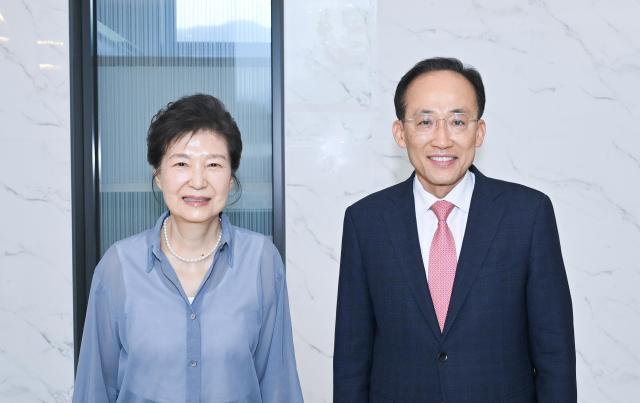
Choo Kyung-ho, Elected Mayor of Daegu:
A politician with a background in economic administration, he has served as the first vice minister of the Ministry of Economy and Finance, head of the Office for Government Policy Coordination, and Minister of Economy and Finance. He has also been a member of the National Assembly representing Daegu's Dalseong District. Recognized as an expert in economic policy, he campaigned with 'Daegu Economic Transformation' as his main slogan.
He has promised to attract Samsung Electronics and SK Hynix semiconductor factories, Tesla's second Asian factory, and HD Hyundai Robotics' research and development campus as key pledges, vowing to transform the industrial structure. He also announced plans for an AI-based citizen participation platform and the establishment of an AX promotion fund to drive AI transformation across industries and administration.
* This article has been translated by AI.
Copyright ⓒ Aju Press All rights reserved.