
GenosisAIHealthcare Co., a leading company in future medical AI, announced on June 9, 2026, that it received a patent registration decision from the Intellectual Property Office's Healthcare Data Review Team for a simulation method that predicts future health based on an integrated human digital twin of omics and biometrics data.
This technology combines an individual's genetic information with real-time biometric and environmental data into a single 'virtual body (human digital twin).' By inputting specific interventions (such as medication, dietary changes, exercise, sleep, and stress management), the AI engine predicts and simulates how these interventions will affect health several months later. The inventors include global experts in aging medicine, including Vice Chairman Park Sang-cheol, along with Kwon Soon-yong, Lee Hee-won, and Kang Si-cheol.
Core Technology: 'Living' a Healthy Future with Digital Twin
Existing digital twin technology primarily relies on static genetic information, limiting predictions and failing to adequately reflect the dynamic nature of the human body and external environment. Genosis's solution, presented in this patent, involves a three-step dynamic pipeline.
First, it constructs a personal omics map by integrating genomics, epigenomics, transcriptomics, proteomics, metabolomics, and microbiome data. Second, it collects real-time biometric and environmental data from wearables like smartwatches and continuous glucose monitors, as well as IoT sensors measuring air quality, UV exposure, and noise, to periodically update the digital twin. Third, it inputs hypothetical interventions (events) into the personalized predictive model to derive future biometric changes.
For example, if a user inputs '30 minutes of aerobic exercise daily,' the digital twin simulates a scenario showing that blood sugar will decrease by an average of 10 mg/dL and weight will drop by 2 kg after three months. Notably, this system reflects the interaction between genetics and environment (G×E) in real-time, dynamically adjusting predictions with each update of the digital twin, and incorporates an explainable AI (XAI) feature that biologically explains the AI's decision-making process, enhancing reliability.
Completing the Portfolio: A Triad of Prevention, Prediction, and Treatment
The strategic value of this patent extends beyond a standalone technology; it secures the 'brain' of Genosis's patent ecosystem. In December 2025, Genosis secured a patent for 'genome-based personalized supplement combinations' (Patent No. 1) in the prevention domain, and in February 2026, it obtained a patent for 'patient-specific cell therapy protocol generation' (Patent No. 2) in the treatment domain.
The newly registered digital twin simulation patent fills the gap between these two areas as a 'prediction' engine. Both nutritional prescriptions and cell therapy interventions require prior predictions about 'what results this intervention will yield for this individual,' positioning this patent to coordinate decision-making across the other two technologies. When combined, the three patents will create a seamless care loop that starts with genomic data, offering preventive prescriptions for healthy individuals, predicting risks, and providing precision treatment for patients.
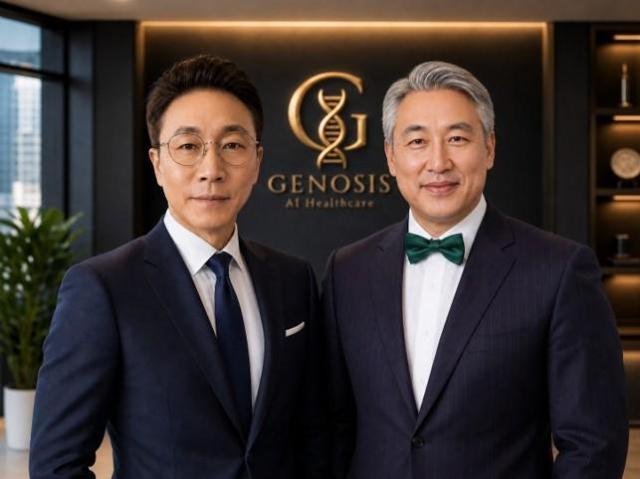
Vice Chairman Kang Si-cheol stated, “Traditional health management has remained at the level of advising 'what to do.' Our technology transforms that advice into a personalized future of 'what happens if you do it.' Living the future on a digital twin and designing the healthiest choices is the starting point for universal concierge medicine.”
Industrial Significance: Transitioning from Reactive to Predictive Healthcare
This technology shifts the focus of healthcare from a reactive model—treating symptoms after they appear—to a predictive and preventive model that anticipates and prevents symptoms before they arise. By converting abstract health advice into concrete decision-making bases on individual digital twins, healthcare providers can gain a multi-layered understanding of patients' complex conditions and make more reliable judgments.
The market environment is also favorable. Global market research firms project that the healthcare digital twin market will continue to grow at an annual rate of nearly 20%, driven by the spread of personalized medicine and the integration of AI and IoT. This patent targets the largest segment of the market—personalized medicine—positioning Genosis to secure a foothold in the critical area of 'individual-based' digital twins.
Patent Strategy: Building a Barrier with Over 100 Portfolios
Genosis aims to use this patent as a core patent in its divisional application strategy. The specification includes detailed technical elements such as 'update sensitivity,' 'transitional event' identification, multimodal, ensemble, reinforcement learning, and explainable AI, allowing for the derivation and expansion of multiple detailed claims from a single foundational invention.
Currently, 21 core patents are under examination, and by actively pursuing divisional applications for already registered patents, Genosis is expected to soon possess over 100 patents in its portfolio. This dense network of patents derived from a single foundational technology is anticipated to serve as a barrier against circumvention by global competitors.
Future Plans
Genosis plans to expand its clinical collaboration framework with major university hospitals and specialized medical institutions based on this patent, and to disseminate the technology through its MSO (Management Support Organization) network and directly operated hospitals. Additionally, it is preparing for overseas medical software licensing procedures, including with the U.S. FDA, and aims to gradually enter markets in Asia and the Pacific, followed by North America and Oceania, in collaboration with AWS's global distribution and infrastructure capabilities.
Vice Chairman Kang Si-cheol remarked, “We will continuously reflect the accumulated multi-omics data and clinical prognosis history into our learning data to enhance prediction accuracy. We aim to contribute to extending human health span through a single platform that encompasses prevention, prediction, and treatment.”
* This article has been translated by AI.
Copyright ⓒ Aju Press All rights reserved.