
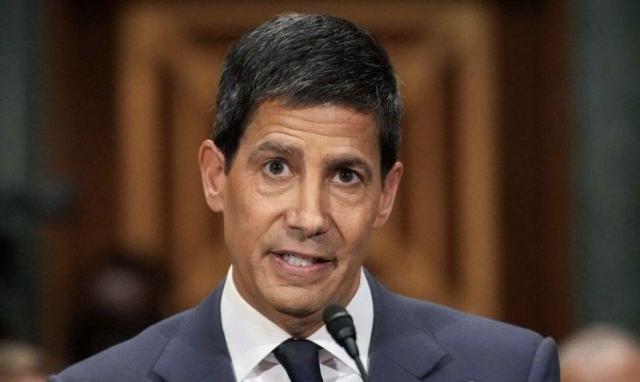
As the Federal Open Market Committee (FOMC) prepares for its first meeting under new Chair Kevin Wash, Wall Street is divided on interest rate forecasts. The recent agreement between the U.S. and Iran has led to a sharp decline in international oil prices, prompting speculation that the Fed may lower rates this year. Conversely, some analysts believe persistent inflationary pressures could lead to rate hikes.
On June 16, Andrew Hollenhorst, chief U.S. economist at Citigroup, stated on Bloomberg TV that the recent drop in oil prices gives Chair Wash more room for policy adjustments. Brent crude fell to $78.96 per barrel, dipping below $80 for the first time in nearly three months.
Hollenhorst noted, "This outcome provides Chair Wash with significantly more flexibility," adding that inflationary pressures are now shifting toward disinflationary trends. Citigroup maintains its forecast that the Fed will cut rates three times starting in September, assuming the U.S. labor market weakens in the coming months. However, he cautioned that if labor market deterioration is not confirmed, the timing of rate cuts could be pushed to next year.
In contrast, Citadel Securities presented a different outlook. Frank Platt, head of macro strategy at Citadel, indicated in a client report that inflation is spreading more broadly, increasing the likelihood of rate hikes as early as September. Platt acknowledged that while oil prices have fallen following the tentative U.S.-Iran agreement, the inflationary pressures accumulated during the conflict remain.
He suggested that a combination of accommodative financial conditions, supply chain disruptions, labor market recovery, and increased investment in artificial intelligence could sustain upward price pressures. Platt anticipates that Chair Wash may adopt a more hawkish stance than the market expects during his first policy meeting. Citadel has mentioned the possibility of rate increases in September, December, and March of the following year, a significantly more aggressive outlook compared to the market's one-third probability of a September hike.
However, the prevailing expectation for this FOMC meeting is to keep the benchmark interest rate unchanged. Market attention is focused less on the rate decision itself and more on how Chair Wash will assess inflation, employment, and falling oil prices in his inaugural press conference. A key point of interest will be whether the Fed reduces language suggesting an accommodative stance in its existing policy statement or lowers the likelihood of rate cuts this year.
* This article has been translated by AI.
Copyright ⓒ Aju Press All rights reserved.