
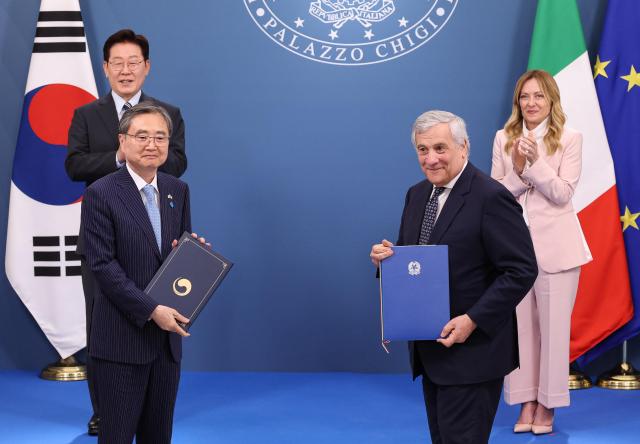
South Korean President Lee Jae-myung's 10-day European tour, coinciding with the G7 summit, is nearing its conclusion. During this trip, President Lee engaged with leaders from Belgium, the European Union, Italy, the Vatican, and France to discuss expanding cooperation across various sectors, including international security, artificial intelligence, semiconductors, aerospace, defense, and culture. This visit is seen as a significant achievement in strengthening ties with Europe, a region that shares values of democracy and the rule of law.
However, the implications of this trip extend beyond Europe. A key highlight is South Korea's decision to participate in Italy's Mattei Plan, a major initiative aimed at fostering development in Africa. Launched by Italian Prime Minister Giorgia Meloni, the Mattei Plan focuses on investments in energy, infrastructure, and other sectors to support Africa's economic growth while addressing Europe's challenges related to migration and resource security. Currently, 18 African nations are involved in the Mattei Plan, establishing it as a prominent European project in Africa.
Italy, strategically located across the Mediterranean from Africa, has a long-standing historical and economic relationship with the continent. For South Korea, which is geographically distant from Africa, collaboration with European nations could serve as a pathway for deeper engagement in African markets. Emilia Gatto, the Italian Ambassador to South Korea, emphasized in a January interview that cooperation between South Korea and Italy in Africa could yield significant synergies in critical minerals and supply chain collaboration.
Notably, President Lee's decision to join the Mattei Plan follows his meeting with 20 African ministers who visited South Korea for the Korea-Africa Foreign Ministers' Conference just before his trip. This sequence of events suggests a strategic approach to enhancing South Korea's presence in Africa.
South Korea has been somewhat late to the African engagement race. China has expanded its influence across the continent since the early 2000s through substantial loans and infrastructure investments. Recently, China has accelerated economic cooperation by expanding tariff exemptions for its 53 diplomatic partners in Africa. Japan has also built strong ties with Africa since the 1990s through the Tokyo International Conference on African Development (TICAD). In contrast, while South Korea is set to host its first Korea-Africa summit in 2024, domestic political upheavals have sidelined its diplomatic efforts in Africa.
Recent comments by Yeo Han-goo, head of the Trade Negotiation Bureau at the Ministry of Trade, Industry and Energy, illustrate this reality. He noted in an interview that South Korean products face tariffs of up to 30% in Morocco, while European companies benefit from tariff-free access due to free trade agreements, complicating South Korea's efforts to use Morocco as an export hub to Europe.
As a result, it is crucial for South Korea to strengthen its diplomatic efforts in Africa moving forward. Currently, no African nations have signed free trade agreements (FTAs) or comprehensive economic partnership agreements (CEPAs) with South Korea, highlighting the need to accelerate trade diplomacy and expand connections. North African countries like Morocco and Egypt, where CEPA negotiations are underway, should serve as initial footholds for building a broader trade network.
In an era marked by intensified U.S.-China strategic competition and the race for critical minerals becoming a national security issue, Africa stands as a strategic region rich in essential resources that influence global supply chains and future growth. Therefore, South Korea cannot afford to overlook Africa due to geographical distance. Strengthening relations with Europe can serve as a foundation for expanding diplomatic outreach to Africa, which is the most significant challenge left by this European tour.
* This article has been translated by AI.
Copyright ⓒ Aju Press All rights reserved.