
Investments by Samsung Electronics and SK Hynix in the Honam region's semiconductor sector are becoming a reality. Specific details are expected to be revealed at a meeting of major corporate leaders hosted by President Lee Jae-myung at the end of this month.
Both companies are focusing on establishing packaging plants rather than building large semiconductor fabs. This shift is likely to bring significant changes to the domestic semiconductor industry landscape, although concerns remain. Critics argue that artificially dispersing the semiconductor ecosystem, which is concentrated in the capital region, could reduce supply chain efficiency.
However, viewing this initiative solely through the lens of regional distribution is a narrow perspective. The semiconductor industry has become a critical power sector, with the demand for electricity skyrocketing due to the production of AI semiconductors and the expansion of data centers. The semiconductor cluster being developed around Yongin and Pyeongtaek is also grappling with power supply issues. In contrast, Honam boasts abundant renewable energy potential and relatively greater capacity for securing industrial land. From a corporate standpoint, there is ample reason to diversify future production bases.
There are also aspects to consider regarding balanced regional development. While the domestic semiconductor industry has become a 'golden goose' thanks to the AI supercycle, the trickle-down effects on the national economy have been limited. Industrial disparities between regions have actually widened.
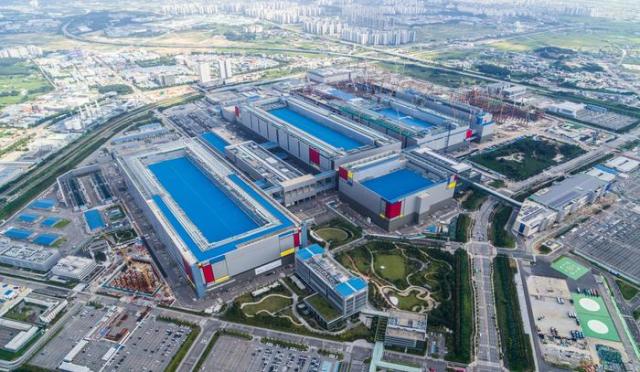
If investments by Samsung Electronics and SK Hynix materialize, Honam has the potential to grow into a new semiconductor belt centered on advanced packaging.
Of course, there are practical limitations. A semiconductor front-end factory requires an ecosystem of hundreds of material, component, and equipment companies. This investment should not be viewed as a substitute for the capital region cluster. While Yongin and Pyeongtaek are the heart of Korea's semiconductor industry, Honam could serve as a new growth axis.
The government's role is also crucial. It should not simply shift the burden onto companies under the guise of promoting balanced regional development. The government must swiftly support land acquisition and permitting processes to enable companies to make actual investment decisions, while also actively working on building power and water infrastructure. Reliable power supply is a key variable for maintaining semiconductor competitiveness in the AI era.
Enhancing logistics competitiveness is another challenge. The advanced packaging industry requires the rapid movement of materials, components, and equipment. Expanding logistics infrastructure that connects ports, airports, and road and rail networks is essential. Workforce development cannot be overlooked either. It is necessary to expand semiconductor-focused education programs centered around local universities and research institutions and establish a workforce training system linked to companies. If the structure that funnels talented individuals solely to the capital region is not changed, establishing a sustainable industrial ecosystem will be difficult.
Semiconductors are the biggest beneficiaries of the AI era. Samsung Electronics and SK Hynix are entering a new growth phase, driven by high-bandwidth memory (HBM) and other innovations. However, there is no guarantee that the successful formula that has worked for nearly half a century will remain effective. To maintain competitiveness, production capacity, talent, and the industrial ecosystem must be expanded nationwide.
Semiconductors are a national industry and should not be confined to a specific region. The construction of packaging plants by Samsung Electronics and SK Hynix in Honam goes beyond merely building new production facilities. It could serve as a turning point in reshaping the industrial map concentrated in the capital region and establishing a new milestone for balanced national growth. The government must also provide comprehensive support to ensure that companies' bold decisions become a reality. The future of Korea as a semiconductor powerhouse in the AI era must be built across a broader territory.
* This article has been translated by AI.
Copyright ⓒ Aju Press All rights reserved.