
The South Korean government is establishing a consumer price management system utilizing artificial intelligence (AI) to address increased price volatility caused by extreme weather and the prolonged conflict in the Middle East. The initiative aims to collect and analyze real-time price information for processed foods and consumer goods while also incorporating AI into the forecasting of agricultural and marine product supply and demand.
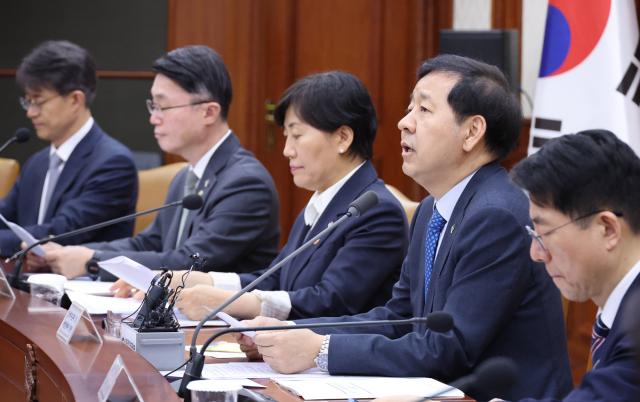
On June 18, the government convened a task force meeting on consumer prices, led by Deputy Prime Minister and Minister of Finance and Economy Koo Yun-cheol, to discuss the "Strengthening Measures for AI-Based Continuous Monitoring of Consumer Prices."
In light of the heightened price volatility due to extreme weather events such as heavy rainfall and heatwaves, as well as geopolitical instability from the Middle East conflict, the government has decided to implement a continuous monitoring system using AI technology. This system is designed to quickly identify factors affecting price fluctuations and enhance data-driven policy responses.
Initially, the government will monitor price information for 13 processed food items, including ramen and bread, and 8 consumer goods, such as laundry detergent and toilet paper. After reviewing data availability, the final list of items will be confirmed in July, with plans to automatically collect price information from online shopping malls using web scraping and standardize unstructured data through AI.
Price fluctuation risks will be categorized into four levels: stable, cautious, alert, and severe, reflecting the characteristics of each item. Current prices, percentage changes, and risk levels will be shared with relevant government departments. Research for this initiative is expected to continue until November.
The use of AI will also be expanded to the management of agricultural and livestock products. The government plans to broaden the application of AI-based production and price forecasting, currently used for six items, including apples, cabbage, and garlic, to ten key products identified through a competition for private sector experts.
AI will be introduced to the seafood sector for the first time, with plans to establish an AI-based fishery observation system by 2029. This system will analyze the causes and spread of sudden price and quantity fluctuations in real-time, supporting policy decisions such as stockpile releases or import adjustments.
To enhance consumer information, the government will develop a "Smart Shopping App" using generative AI to provide local prices and discount information for agricultural and livestock products, as well as optimal purchasing locations. This app is set to be piloted in five regions in the second half of the year. The existing price comparison service, which focused on livestock products, will also be expanded to include agricultural products.
A government official stated, "AI will play a role in explaining price trends and analyzing fluctuation factors. Since it extracts only necessary information from online price data, concerns about hallucinations—generating false or irrelevant content—are minimal."
* This article has been translated by AI.
Copyright ⓒ Aju Press All rights reserved.