
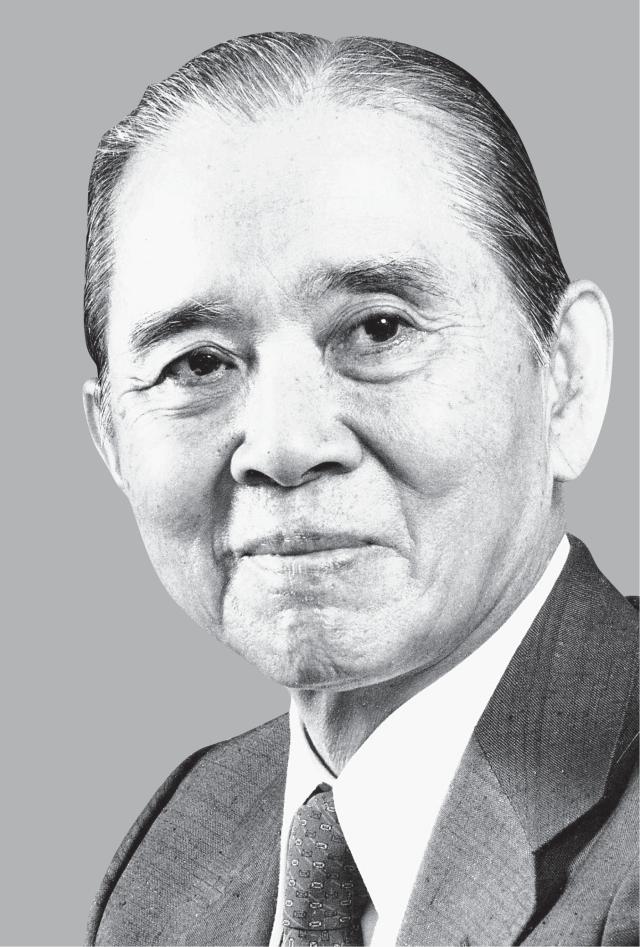
There are moments when a single intellect can change the fate of a nation. Though he did not wield a sword, his battles were fiercer than war; though he did not command a warship, he stood at the forefront of diplomacy to protect his country’s survival. Hong Jin-ki, known as Yumin (維民), was such a figure.
Born as a youth in colonial Korea, he received an education under the Japanese Empire. However, after liberation, he used that knowledge, legal principles, and logic to dismantle the last arguments of Japanese imperialism. It was an irony of history, yet also a moment of historical justice. Armed with the language of law and international law instilled by the Japanese, he deconstructed the logic of colonial rule left by Japan. He fought not with a sword but with words, not with cannons but with legal principles, and overwhelmed Japan not with anger but with reason. Beneath that reason lay the pain of a generation that had lost its country and a fervent patriotism to protect the new nation.
On June 12, 2026, a spring academic conference held by the Modern Japan Society and the Institute of Japanese Studies at Seoul National University brought Hong Jin-ki's life and his diplomacy with Japan back into historical focus. Marking the 60th anniversary of Korea-Japan diplomatic relations, this conference was not merely a commemorative event; it served as a historical reflection on how South Korea fought against Japan, survived, and upheld its national dignity.
We often remember the signing of the 1965 Korea-Japan Basic Treaty as the starting point of Korea-Japan relations. However, long before that, amidst the ruins of the Korean War, there were countless invisible battles fought to protect South Korea's national interests and sovereignty. At the center of these efforts was Yumin.
At that time, South Korea was one of the world's poorest countries. The land lay in ruins from war, foreign exchange was nonexistent, and diplomatic power was weak. In contrast, Japan was rapidly recovering its economic power and international influence with strong support from the United States. The Korea-Japan talks were an uneven playing field from the start. In this context, Japan introduced the concept of 'retroactive claims,' asserting rights over properties left by Japanese nationals in Korea. At that time, 85% of Korean properties were left behind by Japanese. If this logic had been accepted, South Korea might have lost a significant portion of its economic sovereignty from the moment of liberation.
However, Yumin did not back down. He viewed this not merely as a property dispute but as a matter of sovereignty for a liberated nation. If colonial rule was illegal, then the rights formed during that process could not be recognized as legitimate. This became what would later be known as the 'principle of liberation' in diplomatic and international law. This principle was not just a negotiation tactic; it was a declaration of national identity explaining why South Korea is an independent nation, why it must have economic sovereignty, and why it cannot recognize Japan's retroactive claims.
Particularly noteworthy today is Article 4(b) of the San Francisco Peace Treaty. Yumin played a crucial role in incorporating a clause recognizing the validity of the Japanese property disposals conducted by the U.S. military during negotiations with the American side. Had this clause not been included, South Korea would likely have been embroiled in endless international disputes over Japanese property rights, not only during the 1965 Korea-Japan Agreement process but even today. He was not merely a representative in the Korea-Japan talks; he was a giant laying the groundwork for South Korea's economic sovereignty. The properties that became the foundation of South Korea's industrialization could also trace their legal legitimacy back to this.
During the conference, Professor Lee Won-duk of Kookmin University praised this point. Japan claimed protection of Japanese private property based on Article 46 of the Hague Land Warfare Regulations, but Yumin directly refuted this based on the principle of restitution. Professor Park Kyung-min of Kookmin University evaluated that Yumin reframed the issue of property rights as a matter of economic sovereignty for a liberated nation. Professor Park Tae-kyun of Seoul National University explained that Yumin's perspective on international politics and diplomacy was far ahead of Korean society at the time.
Lee Ha-kyung, former chief editor and vice president of the JoongAng Ilbo, highlighted another of Yumin's achievements: the '14 Principles for Korean Unification.' This aspect deserves renewed evaluation today. In 1954, the scars of the Korean War had not yet healed. The prevailing sentiment was overwhelmingly in favor of unification through northern advancement. However, Yumin systematically organized principles for peaceful unification that the international community could accept.
What makes Yumin's unification theory remarkable is that it emerged during the height of the Cold War. Less than a year after the guns of the Korean War fell silent, he proposed principles for peaceful unification that could be accepted by the international community, transcending the logic of victory and defeat. This was not merely a unification plan; it was a national strategy aimed at moving from an era of war to an era of peace. The unification plan of the Democratic Party, founded in 1955, also adopted many of Yumin's principles for peaceful unification. His plan became the first national unification plan approved across political factions and was presented at the 1954 Geneva Conference as a unification proposal from the free world. The issues later raised by the Northern Policy and Sunshine Policy can also be traced back to his insights. He was not only a diplomat and lawyer but also a strategist who foresaw the future.
Born as a youth in colonial Korea, he received an education under the Japanese Empire. However, after liberation, he used that knowledge, legal principles, and logic to dismantle the last arguments of Japanese imperialism. It was an irony of history, yet also a moment of historical justice. Armed with the language of law and international law instilled by the Japanese, he deconstructed the logic of colonial rule left by Japan. He fought not with a sword but with words, not with cannons but with legal principles, and overwhelmed Japan not with anger but with reason. Beneath that reason lay the pain of a generation that had lost its country and a fervent patriotism to protect the new nation.
On June 12, 2026, a spring academic conference held by the Modern Japan Society and the Institute of Japanese Studies at Seoul National University brought Hong Jin-ki's life and his diplomacy with Japan back into historical focus. Marking the 60th anniversary of Korea-Japan diplomatic relations, this conference was not merely a commemorative event; it served as a historical reflection on how South Korea fought against Japan, survived, and upheld its national dignity.
We often remember the signing of the 1965 Korea-Japan Basic Treaty as the starting point of Korea-Japan relations. However, long before that, amidst the ruins of the Korean War, there were countless invisible battles fought to protect South Korea's national interests and sovereignty. At the center of these efforts was Yumin.
At that time, South Korea was one of the world's poorest countries. The land lay in ruins from war, foreign exchange was nonexistent, and diplomatic power was weak. In contrast, Japan was rapidly recovering its economic power and international influence with strong support from the United States. The Korea-Japan talks were an uneven playing field from the start. In this context, Japan introduced the concept of 'retroactive claims,' asserting rights over properties left by Japanese nationals in Korea. At that time, 85% of Korean properties were left behind by Japanese. If this logic had been accepted, South Korea might have lost a significant portion of its economic sovereignty from the moment of liberation.
However, Yumin did not back down. He viewed this not merely as a property dispute but as a matter of sovereignty for a liberated nation. If colonial rule was illegal, then the rights formed during that process could not be recognized as legitimate. This became what would later be known as the 'principle of liberation' in diplomatic and international law. This principle was not just a negotiation tactic; it was a declaration of national identity explaining why South Korea is an independent nation, why it must have economic sovereignty, and why it cannot recognize Japan's retroactive claims.
Particularly noteworthy today is Article 4(b) of the San Francisco Peace Treaty. Yumin played a crucial role in incorporating a clause recognizing the validity of the Japanese property disposals conducted by the U.S. military during negotiations with the American side. Had this clause not been included, South Korea would likely have been embroiled in endless international disputes over Japanese property rights, not only during the 1965 Korea-Japan Agreement process but even today. He was not merely a representative in the Korea-Japan talks; he was a giant laying the groundwork for South Korea's economic sovereignty. The properties that became the foundation of South Korea's industrialization could also trace their legal legitimacy back to this.
During the conference, Professor Lee Won-duk of Kookmin University praised this point. Japan claimed protection of Japanese private property based on Article 46 of the Hague Land Warfare Regulations, but Yumin directly refuted this based on the principle of restitution. Professor Park Kyung-min of Kookmin University evaluated that Yumin reframed the issue of property rights as a matter of economic sovereignty for a liberated nation. Professor Park Tae-kyun of Seoul National University explained that Yumin's perspective on international politics and diplomacy was far ahead of Korean society at the time.
Lee Ha-kyung, former chief editor and vice president of the JoongAng Ilbo, highlighted another of Yumin's achievements: the '14 Principles for Korean Unification.' This aspect deserves renewed evaluation today. In 1954, the scars of the Korean War had not yet healed. The prevailing sentiment was overwhelmingly in favor of unification through northern advancement. However, Yumin systematically organized principles for peaceful unification that the international community could accept.
What makes Yumin's unification theory remarkable is that it emerged during the height of the Cold War. Less than a year after the guns of the Korean War fell silent, he proposed principles for peaceful unification that could be accepted by the international community, transcending the logic of victory and defeat. This was not merely a unification plan; it was a national strategy aimed at moving from an era of war to an era of peace. The unification plan of the Democratic Party, founded in 1955, also adopted many of Yumin's principles for peaceful unification. His plan became the first national unification plan approved across political factions and was presented at the 1954 Geneva Conference as a unification proposal from the free world. The issues later raised by the Northern Policy and Sunshine Policy can also be traced back to his insights. He was not only a diplomat and lawyer but also a strategist who foresaw the future.
A pivotal moment that solidified Yumin's name in diplomatic history occurred during the 1953 Kubota Incident. Japanese representative Kanichiro Kubota claimed that Japan's colonial rule had greatly benefited Koreans, even suggesting that if Japan had not ruled Korea, China or Russia would have invaded, leading to even worse conditions. This was known as the theory of colonial benevolence.
However, Yumin immediately countered this argument. He pointed out that Koreans had the capability to build a modern state on their own and that Japan's invasion was not civilizing but a forced occupation. He then posed a decisive question:
"Then why did the Cairo Declaration state that Koreans were in a state of slavery?"
That single question dismantled the entire Japanese logic. The talks were subsequently suspended, and Japan ultimately withdrew Kubota's statement and its claims for retroactive rights. At that time, Yumin was only thirty-six years old.
This moment was evaluated by Professor Wada Haruki of the University of Tokyo during the conference on June 12, stating, "Yumin's voice was the first spark that changed the consciousness of the Japanese people."
This is a profound assessment. Diplomacy is not merely about amending documents; it is about changing perceptions. Yumin fought not only against Japanese policies but also against the very historical consciousness of the Japanese people. That is what makes his diplomacy great.
Yumin's life is a microcosm of modern Korean history. Born in 1917 in colonial Korea, he graduated from Kyungsung High School and the Law Department of Kyungsung Imperial University. He passed the high civil service examination during the Japanese occupation and served as a judge at the Jeonju District Court. However, after liberation, he devoted all his efforts to building the new Republic of Korea. He served as the Director of the Investigation Bureau and the Legal Bureau of the Ministry of Justice, Minister of Justice, and Minister of the Interior. He later founded the first private broadcasting station in Korea, Dongyang Broadcasting (TBC), and made significant contributions to the development of the media.
A key figure in Yumin's story is Dr. Yoo Jin-oh, a leading authority in Korean law and former president of Korea University. Dr. Yoo highly regarded Yumin not merely for his intelligence but because he was a rare individual who implemented legal theory in the realities of state governance and diplomacy. To Dr. Yoo, Yumin was not just a good student; he was an elite who studied for the survival of the nation, a true 'genius for the country.'
Today, South Korea has become one of the world's top ten economies. However, the international order is once again becoming turbulent. The challenges of U.S.-China rivalry, supply chain wars, semiconductor competition, energy security, and North Korea's nuclear issues are pressing. In such times, Yumin's message shines even brighter.
Chairman Hong Seok-jo reflected on Yumin's insight, stating, "The smaller the country, the more it needs people who understand international law."
This statement is essentially Yumin's last will. Although South Korea has become the world's tenth-largest economy, it remains a nation caught between great powers geopolitically. Yumin dedicated his life to training experts in international law and educating future generations for this reason. He understood better than anyone that the law is stronger than a sword and that international norms endure longer than military power. Having studied on the Prince Yi Scholarship, he repaid that grace through scholarship programs and viewed nurturing future scholars in international law as his final service to the nation. This was the true essence of noble obligation.
It has been nearly 40 years since Yumin passed away. However, the name inscribed on the Yumin Hall at Seoul National University's Law School is not merely a memorial; it serves as a historical landmark reminding us of where the nation started and whose strength brought it this far. When the country was poor, patriotism was needed; when it was weak, courage was required. But now that the nation has grown, wisdom is essential. The life of Yumin Hong Jin-ki exemplifies what that wisdom entails: fighting with law when strength is lacking, winning with logic when national power is weak, and transforming historical wounds into strategies for a brighter future. That is Yumin's greatest legacy.
Ultimately, the life of Yumin Hong Jin-ki can be summarized in one sentence:
He was a great lawyer who completed Japan's defeat with Korea's liberation.
The defeat was Japan's event. However, liberation was Korea's event. Yumin was the one who bridged the vast gap between the two. Someone had to read the treaty, find the loopholes in international law, refute Japan's fallacies, and explain South Korea's rights to the world. The genius who accomplished this was none other than Yumin Hong Jin-ki.
Thus, today we revisit Yumin. We read his principle of liberation, the courage of a young diplomat who countered Kubota's remarks, and the long-term vision of a strategist who designed peaceful unification. We ask ourselves: Are we prepared to that extent today? Do we love our country as much today? What will we leave for future generations?
What is truth? It is to reveal that colonial rule was not benevolence but plunder. What is justice? It is to prevent the absurd logic that seeks to disguise the consequences of plunder as legitimate property. What is freedom? It is for a liberated nation to determine its own land, property, and future.
Yumin Hong Jin-ki's principle of liberation was directed toward these three: truth, justice, and freedom. These were the roots of his legal principles, the strength of his diplomacy, and the fundamentals that South Korea must hold onto today.
Yumin may have departed, but his questions remain. How will a small nation survive between great powers? How will a nation with a history of being treated as slaves rise above resentment to establish dignified principles? For whom should those who have learned the law use their knowledge? What should the media remember? What should future generations carry on?
If we cannot answer these questions, we have not properly honored Yumin. To honor Yumin is not merely to elevate his name but to revive his spirit as today's national strategy.
◆ Who is Yumin? ◆
Yumin (維民) Hong Jin-ki (1917–1986) was a lawyer, diplomat, administrator, and journalist during the early years of the Republic of Korea. Born in colonial Korea, he graduated from Kyungsung High School and the Law Department of Kyungsung Imperial University. He passed the high civil service examination during the Japanese occupation and served as a judge at the Jeonju District Court. However, his true historical role began after liberation.
He stood at the forefront of legal reform and state governance in the newly established Republic of Korea. As the Director of the Legal Bureau of the Ministry of Justice, he laid the foundation for national legislation, safeguarded South Korea's national interests and sovereignty as a representative in the Korea-Japan talks, and dedicated himself to stabilizing the national system as Minister of Justice and Minister of the Interior. Notably, during the Korea-Japan talks in the 1950s, he countered Japan's claims for retroactive rights and the justification of colonial rule with international law and logic, opening a new chapter in South Korea's diplomatic history.
His greatest achievement is known as the 'principle of liberation.' He reinterpreted Japan's defeat not merely as the end of a war but as Korea's liberation and restoration of sovereignty. Through this, he neutralized Japan's retroactive claims and laid the legal groundwork for South Korea's economic sovereignty. He also contributed to the inclusion of Article 4(b) of the San Francisco Peace Treaty, affirming the issue of property rights as a right of South Korea based on the principle of liberation.
Yumin was not just a lawyer and diplomat; he was also a pioneer of peaceful unification. In 1954, he organized the '14 Principles for Korean Unification,' proposing a peaceful unification plan that the international community could accept. This foresight was decades ahead of later policies like the Northern Policy and Sunshine Policy. He also made significant contributions to media development through the founding of the JoongAng Ilbo and dedicated his life to nurturing future generations and scholarship.
In short, he was a figure who transcended legal knowledge into a survival strategy for the nation. He was the one who completed Japan's defeat with Korea's liberation and demonstrated that the strongest weapon for a weak nation in confronting a strong nation is law, principles, and international norms.
◆ The Message Yumin Hong Jin-ki Left for Future Generations and Us ◆
The life of Yumin Hong Jin-ki poses important questions for us. What does it mean to love one’s country? Is patriotism merely a slogan, or is it a practice of dedicating one’s abilities and knowledge to the nation?
Yumin showed the answer through his life. He loved his country but was not consumed by emotion. He was angry about Japan's colonial rule but transformed that anger into the logic of international law. He understood the realities of a weak nation better than anyone but never succumbed to despair. Instead, he believed that because they were weak, they needed to study more, prepare more, and uphold principles more.
His most famous saying can be summarized as, "The smaller the country, the more it needs people who understand international law." This is not merely about the importance of international law. It reflects the philosophy of national survival: while great powers can solve problems with strength, small nations must protect themselves through law, principles, and diplomacy. Considering that South Korea, despite its economic power, is still caught in the U.S.-China competition and geopolitical conflicts, this message resonates more urgently over time.
Yumin also emphasized the importance of nurturing future generations. Having studied on the Prince Yi Scholarship, he later repaid that grace through scholarship programs and academic support. He believed that nurturing the next generation of talent was tantamount to protecting the nation. He understood better than anyone that law is stronger than a sword and that international norms endure longer than military power.
Ultimately, the message Yumin left for future generations is clear: prioritize skill over emotion, preparation over slogans, and intellect over agitation. He urged that in times of national difficulty, one must study more, establish greater principles, and view the world with broader perspectives. And above all, never abandon South Korea's dignity and freedom. This is the most valuable legacy that Yumin Hong Jin-ki left for future generations and us.
◆ Authors of 'Yumin Hong Jin-ki and Korea-Japan Diplomacy' ◆
Lee Ha-kyung, a senior reporter at the JoongAng Ilbo, has worked for over 40 years at the newspaper and led a rational, open, and integrative tone during his six years as chief editor. He served as president of the Korean Newspaper and Broadcasting Editors Association and is a respected journalist representing the Korean media. In 2002, he made a significant mark in Korean journalism with an article that quantitatively analyzed the ideological tendencies of politicians and citizens, earning the Korean Journalist Award. In this book, he provides a multidimensional perspective on the life and thoughts of Yumin Hong Jin-ki within the context of modern Korean history.
Lee Won-duk, a professor at Kookmin University, is regarded as the leading expert on Korea-Japan relations. He has established authority in the study of the Korea-Japan talks, claims negotiations, and historical issues, empirically restoring the significance of the claims for reparations and the retroactive claims debate, as well as the San Francisco Peace Treaty. He played a leading role in verifying the 35,354-page Korea-Japan talks documents during the Roh Moo-hyun administration from 2005, contributing to establishing the Korean government's official position that Japan's inhumane illegal acts still bear legal responsibility and providing a basis for domestic compensation legislation for victims.
Park Tae-kyun, a professor at Seoul National University, is a prominent scholar in modern Korean history, Cold War history, and Korea-U.S. relations. He interprets Yumin's activities within the global context of the Cold War and nation-building, highlighting his role as a diplomat and strategist.
Park Kyung-min, a professor at Kookmin University, has researched the re-education of Japanese nationals during the Japanese occupation and the normalization of Korea-Japan diplomatic relations. He has newly interpreted Yumin Hong Jin-ki's legal achievements and the significance of safeguarding economic sovereignty, focusing on the issue of property rights and the principle of liberation.
The collaborative work of these four individuals is not merely a biography. It is an intellectual endeavor to restore the starting point of South Korea's diplomatic history and the process of forming national identity, demonstrating how South Korea has maintained its sovereignty and dignity through the figure of Yumin Hong Jin-ki.
However, Yumin immediately countered this argument. He pointed out that Koreans had the capability to build a modern state on their own and that Japan's invasion was not civilizing but a forced occupation. He then posed a decisive question:
"Then why did the Cairo Declaration state that Koreans were in a state of slavery?"
That single question dismantled the entire Japanese logic. The talks were subsequently suspended, and Japan ultimately withdrew Kubota's statement and its claims for retroactive rights. At that time, Yumin was only thirty-six years old.
This moment was evaluated by Professor Wada Haruki of the University of Tokyo during the conference on June 12, stating, "Yumin's voice was the first spark that changed the consciousness of the Japanese people."
This is a profound assessment. Diplomacy is not merely about amending documents; it is about changing perceptions. Yumin fought not only against Japanese policies but also against the very historical consciousness of the Japanese people. That is what makes his diplomacy great.
Yumin's life is a microcosm of modern Korean history. Born in 1917 in colonial Korea, he graduated from Kyungsung High School and the Law Department of Kyungsung Imperial University. He passed the high civil service examination during the Japanese occupation and served as a judge at the Jeonju District Court. However, after liberation, he devoted all his efforts to building the new Republic of Korea. He served as the Director of the Investigation Bureau and the Legal Bureau of the Ministry of Justice, Minister of Justice, and Minister of the Interior. He later founded the first private broadcasting station in Korea, Dongyang Broadcasting (TBC), and made significant contributions to the development of the media.
A key figure in Yumin's story is Dr. Yoo Jin-oh, a leading authority in Korean law and former president of Korea University. Dr. Yoo highly regarded Yumin not merely for his intelligence but because he was a rare individual who implemented legal theory in the realities of state governance and diplomacy. To Dr. Yoo, Yumin was not just a good student; he was an elite who studied for the survival of the nation, a true 'genius for the country.'
Today, South Korea has become one of the world's top ten economies. However, the international order is once again becoming turbulent. The challenges of U.S.-China rivalry, supply chain wars, semiconductor competition, energy security, and North Korea's nuclear issues are pressing. In such times, Yumin's message shines even brighter.
Chairman Hong Seok-jo reflected on Yumin's insight, stating, "The smaller the country, the more it needs people who understand international law."
This statement is essentially Yumin's last will. Although South Korea has become the world's tenth-largest economy, it remains a nation caught between great powers geopolitically. Yumin dedicated his life to training experts in international law and educating future generations for this reason. He understood better than anyone that the law is stronger than a sword and that international norms endure longer than military power. Having studied on the Prince Yi Scholarship, he repaid that grace through scholarship programs and viewed nurturing future scholars in international law as his final service to the nation. This was the true essence of noble obligation.
It has been nearly 40 years since Yumin passed away. However, the name inscribed on the Yumin Hall at Seoul National University's Law School is not merely a memorial; it serves as a historical landmark reminding us of where the nation started and whose strength brought it this far. When the country was poor, patriotism was needed; when it was weak, courage was required. But now that the nation has grown, wisdom is essential. The life of Yumin Hong Jin-ki exemplifies what that wisdom entails: fighting with law when strength is lacking, winning with logic when national power is weak, and transforming historical wounds into strategies for a brighter future. That is Yumin's greatest legacy.
Ultimately, the life of Yumin Hong Jin-ki can be summarized in one sentence:
He was a great lawyer who completed Japan's defeat with Korea's liberation.
The defeat was Japan's event. However, liberation was Korea's event. Yumin was the one who bridged the vast gap between the two. Someone had to read the treaty, find the loopholes in international law, refute Japan's fallacies, and explain South Korea's rights to the world. The genius who accomplished this was none other than Yumin Hong Jin-ki.
Thus, today we revisit Yumin. We read his principle of liberation, the courage of a young diplomat who countered Kubota's remarks, and the long-term vision of a strategist who designed peaceful unification. We ask ourselves: Are we prepared to that extent today? Do we love our country as much today? What will we leave for future generations?
What is truth? It is to reveal that colonial rule was not benevolence but plunder. What is justice? It is to prevent the absurd logic that seeks to disguise the consequences of plunder as legitimate property. What is freedom? It is for a liberated nation to determine its own land, property, and future.
Yumin Hong Jin-ki's principle of liberation was directed toward these three: truth, justice, and freedom. These were the roots of his legal principles, the strength of his diplomacy, and the fundamentals that South Korea must hold onto today.
Yumin may have departed, but his questions remain. How will a small nation survive between great powers? How will a nation with a history of being treated as slaves rise above resentment to establish dignified principles? For whom should those who have learned the law use their knowledge? What should the media remember? What should future generations carry on?
If we cannot answer these questions, we have not properly honored Yumin. To honor Yumin is not merely to elevate his name but to revive his spirit as today's national strategy.
◆ Who is Yumin? ◆
Yumin (維民) Hong Jin-ki (1917–1986) was a lawyer, diplomat, administrator, and journalist during the early years of the Republic of Korea. Born in colonial Korea, he graduated from Kyungsung High School and the Law Department of Kyungsung Imperial University. He passed the high civil service examination during the Japanese occupation and served as a judge at the Jeonju District Court. However, his true historical role began after liberation.
He stood at the forefront of legal reform and state governance in the newly established Republic of Korea. As the Director of the Legal Bureau of the Ministry of Justice, he laid the foundation for national legislation, safeguarded South Korea's national interests and sovereignty as a representative in the Korea-Japan talks, and dedicated himself to stabilizing the national system as Minister of Justice and Minister of the Interior. Notably, during the Korea-Japan talks in the 1950s, he countered Japan's claims for retroactive rights and the justification of colonial rule with international law and logic, opening a new chapter in South Korea's diplomatic history.
His greatest achievement is known as the 'principle of liberation.' He reinterpreted Japan's defeat not merely as the end of a war but as Korea's liberation and restoration of sovereignty. Through this, he neutralized Japan's retroactive claims and laid the legal groundwork for South Korea's economic sovereignty. He also contributed to the inclusion of Article 4(b) of the San Francisco Peace Treaty, affirming the issue of property rights as a right of South Korea based on the principle of liberation.
Yumin was not just a lawyer and diplomat; he was also a pioneer of peaceful unification. In 1954, he organized the '14 Principles for Korean Unification,' proposing a peaceful unification plan that the international community could accept. This foresight was decades ahead of later policies like the Northern Policy and Sunshine Policy. He also made significant contributions to media development through the founding of the JoongAng Ilbo and dedicated his life to nurturing future generations and scholarship.
In short, he was a figure who transcended legal knowledge into a survival strategy for the nation. He was the one who completed Japan's defeat with Korea's liberation and demonstrated that the strongest weapon for a weak nation in confronting a strong nation is law, principles, and international norms.
◆ The Message Yumin Hong Jin-ki Left for Future Generations and Us ◆
The life of Yumin Hong Jin-ki poses important questions for us. What does it mean to love one’s country? Is patriotism merely a slogan, or is it a practice of dedicating one’s abilities and knowledge to the nation?
Yumin showed the answer through his life. He loved his country but was not consumed by emotion. He was angry about Japan's colonial rule but transformed that anger into the logic of international law. He understood the realities of a weak nation better than anyone but never succumbed to despair. Instead, he believed that because they were weak, they needed to study more, prepare more, and uphold principles more.
His most famous saying can be summarized as, "The smaller the country, the more it needs people who understand international law." This is not merely about the importance of international law. It reflects the philosophy of national survival: while great powers can solve problems with strength, small nations must protect themselves through law, principles, and diplomacy. Considering that South Korea, despite its economic power, is still caught in the U.S.-China competition and geopolitical conflicts, this message resonates more urgently over time.
Yumin also emphasized the importance of nurturing future generations. Having studied on the Prince Yi Scholarship, he later repaid that grace through scholarship programs and academic support. He believed that nurturing the next generation of talent was tantamount to protecting the nation. He understood better than anyone that law is stronger than a sword and that international norms endure longer than military power.
Ultimately, the message Yumin left for future generations is clear: prioritize skill over emotion, preparation over slogans, and intellect over agitation. He urged that in times of national difficulty, one must study more, establish greater principles, and view the world with broader perspectives. And above all, never abandon South Korea's dignity and freedom. This is the most valuable legacy that Yumin Hong Jin-ki left for future generations and us.
◆ Authors of 'Yumin Hong Jin-ki and Korea-Japan Diplomacy' ◆
Lee Ha-kyung, a senior reporter at the JoongAng Ilbo, has worked for over 40 years at the newspaper and led a rational, open, and integrative tone during his six years as chief editor. He served as president of the Korean Newspaper and Broadcasting Editors Association and is a respected journalist representing the Korean media. In 2002, he made a significant mark in Korean journalism with an article that quantitatively analyzed the ideological tendencies of politicians and citizens, earning the Korean Journalist Award. In this book, he provides a multidimensional perspective on the life and thoughts of Yumin Hong Jin-ki within the context of modern Korean history.
Lee Won-duk, a professor at Kookmin University, is regarded as the leading expert on Korea-Japan relations. He has established authority in the study of the Korea-Japan talks, claims negotiations, and historical issues, empirically restoring the significance of the claims for reparations and the retroactive claims debate, as well as the San Francisco Peace Treaty. He played a leading role in verifying the 35,354-page Korea-Japan talks documents during the Roh Moo-hyun administration from 2005, contributing to establishing the Korean government's official position that Japan's inhumane illegal acts still bear legal responsibility and providing a basis for domestic compensation legislation for victims.
Park Tae-kyun, a professor at Seoul National University, is a prominent scholar in modern Korean history, Cold War history, and Korea-U.S. relations. He interprets Yumin's activities within the global context of the Cold War and nation-building, highlighting his role as a diplomat and strategist.
Park Kyung-min, a professor at Kookmin University, has researched the re-education of Japanese nationals during the Japanese occupation and the normalization of Korea-Japan diplomatic relations. He has newly interpreted Yumin Hong Jin-ki's legal achievements and the significance of safeguarding economic sovereignty, focusing on the issue of property rights and the principle of liberation.
The collaborative work of these four individuals is not merely a biography. It is an intellectual endeavor to restore the starting point of South Korea's diplomatic history and the process of forming national identity, demonstrating how South Korea has maintained its sovereignty and dignity through the figure of Yumin Hong Jin-ki.
* This article has been translated by AI.
Copyright ⓒ Aju Press All rights reserved.