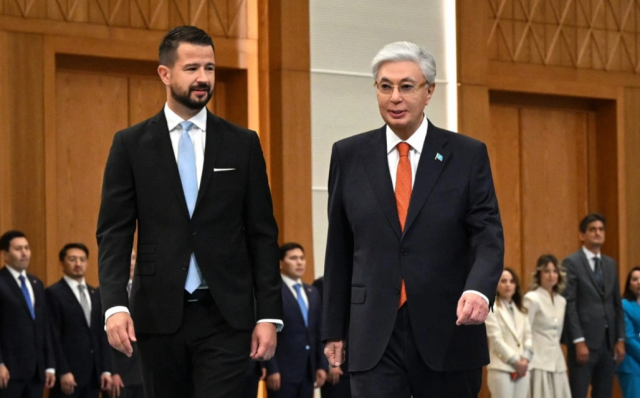
SEOUL, June 20 (AJP) - Montenegrin President Jakov Milatovic met with Kazakh President Kassym-Jomart Tokayev in Astana on June 19 to discuss adopting the digital transformation technologies of Kazakhstan to modernize his country's public administration. According to the Kazakhstan Ministry of Foreign Affairs, the talks mark a significant shift in international diplomacy as European nations increasingly seek administrative blueprints from emerging technological hubs outside the West.
The summit provides a clear window into how advanced digital infrastructure is redefining global statecraft and institutional reform. This meeting underscores how smaller states are bypassing traditional bureaucratic evolution by directly importing established digital architecture from rising tech leaders.
Digital transformation has become an essential mechanism for small and medium-sized countries aiming to optimize their state operation. Shifting public registries, tax collections, and corporate licensing online allows these governments to drastically lower operational overhead and limit institutional corruption without expanding physical infrastructure.
Kazakhstan is currently executing a broad economic pivot to transition away from its historic reliance on natural resources toward high-tech sectors. The Central Asian nation, which has a population of 20.5 million people, has traditionally depended on its vast oil reserves and mineral extraction to drive domestic growth.
The government in Astana has utilized recent constitutional referendums to reshape its state institutions and foster a modern regulatory environment. As part of this digital push, the country enacted a comprehensive AI law in January 2026 to accelerate local technical capabilities and secure foreign tech investments.
Montenegro operates a significantly smaller, service-based economy supported by a population of approximately 630,000 people. The Balkan country relies heavily on international tourism, which generates roughly 30 percent of its gross domestic product, alongside smaller export operations in aluminum and energy.
This heavy reliance on seasonal tourism and foreign visitors requires Montenegro to maintain a highly agile and transparent public administration. The government in Podgorica is looking to Kazakhstan because it requires a proven, scalable digital framework that can upgrade its national systems within a highly constrained budget.
Beyond technological cooperation, the two leaders focused on expanding physical trade corridors and logistics networks connecting Central Asia with Europe. Milatovic and Tokayev highlighted the strategic value of the Trans-Caspian International Transport Route, a shipping corridor gaining prominence as an alternative global supply pipeline.
Ministries from both nations are preparing binding legal agreements covering justice and broader economic cooperation to formalize the expanding bilateral relationship. Officials also signed memorandums of understanding between their respective chambers of commerce and national broadcasting companies during the talks.
"These documents represent an important step towards creating more favorable conditions for business cooperation, increasing trade exchange and stronger connections between institutions, businessmen and citizens of Montenegro and Kazakhstan," the Montenegrin presidential office said in a statement.

Copyright ⓒ Aju Press All rights reserved.