
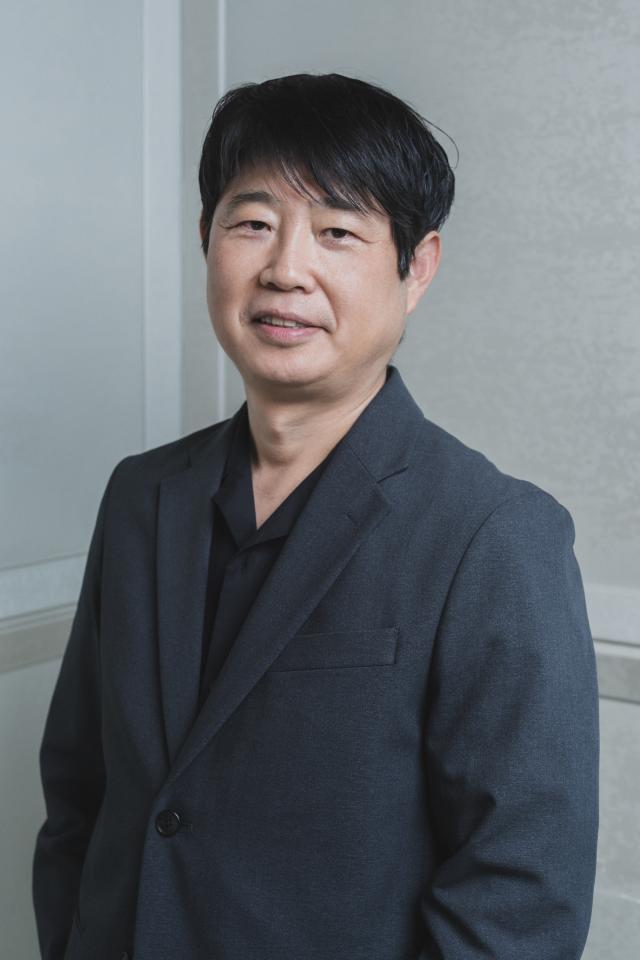
Director Son Jae-gon of the film 'Wild Thing' [Photo=LOTTE Entertainment]
Director Son Jae-gon's comedy often begins with imaginative twists on familiar daily life. In his previous works, such as 'Sweet, Savage Love,' he blended romance and thriller, while 'The Villainess' featured tension and humor in a confined space. His film 'Don't Hurt Me' introduced the quirky concept of a zoo without animals.
In his latest film, 'Wild Thing,' Son depicts the comeback attempt of a mixed-gender dance group reuniting after 20 years. The film, which intertwines music, performance, and a sense of the turn of the century, has surpassed one million viewers, gaining traction through word of mouth. Even with its absurd premise, Son's perspective does not reduce the characters to mere comedic figures.
"I haven't considered comedy my primary genre for a long time. I usually prioritize action, crime, romance, or thriller, and then incorporate comedy and humor. 'Wild Thing' is a work where I have focused on pure comedy for the first time in a while. When I handed the script to the actors, their reactions gave me courage. The actors I initially chose are not known for their comedic performances, but seeing them eager to take on these roles boosted my confidence that I could still control this area," he said.
Son believes that the humor derived from dialogue must differ from that in a theater setting. He has long wanted to incorporate elements of action films into comedy, and in 'Wild Thing,' music and choreography play crucial roles in generating laughter.
"When you watch a comedy program, they can make you laugh multiple times within five minutes just with dialogue. I often wondered, 'What am I doing while they are making people laugh like that?' I felt that when watching a film in a theater, the comedy should provide a different kind of enjoyment than on TV. That's why I thought action elements should be included in comedy. This time, music, choreography, and dance have significantly contributed to breaking away from dialogue-centric comedy," he explained.
The most critical aspect of humor is the situation and timing of the dialogue. Son calculated the moments of laughter not only in the script and filming but also during editing and sound design. The line involving 'Tesla' was created during post-production.
"Ultimately, the context in which a line is delivered is crucial. I have long believed that if the situation is well set, even actors who are not skilled in comedy can evoke laughter when they take their roles seriously. The 'Tesla' line was created during post-production. I asked the actor to record it and considered when the line should come out based on how much of the steering wheel is visible. That moment coincided with an action sequence, so I had to think about where to lower the music volume and what expressions to include during the editing phase. Still, whether it ends up being funny can only be determined in the theater," he said.
The same principle applied when creating the film's key insert songs. Instead of making the music itself comical, Son aimed for natural laughter to arise when the actors performed seriously.
"We decided not to try to make the main song of 'Triangle' funny. We agreed that while it’s good for laughter to emerge naturally when we take it seriously, we shouldn’t aim to create a comedic song. Additionally, in a theater, the audience needs to react to a song as soon as they hear it. Even when hearing a favorite artist's new song for the first time, there can be a moment of confusion, so I requested that the music team create a song that audiences could like immediately in the film," he said.
The era depicted in 'Wild Thing' is not limited to a specific year. The initial script clearly mentioned the millennium, but during production, the scope was broadened to include the 1990s. This was done to capture the sensory experiences of the audience from that time.
"The first draft explicitly stated the millennium. However, the art, makeup, and costume teams suggested that it might be difficult to differentiate between 1999 and 2000, so we decided to expand the range. We focused on the 2000s but also reached back to the 1990s. This broadened our references, and we styled the actors directly to see what suited them. Instead of copying a specific artist, we aimed to allow the audience to discover various memories based on their experiences," he said.
Kang Dong-won, who experienced the culture of that era firsthand, actively contributed to the styling of not only Hyun-woo but the entire Triangle group. His collaboration with Son was a long-awaited project.
"I have sent Kang Dong-won the most scripts of any actor. He may have only read some, but I received feedback from the company. I had previously sent him comedy scripts, as he really enjoys comedy. I believe his comedic talent and charm were well captured in 'The Duelist.' I have been sending him scripts for nearly 20 years, and I feel like he finally responded this time," Son shared.
The casting of Um Tae-goo began with a simple desire to see an unexpected performance. However, the actor felt considerable pressure as this role required him to showcase a different side of himself. During discussions about the project, Son discovered a different aspect of Um, who is known to be introverted.
"I thought it would be interesting if Um Tae-goo took on this role. While actors often want to try something they haven't shown before, the pressure of potentially failing can be quite heavy. Through our conversations, I learned that he is known as a very introverted actor, but when discussing the project, he becomes chatty and proactive. There are no communication issues, but once the conversation ends, he resets and becomes shy again. I find it confusing to see this side of him, but he seems to enjoy trying something new that he hasn't done before," he said.
In the latter half of the film, Son focused on ensuring that the audience would root for Triangle until the end. He wanted to avoid the familiar success story of characters regaining their past glory or the failure of not being able to perform on stage.
"As the story progresses, I put a lot of energy into making the audience want to support the characters. If the comedy continues to emerge and elicits strong emotional reactions from the audience, I believe the climax will have a significant impact. Creating that is challenging, but I worked hard from the script stage through post-production to evoke those emotions," he said.
The conditions for a happy ending, in Son's view, do not necessarily mean that the characters must become stars again. Regardless of success or failure, it is essential that they gain something from this challenge.
"I don't think audiences expect an unconditional happy ending. They want a happy ending that feels fresh. If the characters become stars again, it’s not fresh, and if they fail to perform and all end up failing, that’s not the conclusion audiences expect from this film. It was crucial to show the characters' journey in a way that keeps the audience's support intact until the end, while also presenting it in a fresh manner. They could succeed or fail, but even in failure, I believe it’s important to show that these characters have gained something," he explained.
As 'Wild Thing' continues to gain momentum, surpassing one million viewers, Son noted that the brief feedback from audiences resonates more deeply than expected. Even if the expressions are subdued, the laughter and comments like "It was fun" provide him with the motivation to continue his work.
"When audiences say they enjoyed it, the joy I feel is greater than I expected. When people laugh again in the theater, or if they don’t laugh during a screening, I feel quite disheartened and embarrassed. I generally speak in a subdued manner, but the feelings I experience are quite intense. When someone says, 'I liked it,' 'It was fun,' or 'I enjoyed this part,' it lifts my spirits more than I can express," he said.
As the interview concluded, Son hinted at his next project, stating that he is constantly refining new stories and is ready to jump back onto the screen at any moment.
"Just because I want to doesn’t mean a project materializes immediately, but I am continually refining new stories. I start my day by sitting in front of the computer whenever I have the time. I am always preparing and polishing my ideas," he said.
In his latest film, 'Wild Thing,' Son depicts the comeback attempt of a mixed-gender dance group reuniting after 20 years. The film, which intertwines music, performance, and a sense of the turn of the century, has surpassed one million viewers, gaining traction through word of mouth. Even with its absurd premise, Son's perspective does not reduce the characters to mere comedic figures.
"I haven't considered comedy my primary genre for a long time. I usually prioritize action, crime, romance, or thriller, and then incorporate comedy and humor. 'Wild Thing' is a work where I have focused on pure comedy for the first time in a while. When I handed the script to the actors, their reactions gave me courage. The actors I initially chose are not known for their comedic performances, but seeing them eager to take on these roles boosted my confidence that I could still control this area," he said.
Son believes that the humor derived from dialogue must differ from that in a theater setting. He has long wanted to incorporate elements of action films into comedy, and in 'Wild Thing,' music and choreography play crucial roles in generating laughter.
"When you watch a comedy program, they can make you laugh multiple times within five minutes just with dialogue. I often wondered, 'What am I doing while they are making people laugh like that?' I felt that when watching a film in a theater, the comedy should provide a different kind of enjoyment than on TV. That's why I thought action elements should be included in comedy. This time, music, choreography, and dance have significantly contributed to breaking away from dialogue-centric comedy," he explained.
The most critical aspect of humor is the situation and timing of the dialogue. Son calculated the moments of laughter not only in the script and filming but also during editing and sound design. The line involving 'Tesla' was created during post-production.
"Ultimately, the context in which a line is delivered is crucial. I have long believed that if the situation is well set, even actors who are not skilled in comedy can evoke laughter when they take their roles seriously. The 'Tesla' line was created during post-production. I asked the actor to record it and considered when the line should come out based on how much of the steering wheel is visible. That moment coincided with an action sequence, so I had to think about where to lower the music volume and what expressions to include during the editing phase. Still, whether it ends up being funny can only be determined in the theater," he said.
The same principle applied when creating the film's key insert songs. Instead of making the music itself comical, Son aimed for natural laughter to arise when the actors performed seriously.
"We decided not to try to make the main song of 'Triangle' funny. We agreed that while it’s good for laughter to emerge naturally when we take it seriously, we shouldn’t aim to create a comedic song. Additionally, in a theater, the audience needs to react to a song as soon as they hear it. Even when hearing a favorite artist's new song for the first time, there can be a moment of confusion, so I requested that the music team create a song that audiences could like immediately in the film," he said.
The era depicted in 'Wild Thing' is not limited to a specific year. The initial script clearly mentioned the millennium, but during production, the scope was broadened to include the 1990s. This was done to capture the sensory experiences of the audience from that time.
"The first draft explicitly stated the millennium. However, the art, makeup, and costume teams suggested that it might be difficult to differentiate between 1999 and 2000, so we decided to expand the range. We focused on the 2000s but also reached back to the 1990s. This broadened our references, and we styled the actors directly to see what suited them. Instead of copying a specific artist, we aimed to allow the audience to discover various memories based on their experiences," he said.
Kang Dong-won, who experienced the culture of that era firsthand, actively contributed to the styling of not only Hyun-woo but the entire Triangle group. His collaboration with Son was a long-awaited project.
"I have sent Kang Dong-won the most scripts of any actor. He may have only read some, but I received feedback from the company. I had previously sent him comedy scripts, as he really enjoys comedy. I believe his comedic talent and charm were well captured in 'The Duelist.' I have been sending him scripts for nearly 20 years, and I feel like he finally responded this time," Son shared.
The casting of Um Tae-goo began with a simple desire to see an unexpected performance. However, the actor felt considerable pressure as this role required him to showcase a different side of himself. During discussions about the project, Son discovered a different aspect of Um, who is known to be introverted.
"I thought it would be interesting if Um Tae-goo took on this role. While actors often want to try something they haven't shown before, the pressure of potentially failing can be quite heavy. Through our conversations, I learned that he is known as a very introverted actor, but when discussing the project, he becomes chatty and proactive. There are no communication issues, but once the conversation ends, he resets and becomes shy again. I find it confusing to see this side of him, but he seems to enjoy trying something new that he hasn't done before," he said.
In the latter half of the film, Son focused on ensuring that the audience would root for Triangle until the end. He wanted to avoid the familiar success story of characters regaining their past glory or the failure of not being able to perform on stage.
"As the story progresses, I put a lot of energy into making the audience want to support the characters. If the comedy continues to emerge and elicits strong emotional reactions from the audience, I believe the climax will have a significant impact. Creating that is challenging, but I worked hard from the script stage through post-production to evoke those emotions," he said.
The conditions for a happy ending, in Son's view, do not necessarily mean that the characters must become stars again. Regardless of success or failure, it is essential that they gain something from this challenge.
"I don't think audiences expect an unconditional happy ending. They want a happy ending that feels fresh. If the characters become stars again, it’s not fresh, and if they fail to perform and all end up failing, that’s not the conclusion audiences expect from this film. It was crucial to show the characters' journey in a way that keeps the audience's support intact until the end, while also presenting it in a fresh manner. They could succeed or fail, but even in failure, I believe it’s important to show that these characters have gained something," he explained.
As 'Wild Thing' continues to gain momentum, surpassing one million viewers, Son noted that the brief feedback from audiences resonates more deeply than expected. Even if the expressions are subdued, the laughter and comments like "It was fun" provide him with the motivation to continue his work.
"When audiences say they enjoyed it, the joy I feel is greater than I expected. When people laugh again in the theater, or if they don’t laugh during a screening, I feel quite disheartened and embarrassed. I generally speak in a subdued manner, but the feelings I experience are quite intense. When someone says, 'I liked it,' 'It was fun,' or 'I enjoyed this part,' it lifts my spirits more than I can express," he said.
As the interview concluded, Son hinted at his next project, stating that he is constantly refining new stories and is ready to jump back onto the screen at any moment.
"Just because I want to doesn’t mean a project materializes immediately, but I am continually refining new stories. I start my day by sitting in front of the computer whenever I have the time. I am always preparing and polishing my ideas," he said.
* This article has been translated by AI.
Copyright ⓒ Aju Press All rights reserved.