
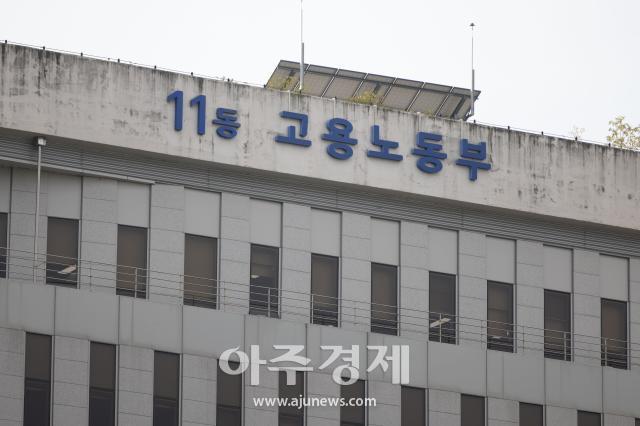
The Ministry of Employment and Labor announced on June 23 that it reviewed and approved amendments to the Enforcement Decree of the Employment Insurance Act and the Enforcement Decree of the Industrial Accident Compensation Insurance Act during a Cabinet meeting. The amendments are set to take effect on July 1.
A new support fund for task coverage during spousal parental leave will be introduced. Previously, only employers who compensated colleagues for work during parental leave or reduced working hours for childcare were eligible for support. Now, support will also be available for those who take 20 consecutive days of spousal parental leave.
The government expects this initiative will improve conditions for workers in small and medium-sized enterprises (SMEs) to take spousal parental leave without hesitation. In SMEs, where securing replacement workers is often challenging, one employee's leave can significantly increase the workload for colleagues, making this compensation vital.
Expanding support for spousal parental leave goes beyond mere welfare enhancement; it also serves as a policy to encourage male participation in childcare, addressing the low birth rate issue. Alleviating the burden of early childcare, which often falls disproportionately on women, is essential for making parental leave and career retention policies more effective.
In line with the short-term parental leave system set to be implemented on August 20, the payment standards will also be revised. The adjustment criteria for parental leave payments, which have been based on monthly calculations, will now be applied proportionally to the number of leave days taken. This change will allow for payment adjustments even when parental leave is taken in one- or two-week increments.
The regional employment promotion subsidy system will also be improved. Employers who relocate their businesses to areas facing employment crises or establish new facilities there will receive partial wage support if they hire local job seekers for more than six months. The eligibility period for the subsidy will be reduced from 18 months to six months, with extensions possible under special circumstances for up to one year.
This measure aims to address delays in actual job creation in regions facing employment crises. As prolonged industrial stagnation leads to faster outflows of young and skilled workers, shortening the time from business relocation and investment to hiring is crucial.
A basis for providing training allowances for current employees and foreign workers to enhance job skills will also be established. Previously, training allowances were available only for job seekers and prospective hires, but now current employees who find it difficult to secure training time due to work commitments will also be eligible. Companies designated as priority support businesses that conduct weekend training sessions of four hours or more will receive 50,000 won per day, with young workers receiving up to 75,000 won in additional support.
Additionally, the government will amend the Enforcement Decree of the Industrial Accident Compensation Insurance Act to protect the rights of workers injured on the job and address delays in compensation. The amendment allows injured workers to request necessary documentation from employers to receive insurance benefits, and the scope of documents that can be requested will be specified in the enforcement decree.
The process for compensation claims related to noise-induced hearing loss is also expected to speed up. Previously, workers had to undergo special examinations at designated medical institutions to receive compensation for noise-induced hearing loss. In the future, they will be able to receive special hearing examinations at clinics and hospitals that meet the required personnel and facility standards. The government estimates that adding 100 clinics and hospitals could reduce the waiting time for hearing tests by about 80 days.
* This article has been translated by AI.
Copyright ⓒ Aju Press All rights reserved.