
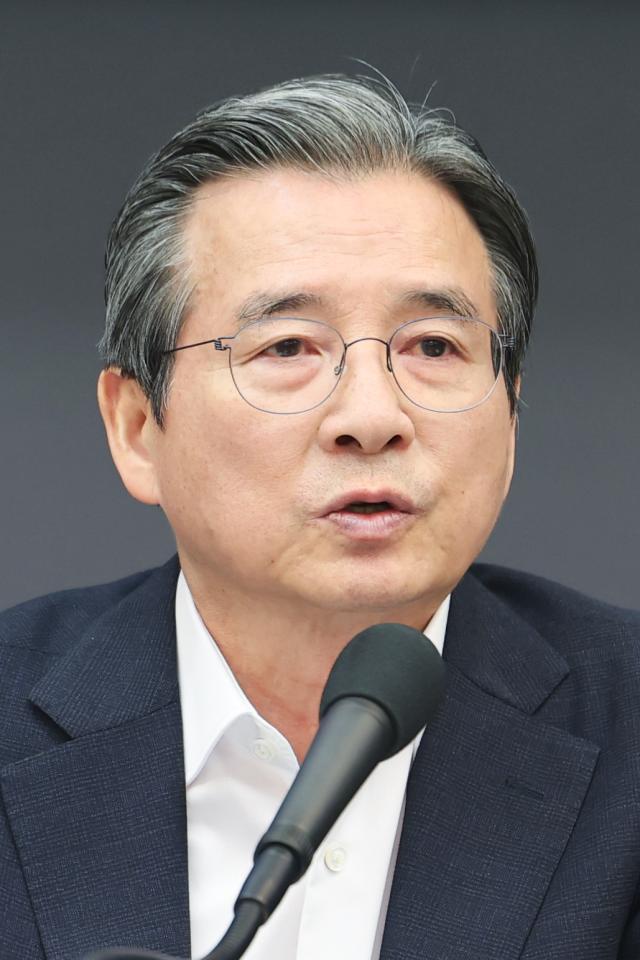
During the Kwanhun discussion at the Press Center in Seoul, Kim noted, "Given the current trend, the demand for semiconductors is surging, necessitating an acceleration of previously planned facility constructions."
He emphasized the need for local clusters, stating, "Even if we want to build more in the metropolitan area, we face limitations in land, power, and water supply. However, that does not mean we must relocate overseas."
Kim clarified that the ongoing construction of the Yongin cluster is not being relocated but rather that a new second cluster will be added. He remarked, "It is absolutely not the case that we will abandon the construction planned for Yongin to move to a different location. We are creating a new cluster."
He further explained, "If we wait until everything is completed in Yongin before starting on the next site, it will be too late. Therefore, we are initiating the development project now."
Additionally, Kim addressed the issue of excess tax revenue from the semiconductor sector, stating, "While AI can make the nation wealthier, there is no guarantee that all citizens will equally benefit from it. We need social discussions on policies and the use of excess tax revenue that are appropriate for the AI era."
He referred to the so-called 'Taiwan Syndrome,' pointing out, "The nation becomes wealthier, but some citizens fall behind in the growth process. Economic indicators may improve, but anxiety about the future does not diminish. This is the issue of K-shaped growth."
Kim urged a careful assessment of whether the current semiconductor and AI boom is merely a cyclical economic event or a structural transformation that will elevate South Korea's potential growth trajectory. He posed the question, "Is the semiconductor and AI supercycle we are experiencing a simple economic cycle, or is it the beginning of a structural transition that raises South Korea's potential growth path?"
He concluded by advocating for a new approach to national governance that combines multi-year investments, cross-government projects, selective focus, and productive finance, emphasizing the need for bold preemptive investments that can reshape South Korea's industrial landscape and provide a new growth foundation for future generations.
* This article has been translated by AI.
Copyright ⓒ Aju Press All rights reserved.