
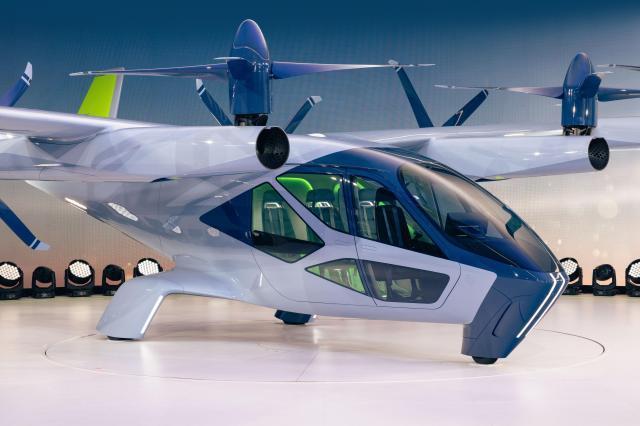
Hyundai Motor Group is taking aggressive steps to enhance its competitiveness in the future air mobility (AAM) sector by establishing a joint venture with Korea Aerospace Industries (KAI) and significantly increasing recruitment in related fields. This move is seen as a commitment to developing air mobility as a new growth area following humanoid robots.
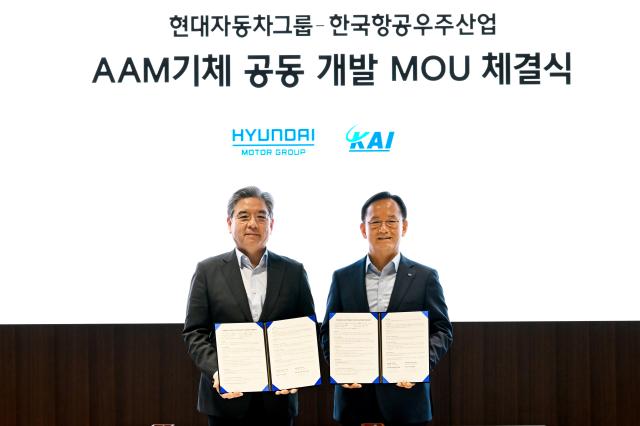
According to industry sources on June 24, Hyundai is discussing plans to establish a joint venture with KAI within the year to strengthen its air mobility business, which it has identified as a key future growth area. The joint venture is a follow-up to the memorandum of understanding (MOU) signed last month for collaborative development of future air mobility vehicles.
Both companies agree that higher-level cooperation is necessary to address challenges in technology and human resource sharing, supply chain and parts ecosystems, mass production systems, and expanding global safety certifications. Currently, Hyundai and KAI are jointly developing a five-passenger air taxi.
Hyundai has also been proactive in recruiting talent in the aviation sector. Recently, it appointed Farhan Gandhi, an authority in vertical takeoff and landing aerodynamics, as the Chief Technology Officer (CTO) of Supernal, accelerating its competitiveness. Gandhi has spent the last 30 years researching rotorcraft and is recognized as an expert in future air mobility.
The company is also beginning to hire experienced professionals with master's or doctoral degrees for roles in five areas, including motors for vertical takeoff aircraft, drive control software, battery charging systems, inverter design, and thermal flow analysis for aviation electrification powertrains. The hiring is expected to be in the double digits.
The global automotive industry is in fierce competition to dominate the urban air mobility market. Wang Dan, Vice President of Xiaopeng Aero, mentioned plans for flying car sales in the Middle East at the Future Mobility Expo held in Daegu last October. Xiaopeng aims to begin initial deliveries of flying cars by the end of this year and ramp up mass production by 2027. Japanese automakers Toyota and Honda are also investing in future air mobility or developing their own electric vertical takeoff and landing (eVTOL) aircraft. Industry experts predict that the air mobility market will open around 2030.
Hyundai has identified humanoid robots for commercialization by 2028 and future air mobility as a key growth area by 2030. Market research firm MarketsandMarkets forecasts that the global urban air mobility market will grow to approximately $23.5 billion by 2030. A Hyundai official stated, "We believe that the era of future air mobility will begin after robotics is fully commercialized, with a significant possibility that the full-scale launch will occur after 2035."
* This article has been translated by AI.
Copyright ⓒ Aju Press All rights reserved.