
The government has finalized its stance on abolishing supplementary investigation rights as part of its prosecutorial reform, which includes the establishment of a Public Prosecution Office and a Serious Crimes Investigation Agency. However, it will not present a separate legislative bill and will follow the decisions made by the National Assembly.
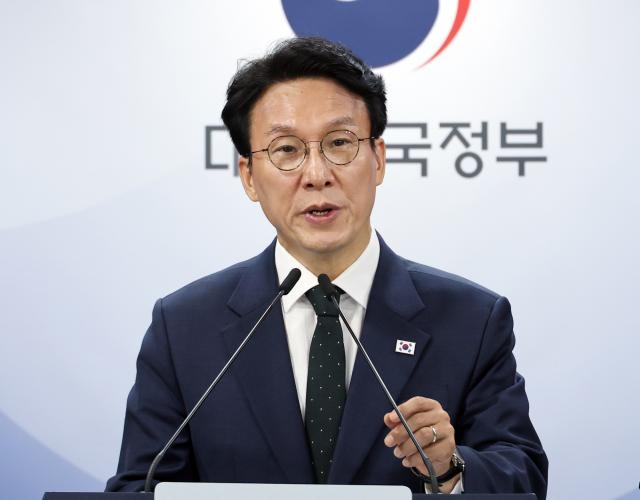
Prime Minister Kim Min-seok held a briefing at the Government Seoul Building on June 25, stating, "The fundamental principle of the Yoon Suk-yeol administration's prosecutorial reform is the separation of investigation and prosecution. This is a core principle aimed at rationally redefining the powers of the prosecution and better protecting the basic rights of the public."
He added, "I have consistently expressed the view that supplementary investigation rights for prosecutors should be abolished. Taking into account various opinions discussed and heard by the government, we have finalized the abolition of supplementary investigation rights as the government's basic position."
Kim noted, "We will communicate this basic position to the ruling party and, rather than proposing a separate legislative bill, we will respect the discussions and decisions made by the National Assembly."
He explained, "I believe it is appropriate for the National Assembly, as the representative body of the people, to decide on the specific design and legislation of the system after sufficient discussion and deliberation. Once legislation is enacted by the National Assembly, the government will faithfully implement the necessary follow-up measures in accordance with that decision."
Furthermore, he emphasized, "Prosecutorial reform is not just about specific institutions or powers; it is a process of creating a judicial system for the people. Above all, it is important to respect the will of the people and the discussions in the National Assembly. I hope that various opinions will be thoroughly discussed in the National Assembly and that a reasonable conclusion will be reached based on the public's will."
Earlier, the Prosecutorial Reform Promotion Team under the Prime Minister's Office announced on January 12 the legislative proposals for the Public Prosecution Office Act and the Serious Crimes Investigation Agency Act.
The Public Prosecution Office Act includes provisions to remove 'criminal investigation' and 'initiation of investigation' from the prosecutor's duties, specifying 'prosecution initiation and maintenance.'
The Serious Crimes Investigation Agency Act defines the agency's direct investigation targets as nine major crimes, including corruption, economic crimes, public office crimes, election crimes, defense business crimes, major disasters, drug crimes, insurrection, foreign exchange crimes, and cyber crimes. It also includes a dual structure for the agency, consisting of judicial officers with legal qualifications and specialized investigators.
However, the proposed legislation has deferred a conclusion on supplementary investigation rights for prosecutors. The issue of whether to allow supplementary investigations on transferred cases will be further discussed during the amendment process of the Criminal Procedure Act.
* This article has been translated by AI.
Copyright ⓒ Aju Press All rights reserved.