
A city in South Korea is redefining its industrial landscape: Sacheon. With the opening of the Aerospace Agency, Sacheon is no longer just an aviation industry city but is beginning to establish itself as the heart of the nation's aerospace sector.
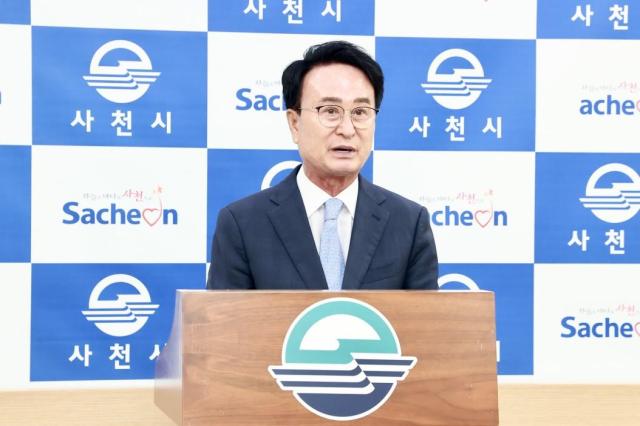
Park Dong-sik, the newly elected mayor of Sacheon, has presented a vision to further advance this trend by completing the aerospace complex city. His key pledges include the enactment of a special law for the aerospace complex city, the clustering of aerospace companies and research institutions, the establishment of a regional transportation network, and the improvement of living conditions. While these may appear as urban development promises, they align with national projects aimed at building the foundation of South Korea's space economy in the context of the AI era.
AI is the core technology that makes satellites smarter, enables autonomous drone flights, and transforms space data into new industries.
The question is clear: Can Sacheon, a city that houses the Aerospace Agency, become the capital of South Korea's AI space industry?
The Era of the Aerospace Agency: A New Destiny for Sacheon
Mayor Park cites the establishment of the Aerospace Agency in Sacheon as the most significant achievement of his previous term. In his new term, he aims to take a step further by completing the aerospace complex city, emphasizing the early enactment of the special law for the aerospace complex and the clustering of related companies and research institutions as his core pledges.
The Aerospace Agency is not just an administrative body; it serves as a control tower leading South Korea's aerospace industry ecosystem. When research institutions, companies, and universities come together, the city enters a new growth trajectory.
However, the competitiveness of the aerospace era is no longer determined solely by rockets.
AI is becoming the key technology in the space industry. Satellites produce data, and AI transforms that data into value. In the future, the ability to analyze data and utilize AI may prove to be more competitive than the launch vehicles themselves.
A City Where AI Meets the Space Industry
The aerospace industry is one of the sectors with the highest utilization of AI. AI is essential for satellite image analysis, and autonomous aircraft and drones cannot operate without it. Space exploration robots, digital twins, and space traffic management are also advancing based on AI technology.
Sacheon already possesses the capabilities for aircraft development and production, centered around Korea Aerospace Industries (KAI). With the addition of the Aerospace Agency, the foundation for a new industrial ecosystem that integrates space technology and AI has been established.
The policy of clustering companies and research institutions promoted by Mayor Park could ultimately lead to the creation of an AI space industry cluster.
In the AI era, the space industry is evolving from one that manufactures rockets to one that utilizes data.
Sacheon stands at the starting point of this transformation.
A Testing Ground for Drones and Future Air Mobility
Drones are no longer just simple flying devices. They are intelligent platforms capable of calculating flight paths, avoiding obstacles, and executing missions autonomously.
As a city with a solid aviation industry foundation, Sacheon is ideally positioned to nurture the drone and future air mobility (UAM) industries. The collaboration between the Aerospace Agency, aviation companies, and research institutions will naturally expand the development of drone testing and AI aviation technologies.
In the future, the demand for AI drones is expected to surge across various fields, including defense, logistics, disaster management, and maritime surveillance.
Sacheon has the potential to become not just an aviation city but a testing ground for the future aviation industry.
City Competitiveness is Built on Living Conditions
The space industry requires people.
If world-class researchers and engineers do not stay in Sacheon, the city will struggle to grow, even with the Aerospace Agency alone.
Therefore, Mayor Park has prioritized improving living conditions and expanding the regional transportation network as key pledges.
Efforts to upgrade Sacheon Airport to international status, incorporate it into the national railway network, and expand highways are not merely infrastructure projects; they are investments in the foundational facilities needed to become a world-class aerospace city.
Silicon Valley, Toulouse in France, and Houston in the United States have all become global innovation cities because they built excellent research and living environments together.
In the AI era, a city's competitiveness stems not only from technology but also from creating a place where people want to live.
Can Sacheon Become South Korea's Houston?
In the United States, there is Houston, a city that has formed the world's leading aerospace industry ecosystem centered around NASA.
In France, there is Toulouse, which has become the hub of the European aerospace industry centered around Airbus.
In South Korea, there is Sacheon, the only city that clusters the Aerospace Agency, Korea Aerospace Industries, and aviation-related research institutions and companies.
If the AI industry is added to this mix, Sacheon could grow beyond a simple aviation city to become the central city of South Korea's space economy.
Mayor Park's vision for the aerospace complex city ultimately aims in this direction.
His pledges can be summarized as the establishment of a special law for the aerospace complex city, the successful integration of the Aerospace Agency, attracting companies, and expanding the regional transportation network. However, from the perspective of the AI era, the significance of these pledges is much greater. It is a project to create a new axis of future industries by combining aerospace and AI.
If semiconductors are the brain of AI, then the space industry is its eyes. A new era is opening where satellites collect data and AI analyzes that data.
Sacheon has already secured a strong starting point with the Aerospace Agency.
What remains to be seen is how deeply AI can be integrated into the space industry.
The first AI aerospace capital in South Korea. The challenge has already begun.
Park Dong-sik, the newly elected mayor, previously served as the chairman of the Gyeongsangnam-do Provincial Council and as the mayor of Sacheon during the 8th term. He successfully won re-election for the 9th term. During his previous term, he led the establishment of the Aerospace Agency in Sacheon and has proposed completing the aerospace complex city, enacting a special law for the aerospace complex city, clustering aerospace companies and research institutions, upgrading Sacheon Airport to international status, expanding the regional transportation network, and improving living conditions as his re-election pledges.
His vision is to grow Sacheon into the core city of South Korea's aerospace industry and a key hub driving the future space economy.
* This article has been translated by AI.
Copyright ⓒ Aju Press All rights reserved.