
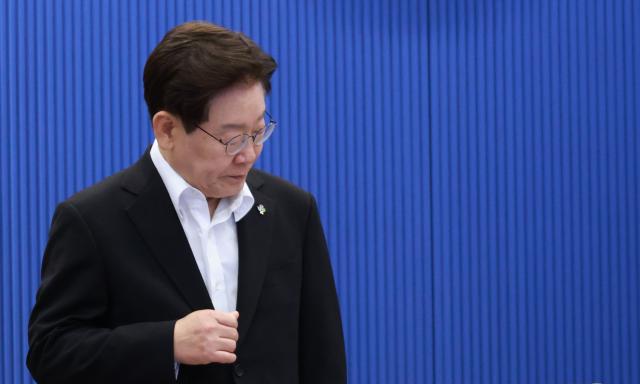
During a senior secretary meeting at the Blue House, President Lee emphasized that "the key to advancing our nation is to ensure fair growth opportunities are accessible from anywhere in South Korea."
He noted that the remarkable growth of certain industries has not reached the provinces, which occupy 90% of the land, potentially deepening the imbalance in national development. "If we do not overcome the Seoul-centric system that absorbs everything, the positive changes we are currently experiencing may be fleeting," he warned.
President Lee called for the enhancement of core infrastructure in the Seoul area while simultaneously establishing new industrial economic bases throughout the provinces to create a win-win situation for both Seoul and the regions. He promised to present a detailed blueprint for this initiative to the public soon.
The Blue House plans to host a 'Public-Private Joint Meeting on National Spatial Transformation' on June 29, where it will announce regional balanced development plans in collaboration with companies like Samsung Electronics and SK Hynix. Reports suggest that these companies are considering the establishment of a second semiconductor cluster focused on Honam and Chungcheong regions.
As he enters the second year of his term, President Lee stated, "From now on, we must accelerate the institutionalization of key national tasks to improve people's livelihoods and restructure society." He added that improving people's lives, the primary principle of governance, will be realized through meticulous adjustments to laws and systems.
Regarding reform initiatives, he urged that necessary reforms for the future of society should not be halted and should be pursued through discussion and persuasion. He committed to steadfastly advancing critical issues such as the future-oriented use of surplus tax revenue, real estate taxation, labor and pension reforms, and bold regional development strategies with broad public understanding and support.
On inflation, President Lee remarked that rising oil prices are driving inflation, which is affecting food prices across various sectors, including agricultural, marine products, and processed foods. He stressed the need for heightened awareness and a sense of urgency to stabilize prices.
Additionally, he expressed the need to create more opportunities for youth, who have recently become a severely marginalized group, to dream of a better tomorrow. He urged that when formulating youth policies, direct communication with young people should be prioritized to refine specific policy details.
* This article has been translated by AI.
Copyright ⓒ Aju Press All rights reserved.