
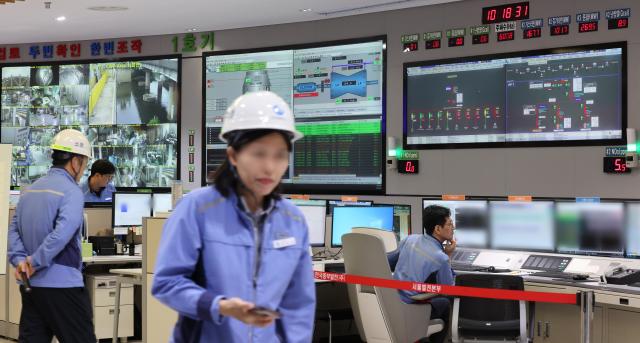
As this summer's power demand is projected to reach unprecedented levels, power authorities are on high alert. The prolonged heatwave is expected to significantly increase cooling demand, and concerns are rising that cloudy weather could reduce solar power generation, further straining the power supply.
However, the government believes that there is little risk of blackouts, as supply capacity has increased compared to last year, and additional reserve resources have been secured. Still, the growing share of variable renewable energy sources means that supply instability could arise depending on weather conditions.
According to the Ministry of Climate, Energy, and Environment, peak power demand this summer is forecasted to reach between 94.1 GW and 98.8 GW during the third week of August. This figure surpasses the previous record of 97.1 GW set on August 20, 2024, and is higher than last year's peak of 96.0 GW recorded on August 25.
Power demand forecasts are calculated by combining historical temperature averages and solar utilization rates. This year, temperatures are expected to be higher than average, prompting an upward adjustment in demand estimates.
The power authorities anticipate that this year's peak demand will occur on Wednesday and Thursday of the third week of August. Typically, summer power demand peaks during weekday afternoons when the use of cooling devices increases. If temperatures remain at normal levels, demand could reach 94.1 GW, while prolonged heat could push it to 98.8 GW.
The challenge lies in the weather. A combination of high temperatures and cloudy conditions could strain the power supply. Increased cooling demand due to the heatwave, coupled with reduced solar generation from cloudy weather, could create significant pressure on the system.
If a typhoon approaches the Korean Peninsula in late August, there is a possibility that cloud cover will form over the southern regions, where solar facilities are concentrated.
The rapid increase in the share of solar power generation is also adding variables to the power supply situation. According to the Korea Electric Power Corporation's monthly power statistics, solar energy generation reached 4,100,089 MWh in April, accounting for 9.24% of total generation (44,378,147 MWh). With solar power nearing 10% of total generation on a monthly basis, the importance of weather factors such as sunlight, cloud cover, and typhoons in power supply management has grown.
In light of concerns over cloudy heatwaves, the government has increased its power supply capacity by 2 GW to 107 GW compared to last year. This means that even during peak demand, there will be a reserve of 8.2 GW available. Additionally, 8.8 GW of extra reserve resources have been prepared for emergency situations.
Kim Sung-hwan, the Minister of Climate, stated during a "Power Supply Response Meeting" that "the government and power agencies will establish a robust response system for power supply crises" and emphasized the commitment to support the public's daily lives and stabilize economic activities for businesses and industries.
* This article has been translated by AI.
Copyright ⓒ Aju Press All rights reserved.