
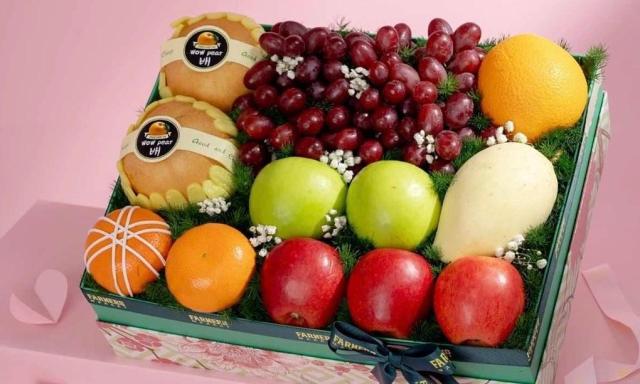
According to Vietnam's VnExpress on June 26, customs statistics show that the import value of fruits and vegetables reached $1.3 billion (approximately 2.1 trillion VND) from January to May this year. This marks a 31% increase compared to the same period last year, significantly outpacing the 20% growth rate in fruit and vegetable exports during the same timeframe. The presence of imported fruits has become increasingly noticeable in traditional markets, supermarkets, and specialty fruit shops, even as local tropical fruit harvests peak.
Notably, the variety of U.S. grapes has expanded to include green, red, and black types, with prices dropping by 10-15% compared to last year. Current prices range from 130,000 to 250,000 VND (approximately $6.70 to $12.50) per kilogram. A consumer residing in Ho Chi Minh City's Jardin area remarked, "In the past, there weren't many varieties of U.S. grapes, but now there are many options, and the prices are more affordable." Additionally, U.S. and Chinese apples and oranges are now easily available in markets, supermarkets, convenience stores, and online shopping platforms due to an expanded distribution network.
Fruit vendors have reported a significant increase in the proportion of imported fruits sold. A vendor operating a fruit shop in Ho Chi Minh City's Pham Van Hai market stated, "About half of the fruits we sell are imported. Customers purchasing fruits for holidays or gift sets often prefer imported fruits because they have consistent shapes, vibrant colors, and longer shelf lives."
The surge in imports can be attributed to the effects of FTAs. The implementation of the EVFTA (EU-Vietnam Free Trade Agreement), CPTPP, and ACFTA (ASEAN-China Free Trade Agreement) has led to significant reductions in tariffs on many items. Since last year, tariffs on U.S. cherries have decreased from 10% to 5%, and tariffs on U.S. apples have dropped from 8% to 5%. Fruits from China also benefit from duty-free status if they meet origin criteria.
Advancements in refrigerated logistics systems and intensified competition among importers have further lowered distribution costs, allowing items previously classified as premium fruits to become everyday consumables.
The Vietnam Fruit and Vegetable Association projects that the import value of fruits and vegetables will reach approximately $1.6 billion in the first half of this year. If the current growth trend continues, annual imports could approach $4 billion, setting a new record.
Conversely, the expansion of imported fruits poses challenges for local fruit producers. The association noted that while this year's fruit harvest in the southern region is good, the significant increase in imports has led to a rise in market supply, causing prices for various fruits to drop significantly compared to previous years. In fact, some fruit prices have decreased by 20-50%.
"Still, Vietnamese Fruits Are the Best"... Mixed Reactions from Online Users
Local internet users have expressed a range of opinions regarding the increase in imported fruits. One user stated, "Vietnamese fruits are still the best," emphasizing that seasonal fruits are both delicious and affordable. Another user argued that consuming only Vietnamese fruits like bananas, papayas, guavas, mangoes, and dragon fruits is sufficient for a healthy diet, highlighting the competitiveness of local produce.
On the other hand, some users viewed the price reductions positively. One commented, "In the past, U.S. apples felt too expensive and special, but now I can buy them without hesitation." Many believe that competition will benefit the industry. One user noted, "Competition is essential. I hope this encourages farmers and businesses to enhance their competitiveness."
However, there are also calls for consumer protection. One user pointed out, "As imports increase, we need to strictly manage origin labeling and crack down on practices that misrepresent origins."
* This article has been translated by AI.
Copyright ⓒ Aju Press All rights reserved.