
The competition in artificial intelligence (AI) is both a technological and capital race. Even with exceptional researchers and innovative technologies, survival in the global market is challenging without long-term investment capital. Companies like OpenAI and NVIDIA in the U.S., as well as DeepMind and Baidu in China, have thrived thanks to substantial financial backing.
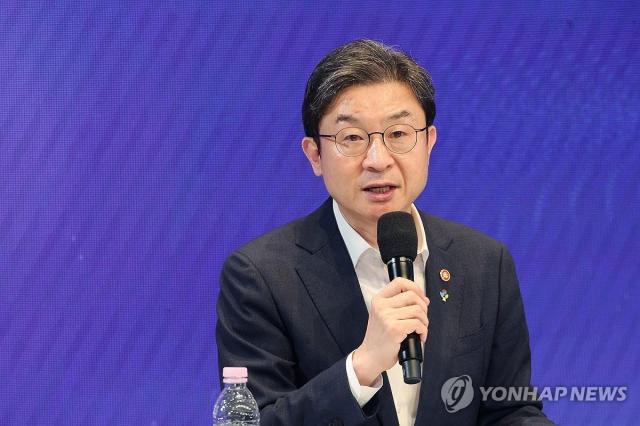
The role of finance in the AI era has evolved beyond merely lending money to businesses. It is now a strategic industry that designs the future of national industries and safeguards technological sovereignty. Lee Ok-keun, the Chairman of the Financial Services Commission, has outlined a vision to transform finance into the engine of South Korea's AI competitiveness.
He plans to provide over 50 trillion won in policy finance over the next five years for the AI and semiconductor sectors, nurture a Sovereign AI ecosystem through the National Growth Fund, and innovate the financial industry to focus on AI. The Financial Services Commission is expanding its role from a regulatory body to a strategic headquarters for fostering South Korea's AI industry.
The question is clear.
Can South Korean finance become a growth engine that creates an AI powerhouse rather than just a supporter of the AI industry?
A new era has begun where finance leads industry.
In the past, finance followed industry.
Its primary role was to supply funds when companies grew and support restructuring when they faced difficulties.
In the AI era, this order is changing.
AI semiconductors, large-scale AI models, and data centers require massive initial investments, but profits take a long time to materialize.
This is a field that private finance alone cannot manage.
Chairman Lee addresses this reality with the concept of 'industrial finance.'
He emphasizes the need to evolve from finance focused on balance sheets and collateral to investing based on technological capability and growth potential. AI operates as a new national infrastructure, similar to electricity and the internet, and finance must adapt accordingly.
We are transitioning from an era where finance supports industry to one where finance creates industry.
Policy finance of 50 trillion won will fuel the AI industry.
Chairman Lee's flagship policy is the large-scale provision of policy finance for the AI and semiconductor sectors.
The government plans to allocate over 50 trillion won to the AI ecosystem through the National Growth Fund and policy finance over the next five years.
Support will cover the entire AI value chain, including AI semiconductors, foundational models, AI data centers, and application services.
The National Growth Fund is already executing significant investments in the AI sector, supporting AI semiconductor companies, large-scale AI firms, and the establishment of national AI computing infrastructure.
This is not merely corporate support.
It is a national investment aimed at growing South Korea's entire AI industry.
In the AI era, having capital that can invest long-term may become a more critical competitive advantage than having good technology.
Sovereign AI: Finance safeguards technological sovereignty.
One of Chairman Lee's frequently used terms is 'Sovereign AI.'
He stresses that securing independent AI models, data, and computational infrastructure is a matter of national security and technological sovereignty, beyond just industrial competitiveness.
Thus, the second mega-project of the National Growth Fund includes not only AI semiconductors but also data centers, foundational models, and application services as part of the Sovereign AI project.
The rationale for supporting domestic AI semiconductors and the national AI computing center with policy finance lies here.
In the AI era, finance is not just about providing funds; it is a national strategy for technological independence.
Finance will also be reborn through AI.
Chairman Lee's AI policy does not stop at supporting the AI industry.
Transforming the financial industry itself to focus on AI is also a crucial goal.
The Financial Services Commission is promoting the establishment of AI platforms in finance, expanding data utilization, training AI professionals, and improving regulations to facilitate the transition to AI in the financial sector.
In particular, they are refining systems to ensure that financial companies can safely utilize generative AI and are updating regulations that hinder AI utilization to align with changing times.
In the future, banks will not merely be places to deposit and borrow money.
They will evolve into intelligent financial platforms where AI analyzes customer risks, manages assets, and detects financial fraud in real-time.
AI startups seek pathways to global markets.
The most common challenge faced by South Korean AI companies is securing funding.
Many have fallen behind in global competition despite having good technology due to a lack of large-scale investments.
Chairman Lee aims to change this structure through the National Growth Fund.
He is expanding direct investments in AI semiconductors, generative AI, and AI infrastructure companies, and establishing a system to provide long-term venture capital to deep tech firms.
He emphasized, "AI is not a short race with quick results; it requires both venture capital and patient capital."
AI unicorns are not created solely by technology.
Finance that believes in technology and invests until the end must accompany them.
Productive finance creates an AI nation.
Chairman Lee has identified 'productive finance' as the core of this year's financial policy.
He aims to redirect funds that have been focused on real estate and short-term investments into national strategic industries such as AI, semiconductors, bio, and future mobility.
The National Growth Fund is expanding its investment scope beyond AI to include bio, OLED, future mobility, defense, and the Saemangeum advanced belt, linking national growth strategies with finance.
AI will transform manufacturing, healthcare, education, and defense.
Finance is the lifeblood that enables these changes.
Ultimately, productive finance will be the funding source for South Korea's transition into an AI nation.
The ultimate goal of AI finance is the well-being of the people.
The AI finance revolution aims not only to support industries but also to provide citizens with safer and more convenient financial services.
AI can enhance the accuracy of loan assessments, quickly detect financial fraud, and offer personalized asset management services.
Financial companies will increase productivity, and citizens will enjoy better financial services.
The goal of the AI finance revolution is to create a structure where finance that supports industry and finance that serves the public can develop together.
Chairman Lee's AI policy is not merely a financial management policy.
It is a national growth strategy that designs the future of South Korea.
The 50 trillion won policy finance, Sovereign AI, National Growth Fund, and the transition to AI in finance all aim toward a single goal.
That goal is to make South Korea one of the top three AI powerhouses.
In the AI era, countries that can nurture technology to its fullest potential are likely to become stronger than those that merely possess technology.
Finance plays a crucial role in this endeavor.
The AI finance revolution led by Chairman Lee is not just a change in the financial industry; it represents a new growth strategy that will transform the entire industrial structure of South Korea.
Lee Ok-keun:
A former economic bureaucrat who served as Vice Minister of Strategy and Finance, he currently chairs the Financial Services Commission. Since taking office, he has been pursuing policies that reposition finance as a key tool for nurturing the nation's advanced industries.
He is leading initiatives to provide over 50 trillion won in policy finance for the AI and semiconductor sectors over the next five years, build a Sovereign AI ecosystem through the National Growth Fund, directly invest in AI semiconductors and large-scale AI companies, and facilitate the transition of the financial industry to AI.
His goal is to evolve finance from a mere funding function into a strategic platform that enhances South Korea's AI national competitiveness.
* This article has been translated by AI.
Copyright ⓒ Aju Press All rights reserved.