
The semiconductor industry is experiencing unprecedented growth, with reports of executives receiving millions in bonuses and investing in luxury goods and real estate. The surge in generative artificial intelligence (AI) and the rapid expansion of data centers have bolstered the astronomical profits of global semiconductor companies. The number of stock investors worth billions has also increased.
Expectations for a trickle-down effect are high. The government, anticipating increased tax revenue, is vocally urging that "excess profits should be shared." While many celebrate the economic boom, the shadows cast by this prosperity are growing darker.
There are about ten major global memory semiconductor companies, with Samsung Electronics, SK Hynix, and Micron controlling 90% of the market. In contrast, the number of manufacturers that rely on semiconductors as essential components is vast. Many of these companies are facing plummeting profits due to rising semiconductor prices and are now raising their product prices despite concerns about declining demand.
Typically, consumer electronics and IT devices see price reductions over time due to the economic principle known as the "experience curve," which reflects stabilization in production processes and economies of scale. However, the current distortion in the semiconductor supply chain is breaking this norm.
For console gaming systems, new models are typically released every six to seven years. In the sixth year, prices are usually lowered. Yet, both Sony and Microsoft have raised the prices of their six-year-old consoles, the PlayStation 5 and Xbox Series S.
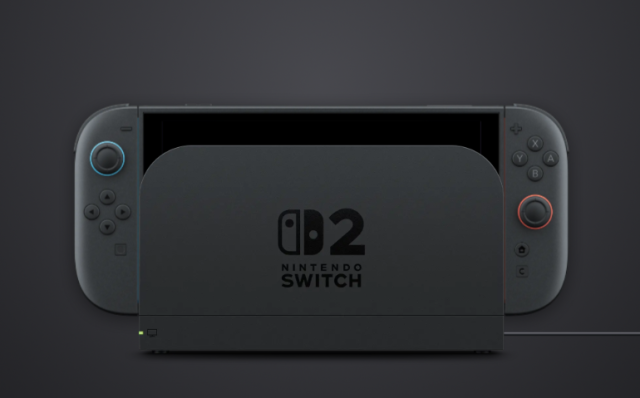
Nintendo, which is set to release its next-generation console, the Switch 2, has significantly increased its launch price due to soaring semiconductor costs, raising it by 17% recently.
The dramatic rise in DRAM and NAND flash prices is attributed to semiconductor companies focusing on high-margin products like high-bandwidth memory (HBM) and high-performance DDR5, leading to a sharp decline in the production of general-purpose DRAM and NAND flash used in PCs, gaming consoles, automobiles, and consumer electronics.
With supply decreasing and demand remaining steady, prices are inevitably skyrocketing. The proportion of memory costs in the specifications of global manufacturers' products has surged from around 10% to as high as 40% recently.
Market research firm Gartner predicts that major manufacturers will eliminate low-cost product lines due to cost pressures, leading to the disappearance of laptops priced below $500. The prices of major smartphone brands are also expected to exceed $1,000.
As affordable products vanish, consumers will ultimately bear the brunt of these changes. Companies are raising prices to survive, passing costs onto consumers, who must absorb these increases.
The market dynamics cannot be ignored. Typically, technological advancements have acted as a "deflationary factor," lowering prices for consumer electronics and IT products and stabilizing the overall Consumer Price Index (CPI). However, rising component costs are structurally distorting the CPI and reinforcing downward rigidity in prices. Considering this rigidity, even if semiconductor prices stabilize in the future, it will be difficult to lower the prices of finished products.
The resulting imbalance is severe. While large corporations and the government revel in the boom, small IT companies struggle under cost burdens, and consumers are forced to tighten their wallets. Instead of benefiting from a trickle-down effect, they may face a prolonged recession due to reduced consumption.
There is a pressing need for supply chain diversification, support measures for small manufacturers, and management of the price instability caused by chip inflation. The shadows cast by this unprecedented boom must be addressed. If left unchecked, the current boom could soon return as a boomerang, leading to stagflation across the manufacturing sector.
* This article has been translated by AI.
Copyright ⓒ Aju Press All rights reserved.