
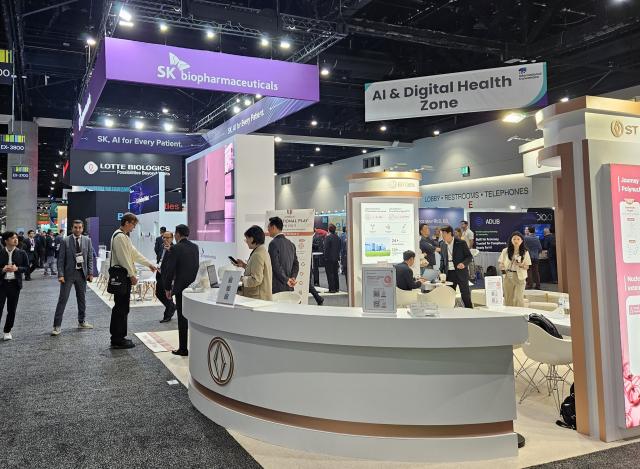
The domestic pharmaceutical and bio industry, which recorded its largest-ever technology exports in the first half of this year, is drawing attention as it gears up for significant clinical results, U.S. regulatory approvals, and expectations for technology exports in the second half of the year.
According to the Korea Pharmaceutical and Bio Association on June 30, there were eight technology export contracts in the first half of this year, with seven of them disclosing a total value of $8.56675 billion (approximately 13.27 trillion won), marking a record high. Industry insiders are optimistic that this year's technology export volume could surpass last year's record of $14.53362 billion.
With the first half's technology exports reaching unprecedented levels, the focus now shifts to whether K-Bio can maintain its momentum in the latter half of the year. Key events are anticipated from HLB, Kolon TissueGene, ArriBio, D&D Pharmatech, and Hanmi Pharmaceutical, including HLB's upcoming FDA approval results.
HLB is set to receive FDA approval results on July 23 for its liver cancer first-line treatment, a combination of riboceranib and camrelizumab. Given the repeated requests for additional data during the review process, the outcome is expected to significantly influence the overall sentiment in K-Bio.
Kolon TissueGene is also seen as a major variable in the second half. The potential success of its Phase 3 clinical trial for the knee osteoarthritis gene therapy 'TG-C' is generating interest regarding its commercialization after years of development. ArriBio's Alzheimer's treatment 'AR1001' is also approaching the release of its Phase 3 clinical trial results in the U.S., raising hopes for continued success in new drug development. Previously, ArriBio secured a global licensing deal worth 10 trillion won for 'AR1001', demonstrating its commercial viability and competitive edge in development.
Expectations are also rising in the obesity and metabolic disease sectors. D&D Pharmatech is being watched closely for its potential to secure additional technology exports with its candidate drug 'DD01' for metabolic-associated steatotic liver disease (MASH), based on Phase 2 clinical trial biopsy results. Han Yong-hee, a researcher at Growth Research, noted, "D&D Pharmatech has emerged as a company with rare candidates in Phase 2 and beyond amid the competition among global pharmaceutical companies for MASH assets." He added, "The point at which the quality of the data translates into actual licensing agreements will mark a significant reassessment of the company's value."
Hanmi Pharmaceutical is preparing to launch its independently developed GLP-1 obesity and metabolic disease treatment 'efpeglenatide'. Efpeglenatide, a once-weekly GLP-1 receptor agonist, is notable as the first domestically developed obesity treatment utilizing Hanmi's long-acting platform technology, Labscovery. Additionally, following Hanmi's previous large-scale technology export agreement with Eli Lilly, there is growing interest in the potential for further technology transfers.
An industry insider stated, "With technology exports already showing significant growth in the first half of the year, expectations for a turnaround are increasing. If the achievements of the first half serve as a springboard for regulatory approvals, clinical results, and additional technology transfers in the second half, K-Bio could continue its rally despite investment hesitancy."
According to the Korea Pharmaceutical and Bio Association on June 30, there were eight technology export contracts in the first half of this year, with seven of them disclosing a total value of $8.56675 billion (approximately 13.27 trillion won), marking a record high. Industry insiders are optimistic that this year's technology export volume could surpass last year's record of $14.53362 billion.
With the first half's technology exports reaching unprecedented levels, the focus now shifts to whether K-Bio can maintain its momentum in the latter half of the year. Key events are anticipated from HLB, Kolon TissueGene, ArriBio, D&D Pharmatech, and Hanmi Pharmaceutical, including HLB's upcoming FDA approval results.
HLB is set to receive FDA approval results on July 23 for its liver cancer first-line treatment, a combination of riboceranib and camrelizumab. Given the repeated requests for additional data during the review process, the outcome is expected to significantly influence the overall sentiment in K-Bio.
Kolon TissueGene is also seen as a major variable in the second half. The potential success of its Phase 3 clinical trial for the knee osteoarthritis gene therapy 'TG-C' is generating interest regarding its commercialization after years of development. ArriBio's Alzheimer's treatment 'AR1001' is also approaching the release of its Phase 3 clinical trial results in the U.S., raising hopes for continued success in new drug development. Previously, ArriBio secured a global licensing deal worth 10 trillion won for 'AR1001', demonstrating its commercial viability and competitive edge in development.
Expectations are also rising in the obesity and metabolic disease sectors. D&D Pharmatech is being watched closely for its potential to secure additional technology exports with its candidate drug 'DD01' for metabolic-associated steatotic liver disease (MASH), based on Phase 2 clinical trial biopsy results. Han Yong-hee, a researcher at Growth Research, noted, "D&D Pharmatech has emerged as a company with rare candidates in Phase 2 and beyond amid the competition among global pharmaceutical companies for MASH assets." He added, "The point at which the quality of the data translates into actual licensing agreements will mark a significant reassessment of the company's value."
Hanmi Pharmaceutical is preparing to launch its independently developed GLP-1 obesity and metabolic disease treatment 'efpeglenatide'. Efpeglenatide, a once-weekly GLP-1 receptor agonist, is notable as the first domestically developed obesity treatment utilizing Hanmi's long-acting platform technology, Labscovery. Additionally, following Hanmi's previous large-scale technology export agreement with Eli Lilly, there is growing interest in the potential for further technology transfers.
An industry insider stated, "With technology exports already showing significant growth in the first half of the year, expectations for a turnaround are increasing. If the achievements of the first half serve as a springboard for regulatory approvals, clinical results, and additional technology transfers in the second half, K-Bio could continue its rally despite investment hesitancy."
* This article has been translated by AI.
Copyright ⓒ Aju Press All rights reserved.