

The export competitiveness in the AI era hinges more on effectively combining technology and finance than on the volume of products produced. Countries worldwide are mobilizing policy finance to nurture AI, semiconductors, batteries, defense, shipbuilding, and biotechnology as strategic national industries.
Hwang Gi-yeon, president of the Korea Export-Import Bank, is redefining the bank's role from a mere lender to a strategic investment institution that designs the global expansion of South Korea's future industries.
He views AI as a key tool not just for internal operational innovation but for enhancing national export competitiveness. The bank is simultaneously advancing the establishment of a generative AI platform, AI-based policy finance, supply chain finance, and support for the overseas expansion of AI industries. Hwang's vision is that AI should become a new driving force for South Korea's exports.
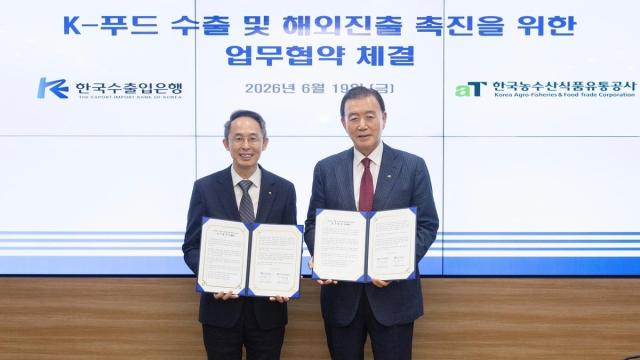
Redefining Export Financing in the AI Era
Hwang Gi-yeon has redefined the purpose of the Korea Export-Import Bank since taking office. He emphasized, "The Export-Import Bank must evolve beyond a simple export financing institution to become a strategic investor leading future industries and a frontline supporter in overcoming trade crises." He believes that policy finance must take the lead in nurturing national strategic industries such as AI, semiconductors, biotechnology, defense, nuclear power, and shipbuilding as future growth engines.
His philosophy is that finance should not merely follow industry but serve as a national strategy that directs industrial development.
Innovating Policy Finance with KEXIM AI
A hallmark project under Hwang's leadership is the establishment of the KEXIM AI platform, a generative AI system. The Export-Import Bank is developing an integrated platform with generative AI systems, unstructured data platforms, AI services, and AI governance through a project worth 13 billion won. Notably, the bank has opted for an internal network-based AI infrastructure rather than external cloud services to ensure security and stability.
He stated that AI will not be limited to document creation or search tools but will expand across all operations, including review, risk management, and policy finance execution, thereby enhancing productivity and enabling businesses to access financial services more quickly and conveniently.
Financing the Export of AI Industries
Hwang aims to promote finance that exports AI industries rather than merely supporting AI. During a visit to Wonik IPS, he stated, "To cultivate the AI industry as a core future industry of our economy, we will strategically support the domestic technological development across the entire AI value chain." He plans to expand financing tailored to AI-related export companies and help small and medium-sized enterprises secure technological leadership.
This approach goes beyond simply nurturing AI companies; it represents a strategy to connect South Korea's AI industry to the global market.
Connecting AI with Official Development Assistance
A distinctive aspect of Hwang's strategy is the integration of AI into Official Development Assistance (ODA). He is collaborating with the National Information Society Agency (NIA) to establish an AI and digital international development cooperation platform, promoting new models that support AI education centers and digital infrastructure in developing countries. This initiative aims to create a foundation for the overseas expansion of South Korean AI companies rather than just providing aid.
He stated, "We will create a new model of AI-based K-ODA that will serve as a catalyst for the global expansion of the domestic AI industry." This represents a new approach that connects policy finance, AI, diplomacy, and industrial strategy.
Supply Chain Financing in the AI Era
The competitiveness of the AI industry stems from a stable supply chain. Hwang has signed a financial cooperation agreement worth $500 million with the Asian Development Bank (ADB) to secure global supply chains for key minerals and is promoting projects to stabilize these supply chains. Additionally, he is building a supply chain cooperative finance platform in collaboration with LG Energy Solution, SK On, Samsung SDI, and Doosan Enerbility to expand financial support to partner small and medium-sized enterprises.
In the AI era, securing semiconductors, batteries, rare earth elements, and key minerals is crucial for national competitiveness, leading to the conclusion that finance must be part of supply chain strategy.
Transforming Finance for Productivity
Hwang views productive finance as the cornerstone of policy finance in the AI era. He has formed a productive finance consultative body with the Industrial Bank, the Korea Development Bank, and the Korea Credit Guarantee Fund to jointly support advanced strategic industries, venture companies, climate technologies, and regional businesses. The Export-Import Bank aims to concentrate 22 trillion won in support for the establishment of AI transformation infrastructure through its 'AX Special Program' over the next five years, with a goal of attracting 15 trillion won in private investment through over 3 trillion won in direct investment by 2028. His commitment to making AI the central axis of industrial innovation is clear.
Growing AI Finance with Small and Medium Enterprises
Hwang emphasizes that AI innovation should not be limited to large corporations in the capital region. He plans to provide over 110 trillion won to small and medium-sized enterprises with technological capabilities and growth potential over the next three years, while also expanding preferential interest rates and supply chain finance for regional companies. His statement that, "We will strengthen support to ensure that future strategic industries like AI can spread beyond the capital region," exemplifies his commitment to linking AI with national balanced development strategies. The philosophy behind AI finance is that it should create inclusive opportunities for all companies to innovate.
The Essence of Financial Entrepreneurship
Hwang Gi-yeon's financial entrepreneurship is centered on making AI South Korea's export competitiveness. He views AI not merely as a tool for operational efficiency but as a national growth strategy. The establishment of KEXIM AI, financing for the AI industry, AI-based international development cooperation, supply chain finance, and the expansion of productive finance all point in the same direction. His vision is for the Export-Import Bank to be a strategic investment institution that opens pathways for South Korea's AI industry to enter the global market, rather than just a bank supporting export companies.
In the AI era, the competition for exports begins with the combination of technology and finance, and Hwang is a leader in policy finance actively implementing that combination.
Strengths
Hwang has deep expertise in policy finance and international finance, having worked at the Export-Import Bank for 36 years. His comprehensive vision connects AI with national export strategies through initiatives like KEXIM AI, AI industry financing, supply chain stabilization, and AI-based ODA models.
Weaknesses
As a policy finance institution, it is significantly influenced by government policies and international circumstances. Most AI strategies are long-term projects, making it difficult to demonstrate results in the short term, and global economic slowdowns and exchange rate fluctuations can burden policy implementation.
Opportunities
The growing global demand for advanced industries such as AI, semiconductors, defense, shipbuilding, and biotechnology significantly expands the role of the Export-Import Bank. KEXIM AI and AI-based international development cooperation and supply chain finance could become new growth engines for South Korean AI companies' overseas expansion.
Threats
The ongoing risks posed by U.S.-China technological rivalry, protectionism, geopolitical conflicts, and global supply chain instability present continuous threats to both export companies and policy finance. The rapid pace of changes in AI technology may also complicate investment decisions.
※ This article was written using generative AI and has undergone editorial review.
* This article has been translated by AI.
Copyright ⓒ Aju Press All rights reserved.