
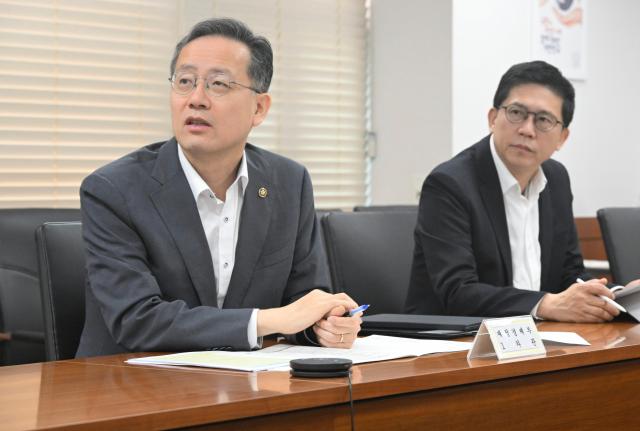
During a meeting at the Government Seoul Building, the Deputy Minister reviewed the consumer price trends for June, the proposed revision of the consumer price index based on 2025 data, and the status of initiatives aimed at stabilizing living costs and alleviating burdens on the public.
According to the National Data Agency, consumer prices rose by 3.2 percent last month. While the increase in seafood prices has slowed and processed food prices remain below 1 percent, the rise in agricultural and livestock products, as well as petroleum products, has slightly expanded.
The government introduced the oil price cap in March to stabilize oil prices. The Ministry of Finance and Economy believes that the cap has contributed to a 0.4 percentage point reduction in inflation last month, estimating that inflation would have reached 3.6 percent without it.
As the United States and Iran reached a peace agreement, international oil prices and prices of petroleum products have begun to decline. On June 27, the government reduced the seventh price cap by 150 won per liter, resulting in a drop of 72 to 73 won per liter in retail prices for gasoline and diesel over the following five days. The government plans to enhance the effects of the price cap by strengthening market inspections and cracking down on unfair practices.
Additionally, the government is accelerating the implementation of its recently announced measures to stabilize living costs and reduce burdens on the public. With an investment of 1 trillion won, it aims to achieve noticeable price stability through tax and financial support.
To this end, the government will conduct the largest-ever discount event for all agricultural, livestock, and fishery products by next month. For items experiencing price increases, such as eggs, pork, and mackerel, the government plans to lower supply prices and increase imports.
The Deputy Minister emphasized, "All measures must lead to actual stabilization of consumer prices, and I urge relevant departments to strengthen on-site inspections." The government will monitor discount prices by item and regularly check the implementation status. Additionally, it will conduct inspections of customs and distribution in collaboration with relevant agencies, including the Ministry of Agriculture, Food and Rural Affairs, the Ministry of Oceans and Fisheries, and the Korea Customs Service.
* This article has been translated by AI.
Copyright ⓒ Aju Press All rights reserved.