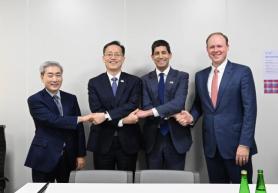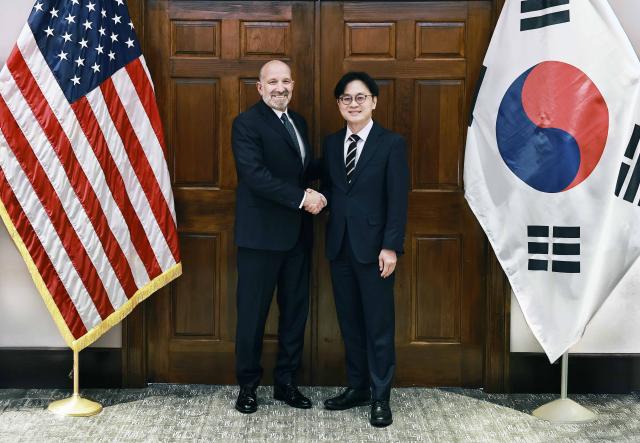
SEOUL, July 22 (AJP) - South Korea’s Industry Minister Kim Jung-kwan left for Washington on Wednesday to defend Seoul’s tariff deal and advance a $350 billion investment package as the legal authority for the United States’ temporary global duties expires on Friday.
Kim will stay in Washington through Saturday for talks with U.S. Commerce Secretary Howard Lutnick and other senior administration and congressional officials on strategic investment and outstanding trade issues, the Ministry of Trade, Industry and Energy said.
He will also meet Energy Secretary Chris Wright and other officials to discuss cooperation in energy and natural resources while conducting outreach to Congress on bilateral trade and investment concerns.
The visit comes as the Trump administration prepares for the expiry of the 10 percent global tariff imposed under Section 122 of the Trade Act of 1974. That provision allows the president to levy duties for up to 150 days to address a serious balance-of-payments problem.
Without congressional action to extend the tariffs, the Section 122 authority expires Friday.
Washington could seek to preserve or replace the duties through Section 301, a more durable trade remedy that permits tariffs or other restrictions after an investigation finds that a foreign government’s conduct is unreasonable or discriminatory and burdens U.S. commerce.
For Seoul, the immediate question is whether duties imposed under a new legal authority would remain subject to the 15 percent ceiling agreed by the two countries last year.
South Korea agreed to a $350 billion investment package in return for Washington lowering its reciprocal tariff on Korean products from 25 percent to 15 percent.
The Korean government has yet to disclose specific projects under the package, although presidential policy chief Kim Yong-beom has said the first investments could become visible around August or September.
Kim’s trip also comes as South Korea faces a separate threat of Section 301 action arising from its treatment of Coupang, the New York-listed e-commerce company.
Beyond tariff concerns, Kim will seek to accelerate bilateral shipbuilding cooperation. He will attend Thursday’s opening of the Korea-U.S. Shipbuilding Partnership Center in Washington with government and industry representatives from both countries.
The center follows a memorandum signed by the Korean Industry Ministry and U.S. Commerce Department in May under the Korea-U.S. Shipbuilding Partnership Initiative. It will support cooperation between Korean and U.S. shipbuilders and identify joint projects.
“The government has begun full-scale work on strategic investment projects under the Korea-U.S. Strategic Investment Act,” Kim said. “Through this visit, we will further specify the direction of the investment projects and faithfully implement the Korea-U.S. tariff agreement so that bilateral trade relations remain stable.”
Copyright ⓒ Aju Press All rights reserved.