
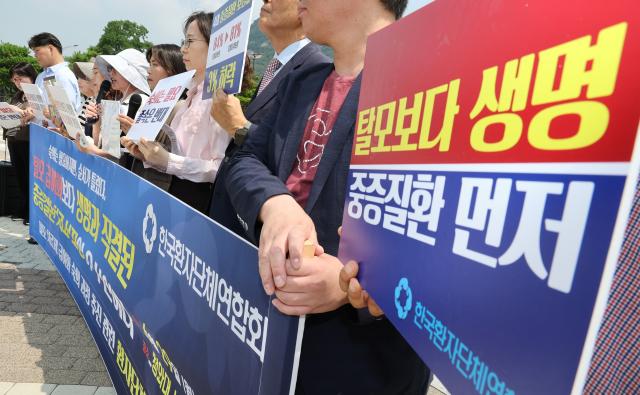
The debate over whether to include hair loss treatments under health insurance coverage has resurfaced. Estimates suggest that adding coverage for hair loss medications could require an additional annual budget of approximately 180 billion won. This has sparked a broader societal discussion about the role of health insurance and the prioritization of its financial resources. In response to growing criticism, a forum scheduled for July 4, organized by the Ministry of the Interior and Safety and the Ministry of Health and Welfare, has been postponed, indicating a slowdown in government policy initiatives.
Hair loss is not a trivial condition. For younger individuals, it can lead to decreased self-esteem, depression, and difficulties in social interactions. Some patients with severe hair loss find themselves in a situation where they cannot forgo treatment. Therefore, the necessity of hair loss treatment should not be dismissed outright.
However, health insurance is a social insurance system that operates with limited resources. It cannot cover every treatment, so clear principles must guide what should be prioritized for support. The primary purpose of health insurance is to ensure coverage for serious illnesses and essential medical care that directly impacts citizens' lives.
The reality is challenging. With an aging population, medical costs are rising rapidly, and the financial burden on health insurance is increasing. There are urgent issues to address, including a shortage of essential medical personnel, gaps in healthcare access in rural areas, and the need for expanded support for cancer, rare diseases, and severe illness treatments. The areas that health insurance must cover continue to grow, but funding is not limitless.
In this context, it is crucial to critically assess whether allocating an additional 180 billion won annually for hair loss treatment can garner public support. If the same funds can be used to save lives or improve access to treatment for severe patients, it aligns more closely with the founding principles of health insurance.
Moreover, once health insurance coverage is expanded, it is difficult to retract. Expanding benefits for one specific condition often leads to demands for equity in coverage for other conditions. There is a significant likelihood that similar treatments or medical services aimed at improving quality of life will also seek health insurance coverage. Ultimately, this could lead to an exponential increase in financial burdens.
This is not to suggest that the economic burden faced by hair loss patients should be ignored. If there is a recognized social need, there is no reason to insist solely on health insurance as the solution. Various policy measures, such as targeted support for low-income individuals or those with severe alopecia, tax incentives, and treatment cost reduction programs, should be considered. Relying solely on health insurance to solve all issues could undermine the sustainability of the system.
Policies should not be determined by consensus alone. Good intentions are insufficient. Once benefits are expanded, future generations will also share the burden. Therefore, a rigorous cost-effectiveness analysis and social consensus are essential.
Health insurance is a shared asset for all citizens. While everyone desires benefits, it is impossible to meet every demand. The prioritization of medical coverage must remain focused on life-saving treatments, essential medical care, and serious illnesses.
Discussions about supporting hair loss treatments should occur within this framework. Before expanding health insurance coverage, the sustainability of the health insurance system itself must be safeguarded. To create a health insurance system that citizens can rely on with confidence, principles must take precedence over popularity, and long-term responsibility must outweigh short-term consensus.
* This article has been translated by AI.
Copyright ⓒ Aju Press All rights reserved.