
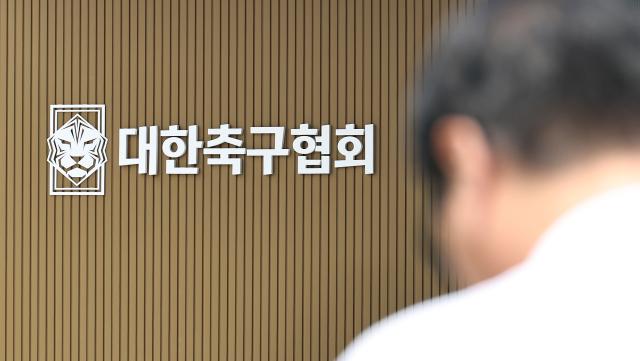
The Korean Football Association is discussing the possibility of directly electing its next president. Following the national team's failure to advance past the group stage in the North and Central America World Cup, the Ministry of Culture, Sports and Tourism and the Korean Sports Council are considering a shift from an indirect election system to a direct one. Although this change comes late, it is deemed necessary.
Historically, the election of the Football Association president has been conducted by a limited electorate. While it cannot be outrightly deemed unreasonable, there have been consistent criticisms that it fails to adequately reflect the diverse voices within the football community. If stakeholders such as coaches, players, referees, recreational athletes, and regional associations have limited avenues to participate in the association's governance, reform is unavoidable.
However, the introduction of a direct election should not be seen as a panacea for all of Korean football's issues. Changing the electoral process is merely a procedural adjustment. More crucial is how the new president will restore trust in the beleaguered football administration with vision and accountability.
The recent World Cup failure cannot be attributed solely to poor performance in a single tournament. There have been numerous criticisms regarding controversies surrounding the national team’s management, distrust in the coaching selection process, the association's closed decision-making, and a lack of communication with fans, all of which have accumulated over time. The sight of the Football Association's logo draped in mourning at the airport upon the team's return symbolized the disappointment and anger of fans towards the football administration.
More important than how the new president is elected is what kind of association will be created. An organization should be run by systems rather than the leadership of a specific individual. If policy directions fluctuate with each change of president and major decisions are concentrated in the hands of a few, the outcome will remain unchanged regardless of whether the election is direct or indirect. The departure of a particular figure does not automatically alter the organizational culture and decision-making structure. If the same structure persists, the same conflicts and distrust are likely to recur, even with a new president.
Therefore, discussions about direct elections must go hand in hand with governance reform. It is essential not only to expand the electorate but also to decentralize the powers concentrated in the president. Key issues such as coaching appointments, national team management, financial execution, and major contracts should be handled responsibly by independent and specialized bodies. The structure where one person's judgment dictates the entire association's system must change.
The Ministry of Culture, Sports and Tourism and the Korean Sports Council should view this issue not just as a problem for the Football Association but as an opportunity to review the electoral systems and governance of all sports organizations. If the reforms are merely superficial, similar controversies will inevitably arise in other sports as well.
Korean football still boasts outstanding players and passionate fans. What is lacking is trust in the administration, not skill. Fans turned away not because of a single defeat but due to the absence of a visible system to rectify failures.
Direct elections represent a meaningful starting point. However, standing at the starting line does not guarantee reaching the destination. What Korean football needs now is administrative innovation that goes beyond merely changing the electoral method. Satisfaction with merely changing personnel will not suffice. Only by reforming the system and establishing a proper framework can Korean football regain its trust.
* This article has been translated by AI.
Copyright ⓒ Aju Press All rights reserved.