
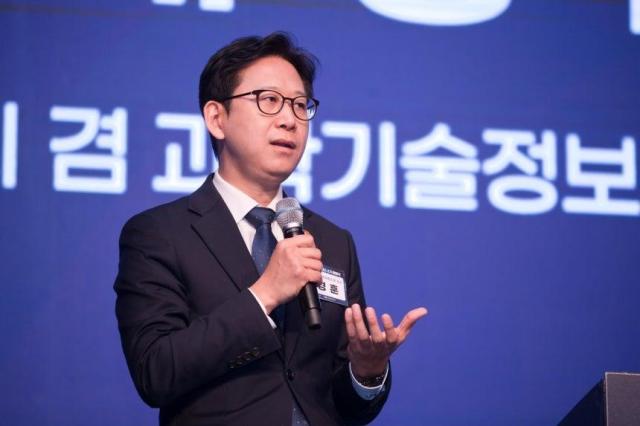
Bae Kyung-hoon, Deputy Prime Minister and Minister of Science and ICT, unveiled a vision for a token economy based on "Everyone's AI," which aims to return the value of citizens' contributions to AI utilization in the form of points and credits. This initiative seeks to redefine citizens as active participants and contributors in the AI ecosystem rather than mere consumers, creating a national AI ecosystem that returns the value generated by AI to the public.
On July 2, Bae shared his vision in a post on social media titled "Everyone's AI: The Beginning of a New National AI Ecosystem." The project, spearheaded by the Ministry of Science and ICT, aims to provide AI services to all citizens.
"In the future, every citizen will have their own AI agent," Bae stated, emphasizing the need to create a structure where citizens can generate both social and economic value through AI utilization.
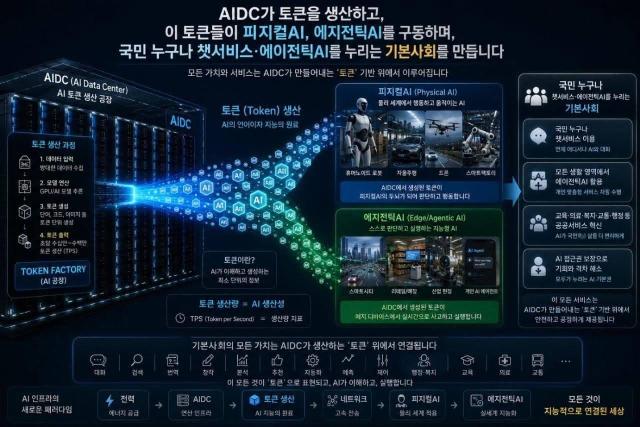
The core of this initiative is a value-return structure based on AI contributions. Bae proposed two models: first, individuals' AI agents could earn points or credits based on their contributions through various activities; second, corporate AI agents could participate in the Everyone's AI platform, providing services, information, and marketing activities, with costs paid to the platform and profits returned to participating citizens. He noted, "This value could evolve into a new form of token economy that circulates within the AI ecosystem."
The concept is rooted in viewing AI data centers as "token factories" that produce and consume tokens, which are seen as a fundamental unit in the AI era. Bae believes that the key resources in this new age will not only be power and semiconductors but also tokens. He predicted that the upcoming physical AI and agentic AI will require computational power and tokens far beyond what current generative AI demands.
Bae assessed that the infrastructure is already being established. "Just two years ago, GPU shortages were the biggest constraint on the development of the AI industry, but now the government is securing over 10,000 GPUs annually to support industry, academia, and research," he said. He also discussed plans to build AI data centers with a capacity of 8.4 GW (approximately $550 billion investment) by 2029 and 10 GW by 2035, calling it a worthy investment for long-term national competitiveness.
However, he cautioned that infrastructure alone is insufficient. Bae stressed, "Building infrastructure alone does not make a country an AI powerhouse. The more important challenge is how to create an 'AI basic society' where all citizens can share in the benefits of AI." He added, "The first country to establish an ecosystem that returns the new value created by AI to its citizens will secure a new competitive edge in the AI era."
This vision is still in the early stages and not yet a finalized policy. Bae noted, "This is not a completed policy but an initial concept exploring various possibilities," and he plans to continue discussions with experts from industry, academia, and research. The Ministry of Science and ICT is working on launching the Everyone's AI service based on an independent AI foundation model within this year.
* This article has been translated by AI.
Copyright ⓒ Aju Press All rights reserved.