
AI is fundamentally changing the order of broadcasting and media.
News is summarized by AI, videos are edited by AI, and translations and subtitles are generated in real-time. However, deepfakes and misinformation have emerged as new threats to democracy and public discourse.
AI presents both the greatest opportunity and the biggest challenge for the media industry.
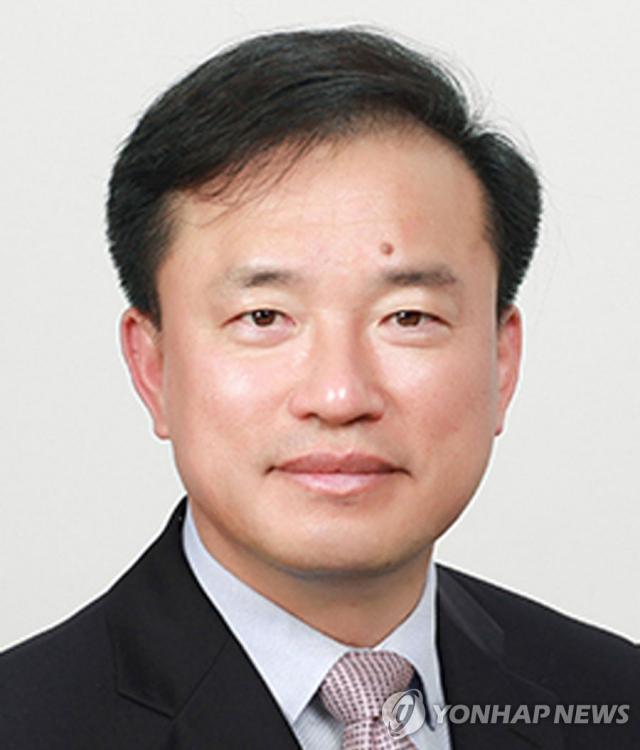
Kim Jong-cheol, chair of the Korea Communications Commission, has declared 2026 as the 'year of reform for broadcasting, media, and communications policy.'
He emphasized the need to innovate outdated broadcasting regulations, establish an integrated media law, and focus on media industry innovation through AI and the creation of a responsible AI ecosystem.
The question is clear.
Can South Korea truly leap to become a global media powerhouse through AI?
AI is rewriting the rules of broadcasting
Broadcasting is undergoing a change that occurs once in a century.
AI is reducing production costs, speeding up production, and enhancing content quality.
Chairman Kim stated that he would boldly innovate outdated and unreasonable regulations on broadcasting advertising and scheduling, promoting media industry innovation through the use of AI. Establishing a new media system that encompasses both OTT and broadcasting is also a key task.
In the AI era, a broadcaster's competitiveness will depend more on how well it utilizes AI than on its size.
Integrated media law will create a new order in the AI era
The boundaries between broadcasting, telecommunications, and platforms have already collapsed.
Chairman Kim announced the launch of the Media Development Committee to discuss the integrated media law, funding structures, regulations, and promotion policies together.
He believes that media policies scattered across various ministries must be unified under a single strategy to effectively respond to the AI era.
Analog-era laws cannot govern the AI era.
New technologies require new laws and systems.
AI era public discourse is essential for protecting democracyAI has opened the door for anyone to create content.
At the same time, misinformation and deepfakes are spreading rapidly.
Chairman Kim is promoting the development of an 'AI Era K-Public Discourse' in collaboration with the National AI Strategy Committee, emphasizing the importance of addressing AI misuse and enhancing public AI literacy as key policies.
He stated, "Public discourse is the core infrastructure of national competitiveness in the AI era," stressing that the government must respect private sector autonomy while fostering a responsible AI ecosystem.
In the AI era, trust becomes a more valuable asset than technology.
Media sovereignty is a matter of national competitiveness
Chairman Kim emphasizes the concept of 'media sovereignty.'
Guaranteeing the right of all citizens to freely and safely use media is the new policy goal for the AI era.
To achieve this, he plans to expand AI utilization education and digital dysfunction prevention education throughout the life cycle, enhancing the media capabilities of the public.
The more citizens who effectively use AI, the greater the national competitiveness.
Reduce regulations and grow the industry
In the AI era, innovation is more important than regulation for the broadcasting industry.
Chairman Kim is also pushing for the establishment of the Korea Broadcasting Media Communications Promotion Agency to improve broadcasting advertising and scheduling regulations and strengthen industry promotion functions.
He aims to create a policy framework that achieves both industrial growth and public interest, moving away from the previous approach of separating regulation and promotion.
AI is not just a technology that reduces costs in the broadcasting industry; it is a technology that creates new markets.
AI presents opportunities for new broadcasters like ABC
AI is not just a technology for large broadcasters.
In fact, the benefits of AI are even greater for smaller organizations.
With AI supporting news production, video editing, translation, subtitles, and short-form content creation, high productivity can be achieved with fewer personnel.
The regulatory innovations and expanded AI utilization emphasized by Chairman Kim can provide growth opportunities not only for existing broadcasters but also for new media operators.
In the AI era, the economy of speed is more important than the economy of scale.
The task assigned to Chairman Kim is not merely to manage broadcasting.
It is to design a new media order that aligns with the AI era.
AI broadcasting innovation, integrated media law, fostering K-public discourse, and regulatory reform all aim toward a single goal.
To make South Korea the world's leading AI media powerhouse.
Broadcasting no longer competes solely through waves.
Only a nation equipped with AI, platforms, data, and trust can lead the future of media.
: Kim Jong-cheol, Chair of the Korea Communications Commission :Kim Jong-cheol, chair of the Korea Communications Commission, is a legal scholar who has researched media law, constitutional law, and AI law. He has served as a professor at Yonsei University Law School and the Department of AI. Leading the Korea Communications Commission, which was launched in early 2026, he is promoting integrated broadcasting and telecommunications policies.
He has identified the establishment of an integrated media law, the creation of the Media Development Committee, the innovation of broadcasting regulations, the expansion of AI utilization, and the establishment of a responsible AI ecosystem as key tasks, leading the new media policy for the AI era.
* This article has been translated by AI.
Copyright ⓒ Aju Press All rights reserved.