
Trump's Mediation Efforts Resurface
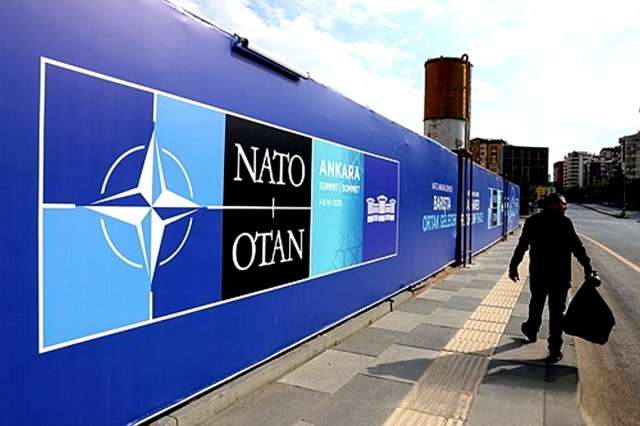
According to CBS and the Associated Press on July 5, President Trump spoke with both President Putin and President Zelensky to discuss potential resolutions to the Ukraine conflict. Following their conversation, President Zelensky stated on X (formerly Twitter), "There is a realistic prospect of ending this war, and the U.S. decision is crucial." He added that he plans to meet with President Trump in Ankara for further discussions.
Russia has also indicated a willingness to consider U.S. mediation. The Kremlin described the call between Trump and Putin as "constructive." Dmitry Peskov, a spokesperson for the Kremlin, noted that "Russia remains open to peace negotiations with Ukraine" and expressed hope for continued efforts by U.S. mediators.
However, it remains uncertain whether these discussions will lead to a ceasefire or peace negotiations. While Russia has mentioned diplomatic solutions, it has attached conditions, insisting that its fundamental positions must be acknowledged. The two sides also have conflicting claims regarding the battlefield situation, with Russia asserting control over the eastern city of Kostiantynivka, which Ukrainian forces deny.
Middle East and Defense Spending Overshadow China Agenda
Middle East instability is another significant factor influencing the summit. The U.S. and Iran recently signed a memorandum of understanding to halt military clashes, but disagreements over maritime navigation in the Strait of Hormuz, the release of frozen assets, and nuclear program restrictions persist. Should the U.S.-Iran ceasefire falter, NATO's focus may shift towards managing the crisis in the Middle East.
Increased defense spending and arms production are also critical issues on the agenda. NATO member states agreed last year in The Hague to allocate 5% of their GDP to defense by 2035. The U.S. plans to assess how well countries are adhering to this commitment during the summit.
However, simply increasing budgets does not guarantee an immediate enhancement of military capabilities. NATO Secretary General Jens Stoltenberg stated in an interview with The Wall Street Journal, "Last year, the focus was on promises to increase defense spending; this year, it is about fulfilling those promises." This means that increased funding must translate into actual procurement of weapons and ammunition.
The capacity for arms production has also become a concern due to high consumption rates resulting from the Ukraine conflict and U.S.-Iran tensions. Defense contractors are struggling to keep pace with the rising demand. A senior official from the Trump administration indicated that several billion dollars in U.S. arms sales contracts are expected to be announced during the summit.
As discussions on the Ukraine conflict, Middle East instability, and defense spending take center stage, issues related to China and Indo-Pacific security are likely to be sidelined. The South China Morning Post reported that NATO views China's military expansion and cooperation among North Korea, China, Russia, and Iran as long-term threats. However, it is anticipated that Indo-Pacific cooperation will not be addressed as a separate key agenda item during this summit.
NATO has also invited the so-called Indo-Pacific Four (IP4) partners, including South Korea, Japan, Australia, and New Zealand. Among the IP4 leaders, only President Yoon Suk Yeol of South Korea is expected to attend, while Japan and Australia plan to send ministerial representatives instead.
* This article has been translated by AI.
Copyright ⓒ Aju Press All rights reserved.