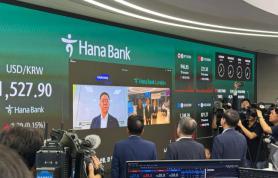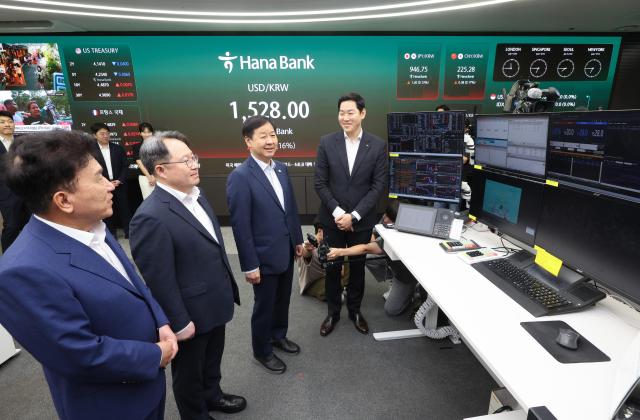
SEOUL, July 07 (AJP) - The Korean won strengthened further Tuesday, the second day of round-the-clock trading in the domestic foreign exchange market, even as foreign investors sold local stocks.
As of 12:30 p.m. (0300 GMT), the won was hovering around 1,521 per dollar, up more than nine won from the previous daytime closing level. South Korea shifted its dollar-won spot market to a 24-hour trading system on Monday, allowing continuous trading from 6 a.m. Monday to 6 a.m. Saturday.
The won's move was notable because it came despite foreign selling in the KOSPI market, which would normally add some pressure on the currency. The intraday gain suggested that dollar-supply expectations and position adjustments may have outweighed equity outflow pressure, at least in early trading.
Market participants were watching expectations for corporate dollar inflows, possible position adjustments after the start of 24-hour trading and caution over official smoothing operations. The decline in the exchange rate also revived market talk of possible smoothing operations by foreign exchange authorities. Authorities do not confirm intervention, and there was no official indication that they had entered the market.
The move was still moderate compared with the won's recent range, but the currency's advance toward the low-1,520 level suggested that the opening phase of the new trading system has not triggered additional FX stress so far.
Bond-market reaction remained limited. The three-year Korean government bond yield fell 1.3 basis points to 3.763 percent in morning trading. The 10-year yield slipped 0.3 basis point to 4.200 percent, staying effectively flat.
The muted bond-market response suggests that the absence of sharp FX volatility after the 24-hour market opening was mildly supportive for bonds, while concerns over long-end supply, inflation and the Bank of Korea's policy-rate path continued to cap the move.
The 10-year yield's reluctance to move far below the 4.2 percent level indicates that investors are still pricing in heavy long-term bond supply and uncertainty over future rate decisions.

Copyright ⓒ Aju Press All rights reserved.