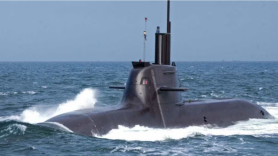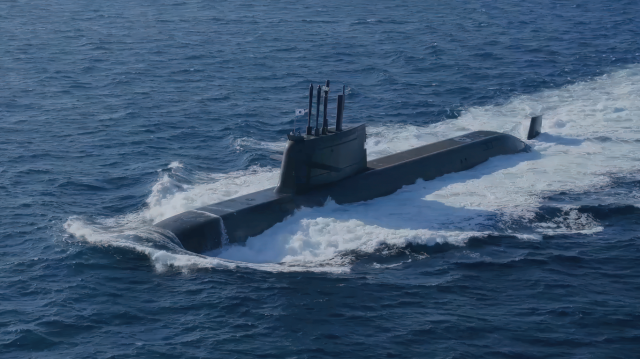
In Korea, there is a saying, jeot-jal-ssa — literally "lost, but fought well." It best captures Hanwha Ocean's narrow defeat to Germany's TKMS in what Canada itself described as a "difficult, close decision."
To impress Canadian officials, South Korea dispatched the operational KSS-III submarine across the Pacific, met the Royal Canadian Navy's demanding requirements and earned praise from Canadian officials for offering a "comprehensive and thoughtful package" in what they called a highly competitive contest.
The result leaves Hanwha Ocean with something almost as valuable as a contract: a globally validated reference as other navies prepare to replace or expand their submarine fleets.
"It was a loss, but one that built a valuable foundation," said Moon Geun-sik, a submarine expert and professor at Hanyang University's Graduate School of Public Policy.
"In submarine performance, South Korea showed the world that it is on par with, or even ahead of, the world's leading builders," he told AJP.
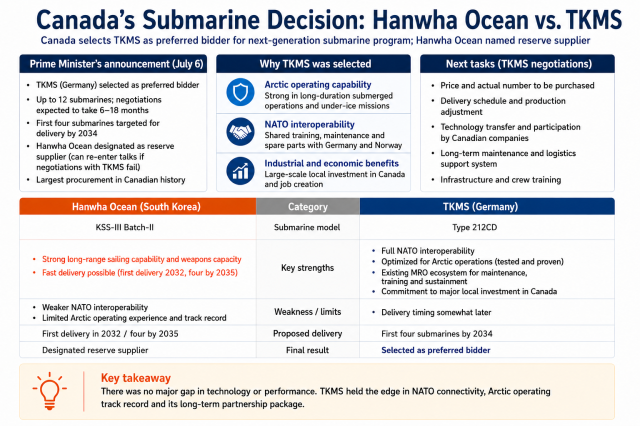
Canada on Monday selected TKMS's Type 212CD as the preferred platform for its program to acquire up to 12 conventionally powered submarines. Hanwha Ocean's KSS-III Batch-II was designated the reserve option should Ottawa fail to reach a final agreement with the German company.
The outcome was clearly a setback. But Canada did not reject the Korean submarine on technical grounds.
Prime Minister Mark Carney said both proposals satisfied the Royal Canadian Navy's demanding operational requirements and described the competition as a close contest between two highly qualified suppliers.
The deciding factor, he said, was which proposal better advanced Canada's broader security, strategic and economic interests and fit more naturally into its alliance framework and long-term defense strategy.
Carney also noted that Canadian personnel had observed the Korean Navy operating alongside Canadian forces during joint exercises in early June.
Yet the decision came as NATO members were placing unprecedented emphasis on strengthening their own defense industrial base.
Moon said the timing reinforced that interpretation. Ottawa announced its decision just before Carney departed for the NATO summit in Ankara.
That mattered because the July 7-8 summit is centered on the very priorities Canada cited in explaining its choice.
NATO leaders are focusing on defense investment, industrial capacity and joint procurement as members seek to translate last year's pledge to spend 5 percent of gross domestic product on defense and related sectors into actual production capacity and weapons programs.
The urgency has intensified after U.S. President Donald Trump again questioned Washington's commitment to the alliance while accusing European members of relying excessively on American protection.
There is no formal process for a U.S. withdrawal from NATO. But Trump's rhetoric, coupled with reductions in the U.S. military presence in Europe, has increased pressure on European allies and Canada to demonstrate they can shoulder more of the alliance's defense burden while keeping Washington committed to Article 5.
Against that backdrop, selecting a European-designed submarine carried significance beyond procurement. It aligned with NATO's broader push to deepen European and Canadian defense integration through shared production lines, supply chains and long-term industrial cooperation.
Some commenters welcomed the choice as strategically sound and economically beneficial. One called it "an excellent decision," while another said Germany was the expected winner given Carney announced the selection immediately before leaving for the NATO summit.
Others questioned why Canada was again relying on a foreign builder, doubted whether TKMS could meet its delivery schedule and criticized Ottawa for choosing a submarine that has yet to enter service over Hanwha's operational KSS-III.
The same divide appeared on an online forum frequented by members of the Canadian military community. Some users argued the outcome reflected alliance politics more than technical evaluation, with one summarizing the decision as: "EU ties. Politics not procurement."
Others lamented that Canada had passed over the Korean submarine's longer range, greater weapons capacity and earlier delivery timeline. The comments were anecdotal and do not necessarily reflect broader Canadian public opinion.
South Korea's campaign nevertheless left a lasting impression.
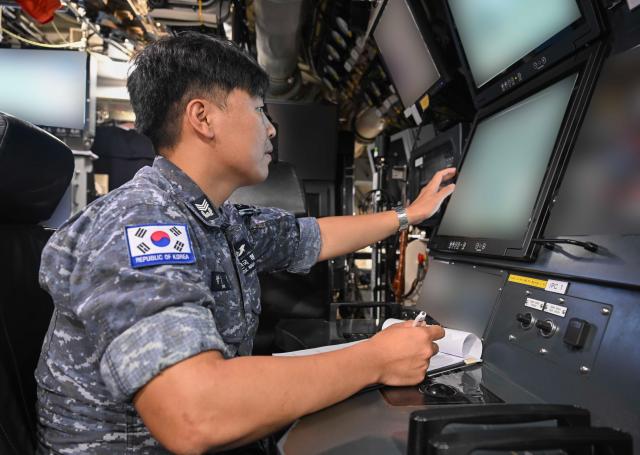
The ROKS Dosan Ahn Chang-ho completed a nearly two-month, 14,000-kilometer Pacific voyage to Canada, with Royal Canadian Navy submariners joining the crew in Hawaii for the final leg before the two navies conducted joint exercises.
Petty Officer 2nd Class Jake Dixon compared the experience to "buying a brand-new Tesla and then coming out of a '99 Honda Civic," while Lt. Cmdr. Brittany Bourgeois said stepping aboard the modern submarine had "opened our eyes to the possibilities ahead of us."
South Korea's Defense Acquisition Program Administration stressed that the result did not mark the end of Seoul's defense ambitions in Canada.
"Although the submarine project produced a disappointing result, there are several other defense projects between the two countries that remain at an early stage," a DAPA spokesperson said. "We will continue to cooperate and expand our defense ties."
The spokesperson declined to identify the projects.
For South Korea, the more immediate question is whether the Canadian campaign can be converted into future export victories.
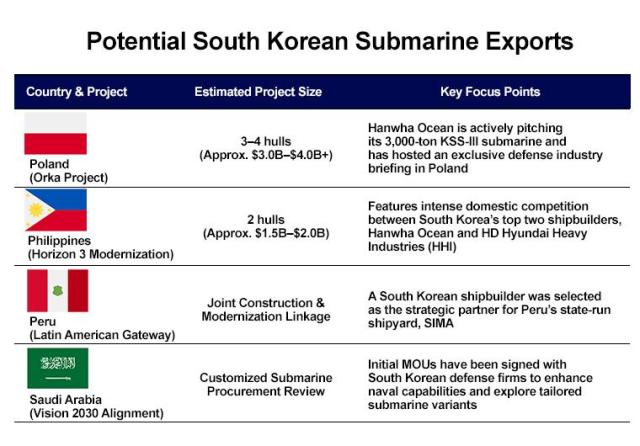
"South Korea was not behind Germany in submarine performance," he said. "This will have a positive effect in competitions with other countries."
The Canadian campaign gave prospective buyers something few defense competitions ever provide: a public demonstration under real-world conditions.
South Korea sailed an operational submarine across the Pacific, proved it could sustain long-distance deployments and remained in contention until the final stage against the world's most established conventional submarine builder.
The campaign did not produce a contract, but it may impress the next customer.

Copyright ⓒ Aju Press All rights reserved.