Huang may have overrated Korea.
By almost every measure, South Korea is among the world's most enthusiastic adopters of artificial intelligence. Yet one crucial ingredient remains missing: a homegrown flagship foundation model.
Generative AI reached 37.1 percent of Korea's working-age population in the first quarter of 2026, up from 25.9 percent in June last year, according to Microsoft's AI Economy Institute. The 43.2 percent increase was the largest among the countries surveyed over the period, far outpacing the roughly 19 percent rise in the United States.
The institute said Asia is emerging as a major growth engine, with South Korea and several other economies recording rapid gains as AI tools become more useful in local languages and everyday workflows.
"AI adoption continued to accelerate in Q1 2026, but the benefits are spreading unevenly. The Global North is pulling further ahead of the Global South, underscoring the need to address foundational gaps in electricity, connectivity, digital skills and local-language access," the institute said in its latest report.
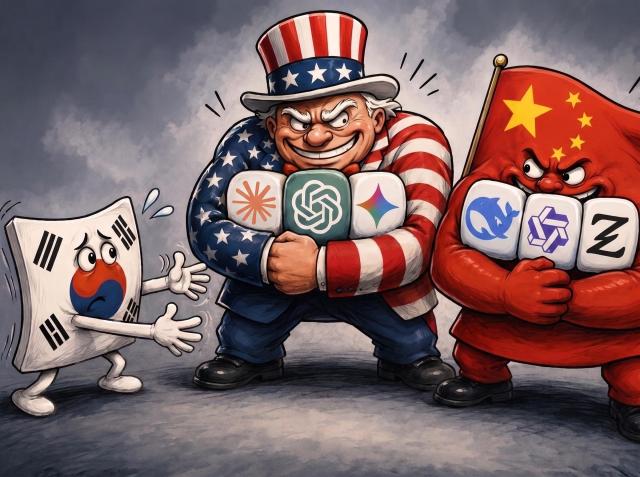
Korea's dependence on foreign frontier models became painfully tangible on June 12, when the U.S. Commerce Department abruptly blocked overseas access to Anthropic's newest models, Mythos 5 and Fable 5, citing national security concerns.
Although Washington restored access to vetted institutions on July 1, the episode served as a stark reminder that even a treaty ally can lose access to critical AI technology with little warning.
For advocates of "sovereign AI" — the drive to build advanced models using domestic computing power, language and data — the incident transformed an industrial ambition into a strategic necessity.
The government has since moved with unusual urgency.
The Ministry of Science and ICT is reportedly discussing with the presidential office and fiscal authorities a plan to invest about 5 trillion won ($3.29 billion) from a semiconductor-driven tax windfall to secure roughly 10,000 of Nvidia's latest Vera Rubin GPU modules while launching an aggressive effort to bring leading Korean AI researchers back from overseas.
The ministry has stressed that no final decision has been made.
The proposal would mark a sharp departure from Seoul's current sovereign AI foundation-model program, which distributes only a few hundred GPUs to each of four teams — SK Telecom, LG AI Research, Upstage and Motif Technologies. Critics argue that spreading scarce computing resources so thinly leaves every participant too small to compete against frontier laboratories deploying tens of thousands of GPUs.
Instead, the new proposal would concentrate all 10,000 GPUs on a single elite team capable of building a globally competitive model.
"GPU is increasingly needed on a massive scale, but isn't the pace of securing it too slow?" President Lee Jae Myung said on June 26, urging lawmakers to lock related funding into the supplementary budget.
South Korea is far from alone in its concerns.
More than 60 countries have now published national AI strategies, while an increasing number — including France, India, the United Arab Emirates, Saudi Arabia, Japan and South Korea — have backed those strategies with dedicated computing infrastructure and state-supported foundation-model programs.
France's Mistral AI, the UAE's Falcon, Saudi Arabia's HUMAIN and India's BharatGen each represent different approaches to the same objective: reducing dependence on foreign frontier models.
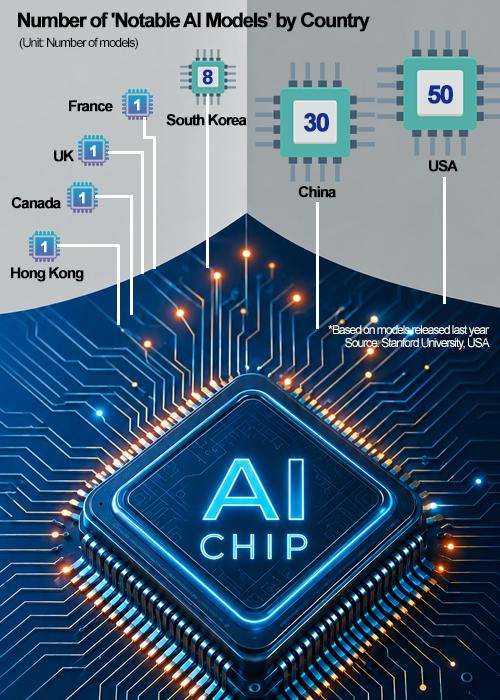
Pressure is also mounting from China.
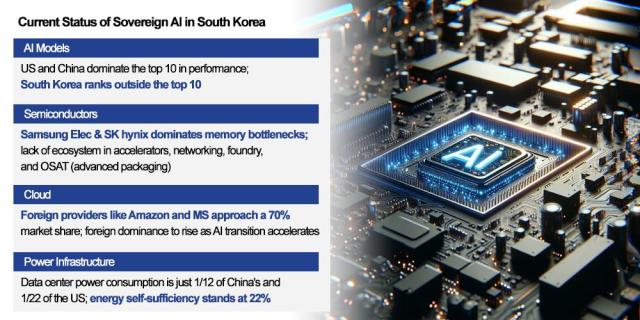
Underlying the race for chips and models is an even larger contest over infrastructure.
Deputy Prime Minister and Science Minister Bae Kyung-hoon said on June 29 that countries worldwide plan to invest about $5.5 trillion, or roughly 8,400 trillion won, in AI data centers over the next five years.
"Korea will invest 550 trillion won to build 8.4 gigawatts of AI data-center capacity by 2029 and attract more than 1,000 trillion won in total investment by 2035," Bae said.
The infrastructure push dovetails with the country's biggest industrial gamble yet.
Under the government's "three mega-projects" initiative, Samsung Electronics and SK hynix have pledged a combined 800 trillion won to build four next-generation memory fabs in the Honam region, shifting the center of gravity of Korea's power- and water-intensive semiconductor industry away from the Seoul metropolitan area.
SK Group envisions building up to 15-gigawatt AI factories across the nation.
James Ryu, president of SK AI Committee in an AI forum sponsored by the American Chamber of Commerce in Korea on July 2 argued Korea must evolve from a chip exporter to an AI token exporter to become an AI powerhouse.
"We are selling the world's best memory chips while letting other countries build the token factories," he said. "In effect, we export components but import the finished AI product."
He preached Korea must pursue five priorities to become a global AI token exporter: building gigawatt-scale AI factories, developing sovereign Korean foundation models, attracting global AI companies to operate AI factories in Korea, expanding domestic AI demand across healthcare, education, manufacturing and defense, and strengthening enabling technologies including power systems, cooling, HBM, CXL memory and advanced semiconductor packaging.
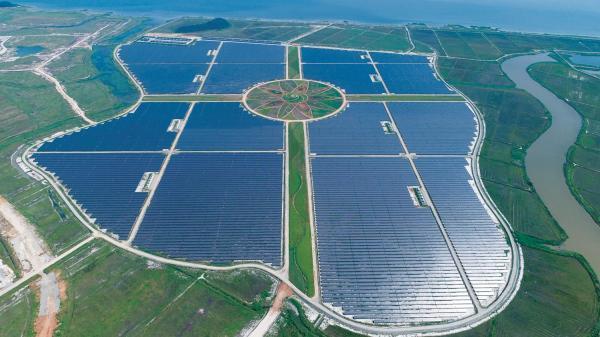
Officials acknowledge that securing sufficient electricity and industrial water will determine whether those ambitions become reality. The Honam semiconductor complex alone is expected to require roughly 650,000 tons of industrial water a day, while rebuilding Korea's AI talent pipeline remains an equally urgent challenge.
Time, industry executives warn, is not on Korea's side. Frontier AI laboratories now release increasingly capable models at a breathtaking pace, narrowing the window for newcomers to catch up.
Huang could be right that South Korea possesses many of the ingredients of an AI superpower. But it is yet to deliver the final layer where the greatest value is created: a globally competitive foundation model.
Producing the world's best chips is no longer enough. The next race is to build the intelligence that runs on them.
Copyright ⓒ Aju Press All rights reserved.