In a post on his own social media platform Truth Social, Trump wrote, "The Hormuz Strait is OPEN, and will remain OPEN, with or without Iran. We are reinstating THE IRANIAN BLOCKADE, so named because it is only stopping Iran's ships or customers from entering or leaving."
Trump said the U.S. would oversee security in the strategic shipping route, which is crucial for global oil and gas shipments, and be reimbursed for the costs of maintaining safe passage.
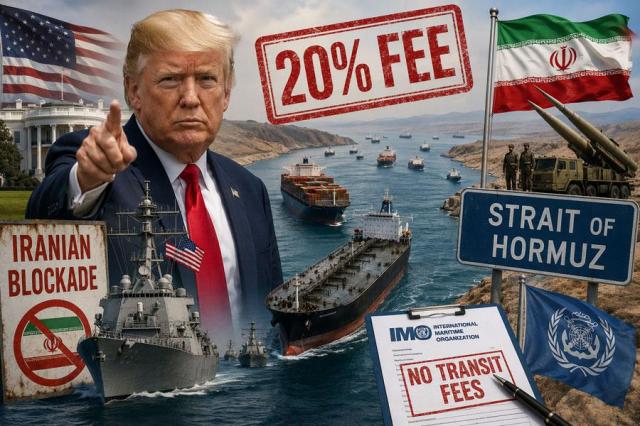
"The U.S.A. will be, from this point forward, known as 'THE GUARDIAN OF THE HORMUZ STRAIT,' but as such, and as a matter of FAIRNESS, will be reimbursed, at the rate of 20% on all cargo shipped, for any and all costs necessary to do the job of providing safety and security to this very volatile section of the World," he said, adding that the process would "begin immediately."
But it remains unclear whether the proposed 20 percent charge would apply to the total value of cargo passing through the strait or cover the costs of maintaining security.
Trump did not provide further details, while the U.S. Central Command (CENTCOM) later said its forces "will resume enforcing a blockade on maritime traffic entering and exiting Iranian ports" from Tuesday.
"CENTCOM forces will enforce the blockade against vessels transiting to or from Iranian ports and coastal areas. The U.S. military continues to support traffic flow through regional waters for all vessels not violating the blockade," it said.
CENTCOM said the previous blockade, which was in place from April 13 to June 18, redirected more than 140 compliant vessels, disabled nine non-compliant ships and allowed more than 50 commercial vessels carrying humanitarian aid to pass through.
For its part, Iran's powerful Revolutionary Guard, which controls the Islamic Republic's ballistic missile arsenal, said the strait is "our territory" and that it would not allow a "rogue and child-killing army from the other side of the world to continue its illegal interference in it."
Iran had previously sought tolls on vessels passing through the strait but agreed to suspend them for 60 days under an interim deal with the U.S. last month, suggesting ships passing through the waterway could now face charges from both countries.
Shortly after Trump's remarks on the proposed fees, the International Maritime Organization (IMO) reaffirmed its opposition to transit fees in the strait. "We have always been consistent on our stance on fees – IMO stands firmly against charging fees for passage through straits used for international navigation," an IMO spokesperson said. "There is no legal basis through which to introduce mandatory tolls simply to transit through a strait."
Amid fiery rhetoric between Washington and Tehran that has raised concerns over renewed escalation in the region, South Korea and other energy-importing countries have been closely monitoring developments, as the country relies heavily on the waterway for crude oil imports.
After Washington and Tehran signed a 14-point memorandum of understanding (MOU) on June 17 to negotiate a final agreement, many ships from around the world that had been stranded in the strait began leaving the area. A total of 26 South Korean vessels had been trapped in the strait since late February, but 24 of them have since departed.
Currently, two South Korean-flagged vessels remain inside the strait including cargo ship HMM Namu, which was towed to a port in Dubai for repairs after being attacked in early May, according to the Ministry of Oceans and Fisheries.
Copyright ⓒ Aju Press All rights reserved.