SEOUL, July 20 (AJP) - There is a reason the only direct peace talks between Russia and Ukraine in four years of war have happened in one city, and that city is Istanbul.
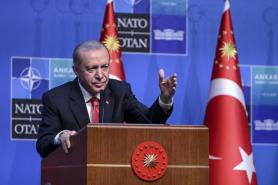
Earlier this month, NATO leaders gathered in Ankara for the first summit the alliance has ever held in the Turkish capital. The choice of venue was not a courtesy. It was an acknowledgment that the country long treated as the alliance's difficult southeastern flank has become something closer to its hinge. To understand why, it helps to look past the headlines and at a much older habit.
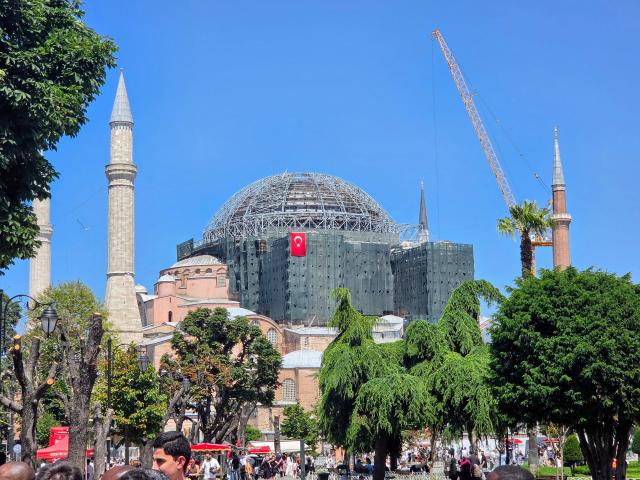
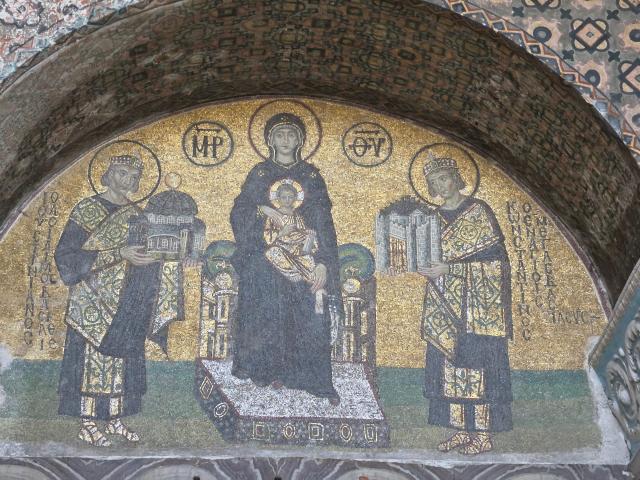
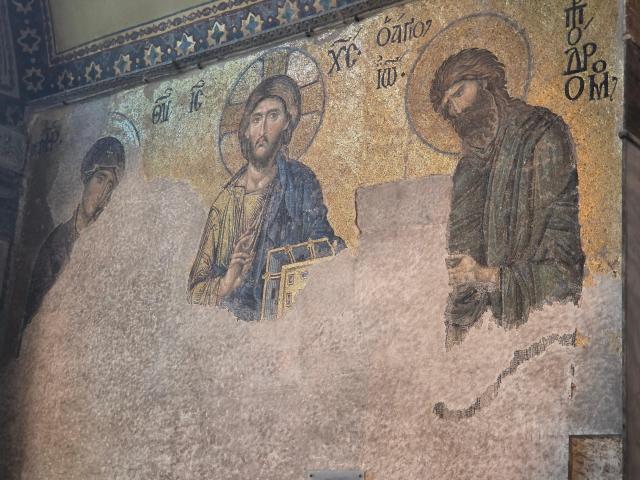
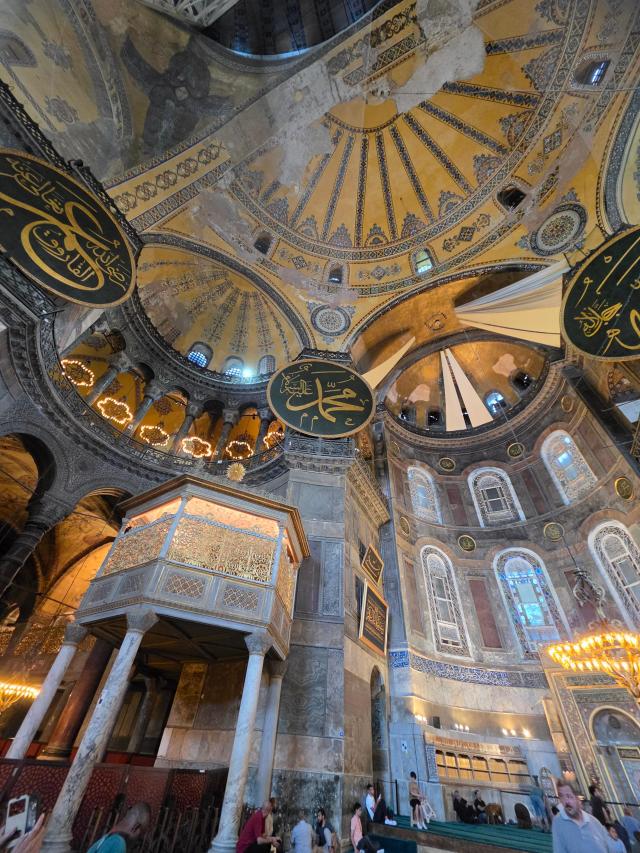
Türkiye has spent most of its history as the country in between. Istanbul was the capital of Christian Byzantium for a thousand years before it became the seat of the Islamic caliphate for nearly five hundred more. Hagia Sophia has been a cathedral, a mosque, a museum, and a mosque again, and the city has somehow absorbed each conversion without losing itself. The Ottoman Empire governed Greeks, Armenians, Jews, Arabs, and Slavs under a system that let each community keep its own courts, schools, and houses of worship. When Spain expelled its Jews in 1492, the sultan sent ships to collect them. None of this was modern liberalism. It was something more durable: the practical knowledge that a state straddling two continents survives by holding differences together rather than resolving them.
That knowledge came at a price, paid mostly at home. The republic that Mustafa Kemal Atatürk built from the empire's ruins has spent a century arguing with itself about what it is: secular or religious, European or Middle Eastern, democratic or strong-handed. The argument has repeatedly turned violent. The military overthrew governments in 1960, 1971, and 1980, and pressured another from office in 1997.
In July 2016, a faction of the armed forces bombed the parliament and fired on citizens. 253 people died stopping them. I spent last week in Istanbul interviewing survivors of that night, and what struck me was not their anger but their vocabulary. A businessman who lost part of his foot to a bullet told me that everyone living on Turkish soil is his family. The purges that followed the coup swept up tens of thousands and drew lasting criticism from Europe, and the wound is not closed. A country that has nearly torn itself apart this many times does not romanticize division. It learns to manage it.
That learned reflex is now worth a great deal, because Türkiye's neighborhood is on fire on two sides.
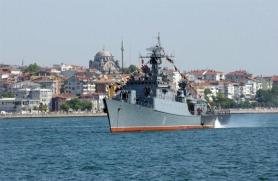
To the north, the war in Ukraine grinds into its fifth year. Ankara has armed Kyiv with drones, closed the Turkish straits to warships, and affirmed Ukraine's territorial integrity, while refusing to join sanctions on Moscow and keeping its channels to the Kremlin open. Western capitals once called this fence-sitting. They call it something else now that it has produced the grain deal that fed markets across Africa and Asia, the largest prisoner exchanges of the war, and the only venue both sides will accept. Just last week, Türkiye's foreign minister stood in Kyiv proposing a truce covering the Black Sea and energy infrastructure, an interim step no other government is positioned to broker.
To the southeast, this year's war between Israel, the United States, and Iran left Türkiye in a position no other NATO member occupies: alliance air defenses shot down Iranian ballistic missiles crossing Turkish airspace even as Ankara kept talking to Tehran. The radar at Kürecik in eastern Türkiye is the front line of Europe's missile defense against Iran. Remove Türkiye from the map, and Europe's early warning starts a thousand kilometers further west.
The European Union has kept Türkiye's membership application frozen for decades, with reasons ranging from principled to reflexive. Yet the continent now finds it needs the country it would not admit. America's rethinking of its security guarantees has left Europe rearming in a hurry, and the arithmetic is uncomfortable. Türkiye fields NATO's second-largest army, will command the alliance's rapid reaction force from 2028, and has grown its defense exports from under $2 billion a decade ago to a projected $11 billion this year, with its drones already embedded in European arsenals.
In Ankara, alliance members announced more than $50 billion in new procurement and pledged roughly $80 billion in military support for Ukraine in 2026. Brussels still debates whether to open its new defense programs to a non-member it does not fully trust. Ankara warns that a European security architecture built without Türkiye will protect less of Europe. On the evidence of the past four years, the warning is hard to dismiss.
Critics have a sharper word for all this balancing, transactionalism, the accusation that Ankara simply sells its position to every side. I would suggest the older word is better. What looks like playing both sides is, in the long Turkish habit, openness, the refusal to let any single identity, bloc, or patron claim the whole country. A state that contained Orthodox Christians and Sunni Muslims for five centuries does not find it strange to host Russians and Ukrainians at the same table. A society that argues perpetually about religion and secularism is not scandalized that the world disagrees with itself too.
This openness has hard limits, and Türkiye's own citizens know them best; the decade since the coup has tested civil liberties at home even as flexibility flourished abroad. But the leaders of the Western alliance, having just left Ankara, might consider that the ally they have found hardest to categorize is valuable for precisely that reason. In a world splitting into camps, somebody has to stand in between. Türkiye has had five hundred years of practice.
Copyright ⓒ Aju Press All rights reserved.