Some are, however, broadening their radar beyond chips and their strategies beyond a quick bet on a rebound. Playing smarter and safer is gaining appeal, even as leveraged wagers remain hard to resist.
In the first half, as the KOSPI cleared one milestone after another to double by the end of June, investors were swept up in a crowd-driven frenzy with shades of “Squid Game.”
After a bruising reversal that erased roughly half of the benchmark’s earlier gains, Korea’s “ants” — the local nickname for individual investors — have reason to become more studious, pickier and less hotheaded.
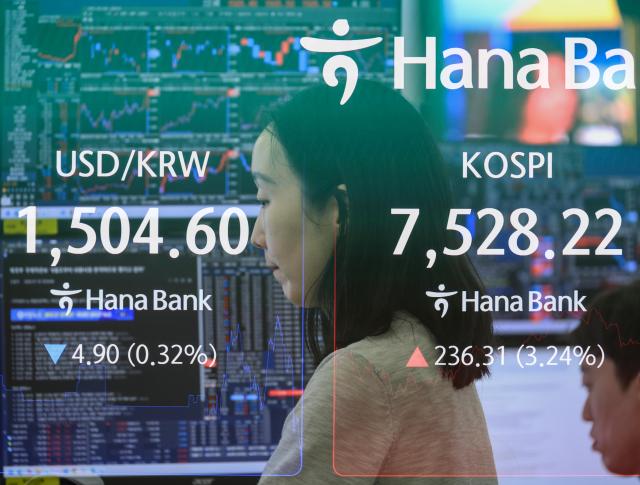
They stayed in the game as the KOSPI plunged 7.57 percent Thursday, hunting for bargains while also looking beyond the familiar chip names.
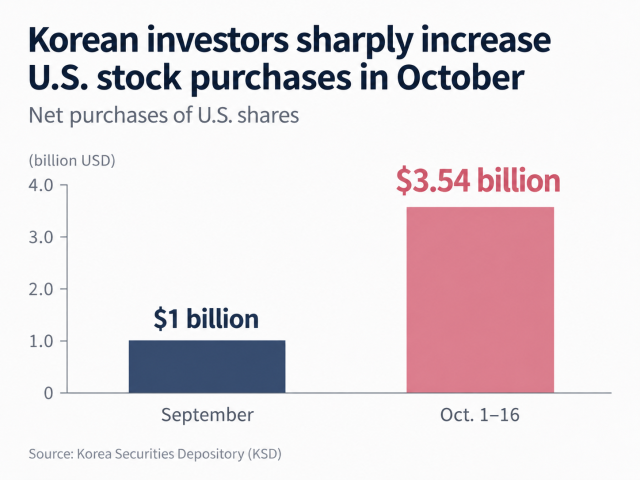
Their search extended to Wall Street. Korean investors bought a net $3.54 billion of U.S. shares from Oct. 1 through Thursday, more than three times the roughly $1 billion purchased during all of September, according to the latest available data from the Korea Securities Depository (KSD).
Semiconductor funds still dominated the buying, although investors took opposing positions on where chip stocks were headed.
Direxion Daily Semiconductor Bull 3X Shares, or SOXL, which seeks to deliver three times the daily performance of a U.S. semiconductor index, attracted $2.27 billion in net purchases. The fund accounted for about 64 percent of total net U.S. stock purchases over the period.
Its inverse counterpart, Direxion Daily Semiconductor Bear 3X Shares, or SOXS, ranked second with $186.47 million. The fund seeks to deliver three times the opposite of the index’s daily return — a leveraged bet that semiconductor stocks will fall.
Buying stretched to other technology stocks. Quantum-computing company IonQ drew $117.29 million, while AI data-center operator IREN attracted $93.11 million.
Alongside those aggressive bets, investors bought bond, dividend-focused and broad stock-index exchange-traded funds.
The iShares 0-3 Month Treasury Bond ETF, or SGOV, which invests in short-term U.S. Treasury bills, ranked fourth with $105.61 million in net purchases.
The Schwab U.S. Dividend Equity ETF, or SCHD, drew $81.66 million. The Vanguard S&P 500 ETF, or VOO, attracted $75.08 million, while the Invesco Nasdaq 100 ETF, or QQQM, received $60.26 million.
The figures reveal a market divided between investors chasing a semiconductor rebound and those seeking steadier income or broader exposure. They do not necessarily show that the same investors are balancing both.
“Investors are pursuing aggressive returns while also trying to protect their assets,” said Kim Dae-jong, an economics professor at Sejong University.
“They are betting on the semiconductor industry’s long-term growth potential while preparing for short-term market declines and interest rate fluctuations.”
With demand for high-risk leveraged products still strong, however, Kim said it was too early to conclude that diversification had become common among retail investors.
Bonds gain ground at home
The search for a cushion is also visible in South Korea’s bond market.
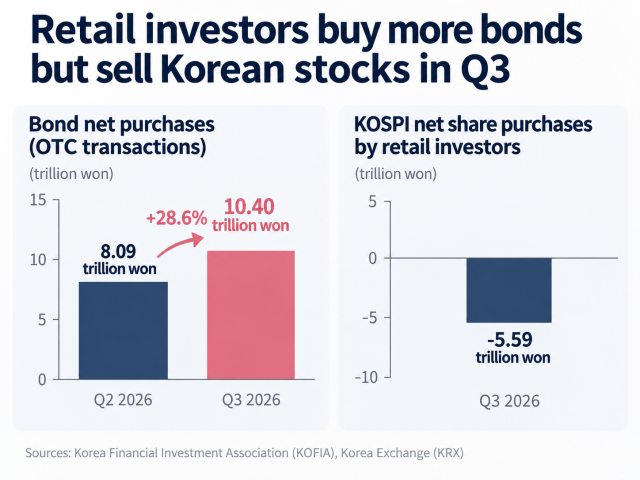
Retail investors bought a net 10.40 trillion won ($7.75 billion) of bonds through over-the-counter transactions in the third quarter, up 28.6 percent from 8.09 trillion won in the previous quarter, according to the Korea Financial Investment Association.
Individuals meanwhile sold a net 5.59 trillion won of shares on the main KOSPI market during the same period, Korea Exchange data showed.
Government bonds, bank bonds and special bonds — a category that includes debt issued by public institutions — accounted for about 75 percent of their net bond purchases, pointing to a preference for relatively low credit risk.
Kim said shorter-term bonds were particularly appealing during uncertain periods because they are generally less sensitive to interest rate changes.
“With stock markets becoming more volatile and economic uncertainty growing, investors are increasingly seeking to protect their capital and secure predictable interest income,” he said.
“Government bonds, bank bonds and special bonds generally carry lower credit risk and can help cushion investors against stock market volatility.”
Debt clouds the AI trade
Behind the investment choices lies a broader question about the AI boom: whether companies can sustain the enormous spending needed to keep it growing.
CoreWeave, a U.S. AI cloud company that provides computing power using advanced chips, offers one example. The company has accumulated about $50 billion in debt as it rapidly expands its data centers. Yields on some of its bonds have surged above 16 percent, raising concerns about the cost of financing further growth.
Even if demand for AI remains strong, heavily indebted companies may struggle to maintain their spending pace. A slowdown could eventually feed through to orders for AI chips.
Investors are therefore caught between confidence in the semiconductor industry’s long-term growth and unease over how much of that promise can support today’s spending and valuations.
Leveraged bets feel the pain
For Korean investors betting on a semiconductor recovery, the immediate risk is already evident.
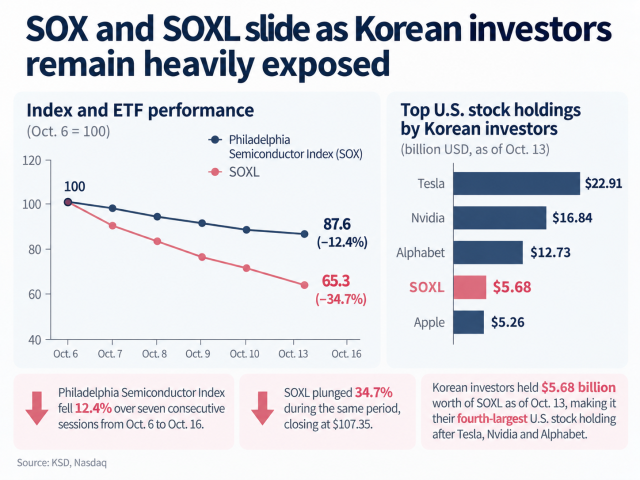
The Philadelphia Semiconductor Index fell for a seventh consecutive session Thursday, losing about 12.4 percent from its Oct. 6 close. SOXL plunged about 34.7 percent over the same period to close at $107.35.
Korean investors held $5.68 billion worth of SOXL as of Oct. 13, making it their fourth-largest U.S. stock holding by value after Tesla, Nvidia and Alphabet, according to KSD data.
Kim warned that holding such products through volatile markets could expose investors to greater losses.
“Diversification can help limit losses from individual investments, but it still cannot protect investors when the broader market falls,” he said.
“Investors need to limit their exposure to high-risk products and maintain an appropriate balance among stocks, bonds and cash-like assets,” Kim added.
For now, Korea’s ants are broadening their search without abandoning their biggest bet. They may be looking for a safer way through the market’s hell, but chips still account for much of the risk they carry.

Copyright ⓒ Aju Press All rights reserved.